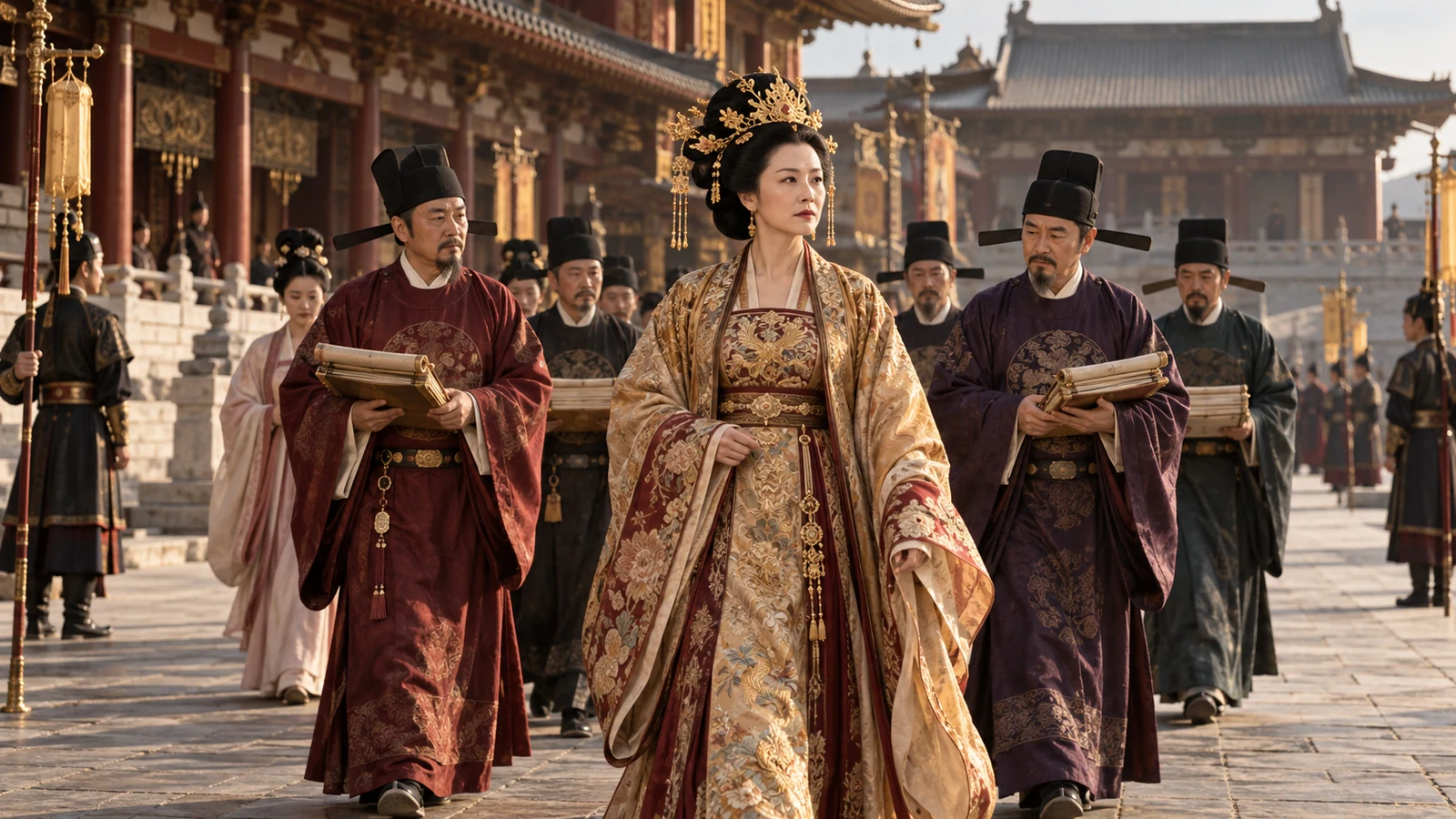
690–705
Wu Zetian and Buddhist art at Luoyang
An emperor in her own right and Buddhist imagery in political life.
From court position to emperor
Influence as empress differed from ruling as emperor. Wu founded Zhou in 690, a regime distinct from ancient Zhou; Tang was restored in 705. Beneath dynastic names, official recruitment and regional administration sustained government.
Officials and Buddhist patronage
At Longmen’s Fengxiansi, disciples, bodhisattvas, heavenly kings and guardians surround the central Buddha. Court support under Gaozong and Wu enabled the carving. Funding, skilled stonework and the arrangement of religious figures combined to create the sacred space.
Tang, Zhou and surviving monuments
Tang was restored in 705, while the carvings endured. Associations between the Buddha’s face and Wu are not conclusive portrait evidence. Patronage and the religious identity represented are distinct questions.
Before and after
- 624
Wu Zetian’s birth year.
- 690
She founded Zhou and became emperor.
- 705
Her rule ended and she died.
Key terms
- Empress consort
- The position of an emperor’s consort.
- Emperor
- The sovereign position governing a dynasty.
- Grotto
- A rock-cut space for images and devotion.
What supports the account?
Power as empress differs from claiming the imperial title. The dynastic change of 690 marks that distinction.
Wu’s life, the Tang court, Zhou dynasty and examination context. Construction under Gaozong and Wu and Fengxiansi images.
A timeline does not convey every court participant’s experience.
Monumental stone images required commissions, materials and labor. Patronage does not make the ruler their sole maker.
Wu’s life, the Tang court, Zhou dynasty and examination context. Construction under Gaozong and Wu and Fengxiansi images.
Sculpture is not a direct facial record of the patron.
Check your understanding
Choose an answer to reveal the explanation. Return to the article and sources when you are unsure.
Sources
- Timeline of Chinese History, Art, and CultureSmithsonian National Museum of Asian Art
Wu’s life, the Tang court, Zhou dynasty and examination context.
- Longmen Grottoes evaluationUNESCO / ICOMOS
Construction under Gaozong and Wu and Fengxiansi images.
- Longmen’s long building historyUNESCO World Heritage Centre
Buddhist grottoes and stone carving across Northern Wei and Tang.
Keep exploring
Mainly seventh–tenth centuries
Gyeongju, capital of Silla
Temples and Buddhist sculpture in an ancient Korean capital open a wider East Asian view.
Gyeongju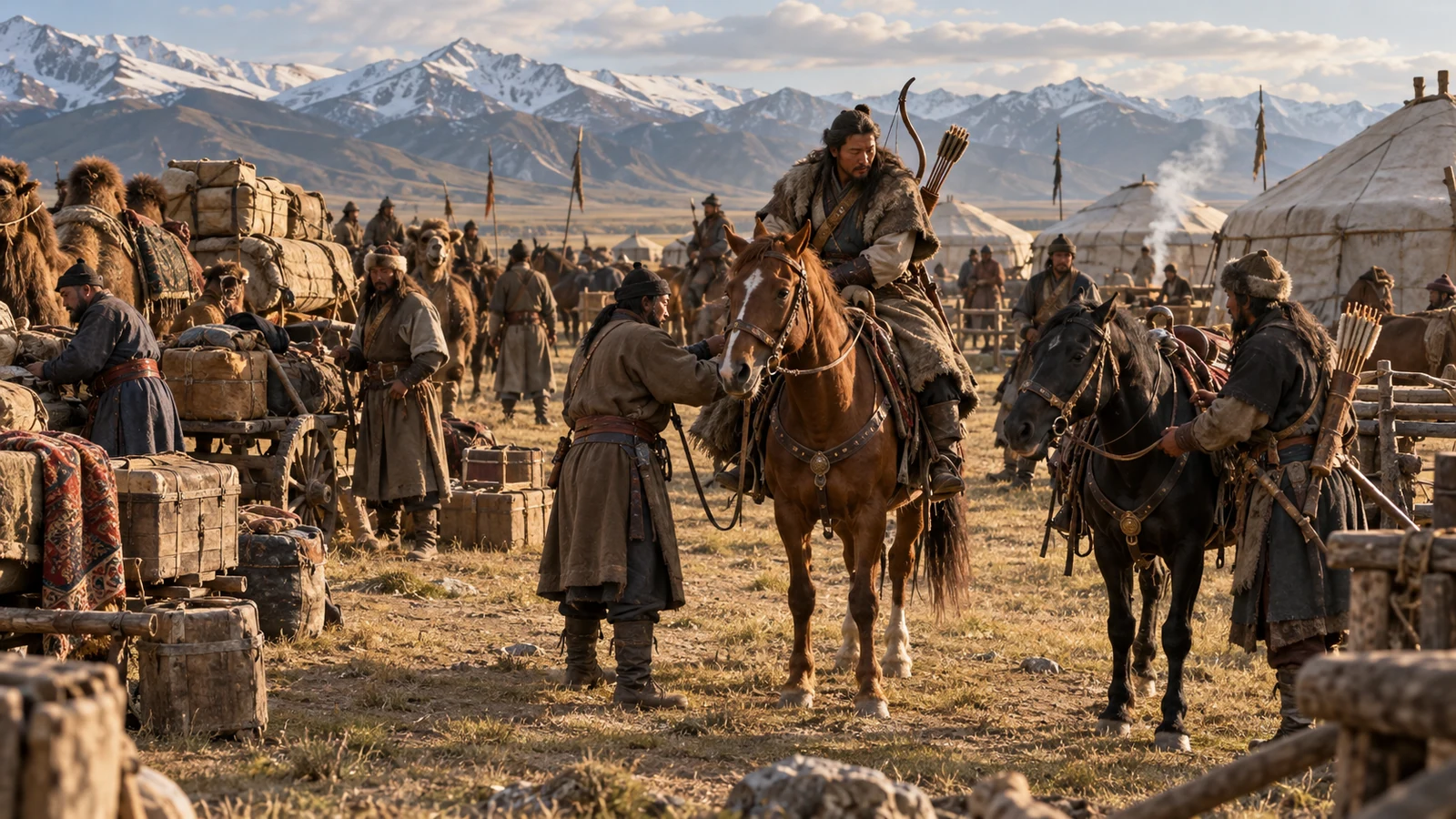
Mainly 1206–1368
Routes and people in the Mongol Empire
Read the violence of conquest alongside exchanges across imperial space.
Karakorum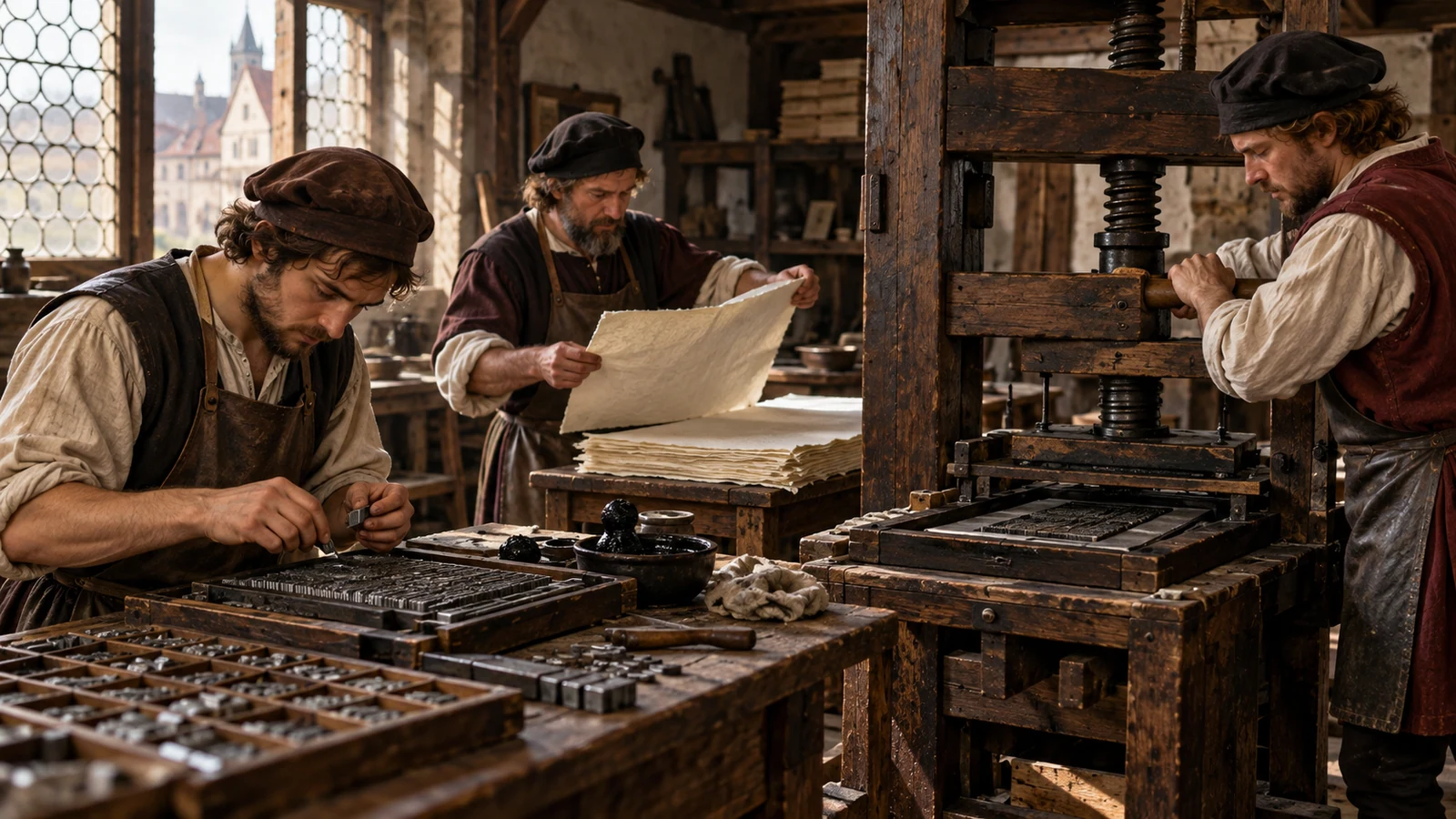
Comparing 1377 and the 1450s
Gutenberg and the work of movable type
Type, printing and hand decoration reveal workshop processes.
Mainz / Cheongju