c. 1371–1433 or 1435; death year debated
Zheng He
Ming fleet commander
Commanded expeditions beginning in 1405. The voyages connected established ports through diplomacy, tribute and military power.
What a state fleet brought to a port
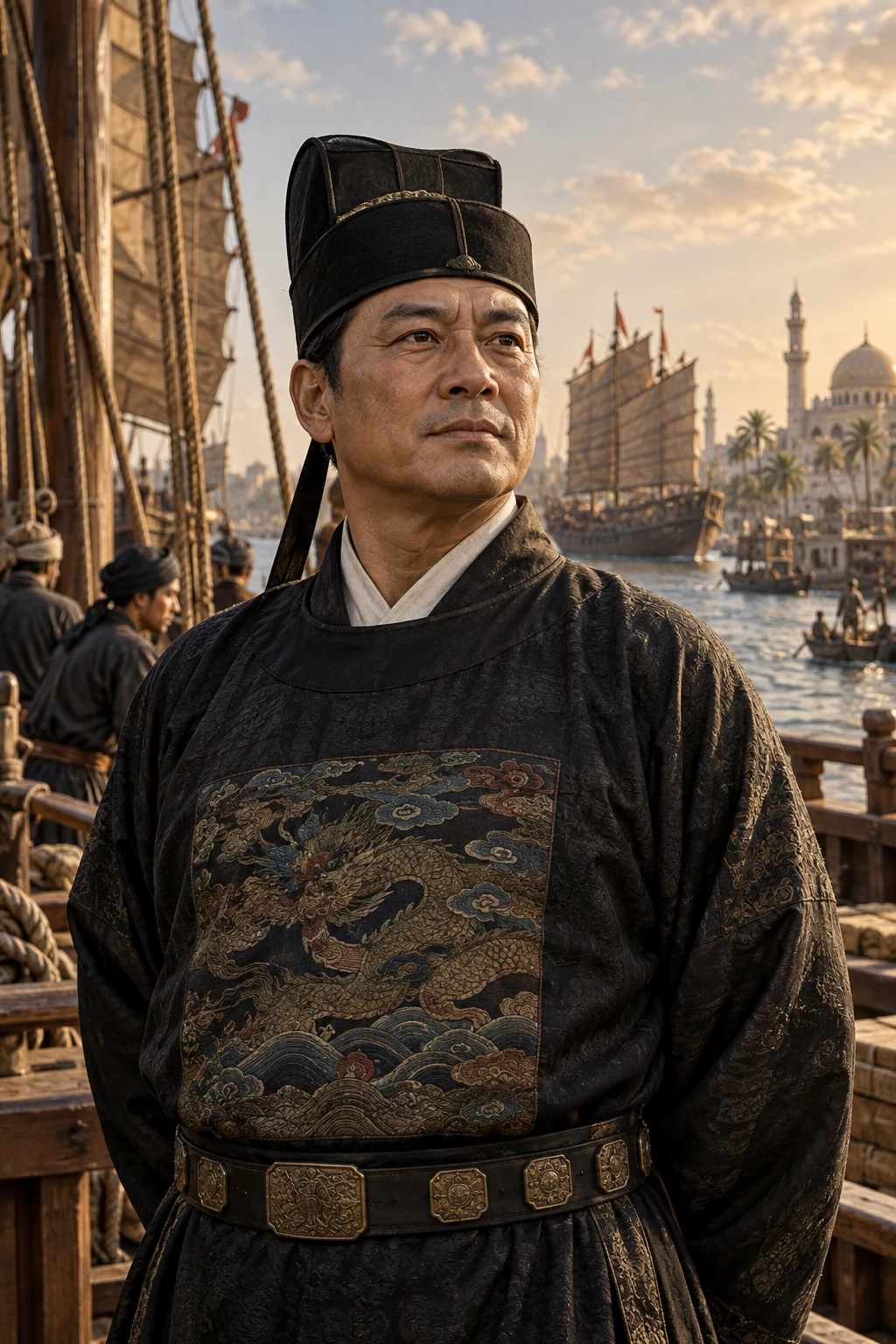
Beginning in 1405, Zheng He’s Ming fleets entered ports already used by merchants. Ships carrying gifts and envoys also carried military force. Captured during the Ming conquest of Yunnan and brought into palace service, he became an agent of Yongle’s authority overseas.
Fleet command involved crews, vessels, supplies and diplomatic exchanges. Repeated voyages depended on state mobilization and negotiation in ports, not size alone. They linked the court with maritime communities rather than constituting a solitary explorer’s adventure.
Voyaging through monsoons and ports
Fleets connected Southeast Asia with India, West Asia and East Africa. Different ships and voyages followed different routes.
Navigation combined compasses, stars, landmarks and seasonal winds. Provisioning and port negotiations supported the journeys.
Monsoon timing and ports providing water and provisions shaped the itinerary. Interpreters and pilots supplied local knowledge. Long voyages depended on these coastal relationships as well as state organization.
Gift exchange and military action
The fleets carried gifts and envoys but also armed force. Military action in places including Sri Lanka placed pressure on local rulers within Ming diplomatic relationships. Arrival offered commercial opportunities and displayed state power, combining trade, missions and coercion in one undertaking.
Large expeditions ended in the 1430s, while Indian Ocean merchants and mariners continued trading. Dynastic changes, costs and diplomatic priorities influenced the state voyages. Their ending did not erase connections among ports; Zheng He’s death date and final location remain disputed.
Ma Huan’s observations and transmitted charts
Ma Huan’s Yingya Shenglan describes customs and products from a visitor’s perspective. What attracted a traveler’s attention is not a complete account of local life. Purpose and position matter when reading trade and religious descriptions.
Route information survives in the later Wubei Zhi. That transmission does not make it an original chart directly used by Zheng He. Compilation and publication dates reveal how fifteenth-century navigation was preserved for later readers.
Turning points
- About 1371
Approximate birth in Yunnan.
- 1405
The first major expedition began.
- 1410s
Voyages extended toward West Asia and East Africa.
- 1431–1433
The final major expedition took place.
Their legacy
The state expeditions ended in the 1430s, while Indian Ocean commerce continued. The voyages marked a period when Ming diplomacy and force operated at scale within existing maritime networks.
Related history

1405–1433
Zheng He’s fleets and Indian Ocean ports
Read Ming expeditions through charts, winds and port labor.
Nanjing / Calicut (Kozhikode)
From the second century BCE through the medieval period
The Silk Roads were a network
Goods, languages and skills moved through connected land and sea routes.
Eurasian and Indian Ocean trade networksSources
Geoff Wade / National University of Singapore · An analysis of diplomatic and military aims using Ming records.
United Nations Office for Outer Space Affairs · Voyages in 1405–1433 and astronomical, compass and landmark navigation.
The portrait is an original historical imagining, not evidence of the person’s appearance.