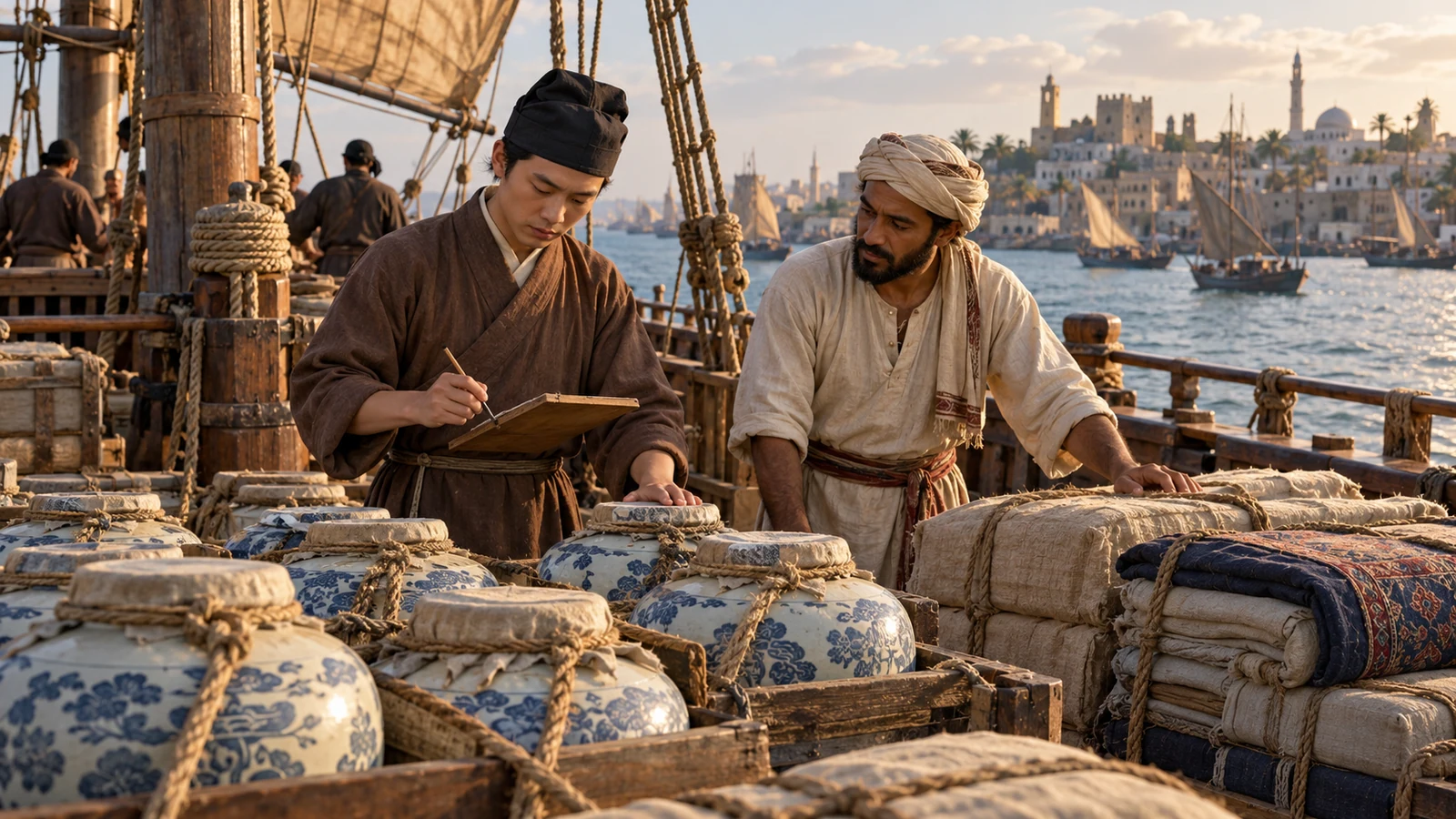
Around 1430 · An Indian Ocean port · A Ming vessel, port warehouse and lodging
Check the words at port and wait for wind
Liang, a Ming ship clerk
Check the cargo with an interpreter and prepare for departure.
An imperial command cannot change the wind. Local knowledge matters.
Begin the storyPreparing your story…
Explore the diagram: Imperial orders meet seasonal winds
Imperial orders meet seasonal winds
Does an order to sail make every season equivalent?
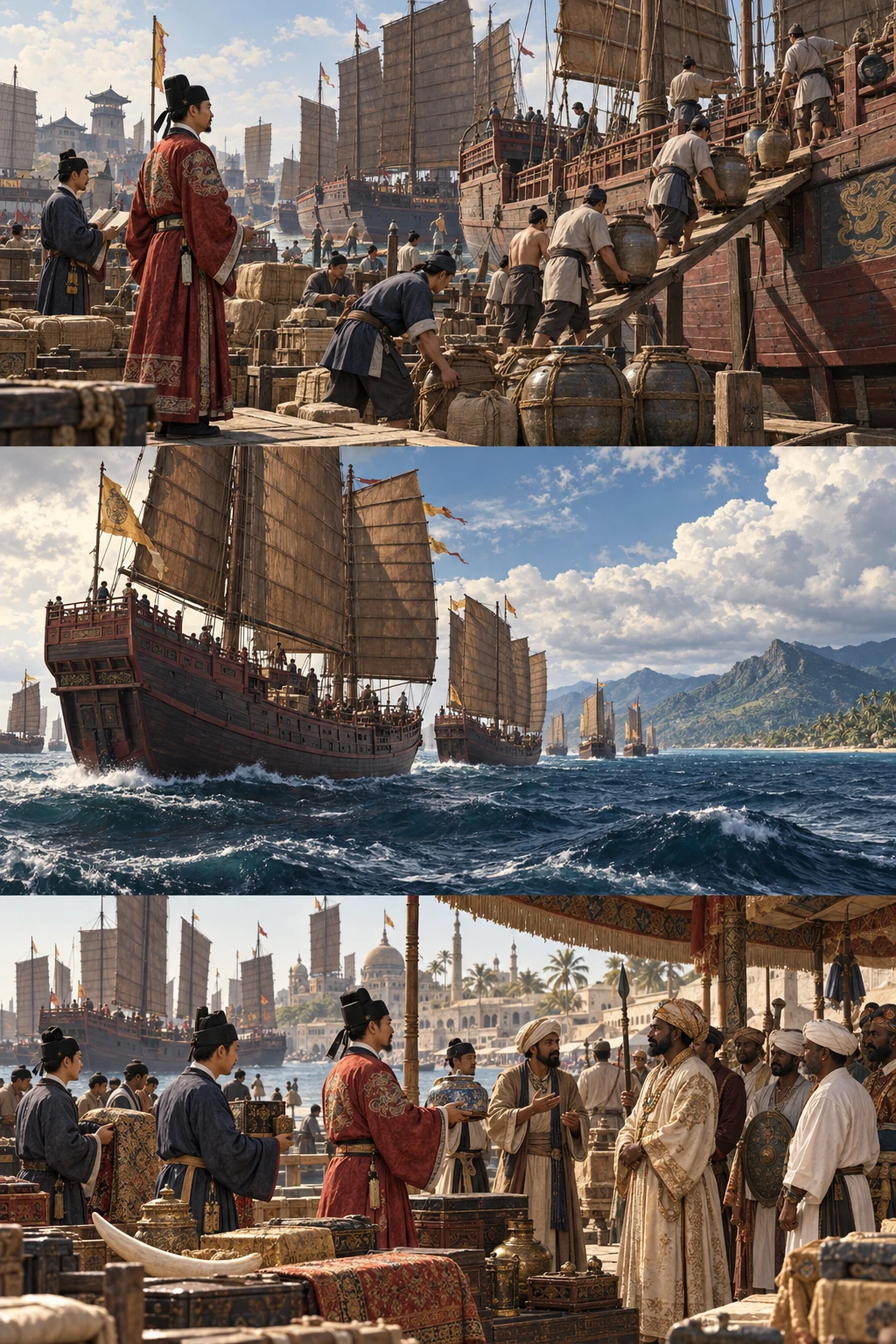
Orders require people, vessels and supplies.
An expedition enters existing networks
The Ming emperor ordered Zheng He’s expeditions. Merchants and connections already existed at their destinations; the fleets did not create every link from nothing.
Sources and scope
These illustrations explain processes and institutions rather than reconstructing actual people, buildings or layouts. Cutaways and insets show hidden structures or separate locations.
Zheng He voyage charts ↗The Indian monsoon ↗Liang, twenty-five, Hasan, thirty-five, goods and transactions are fictional. This is not a specific voyage journal; numerical tasks and routes are models. The ship illustration does not settle disputed giant-vessel dimensions.
Explore the time and placeSources
- Mapping the World exhibition guide ↗
National Library Board Singapore · Dates of seven voyages, tribute, trade and Mao Kun charts.
- Stories from the Stacks: the Mao Kun Map ↗
National Library Board Singapore · Chart structure, debated origins and representations of ports and mountains.
- Silk Road Diplomacy: Twists, Turns and Distorted History ↗
YaleGlobal / Yale University · Military force and political relationships; contemporary diplomatic comparisons are not used here.
- The Indian Monsoon in a Changing Climate ↗
Royal Meteorological Society · Seasonal changes in wind and rainfall, used only to explain the physical background of monsoons.