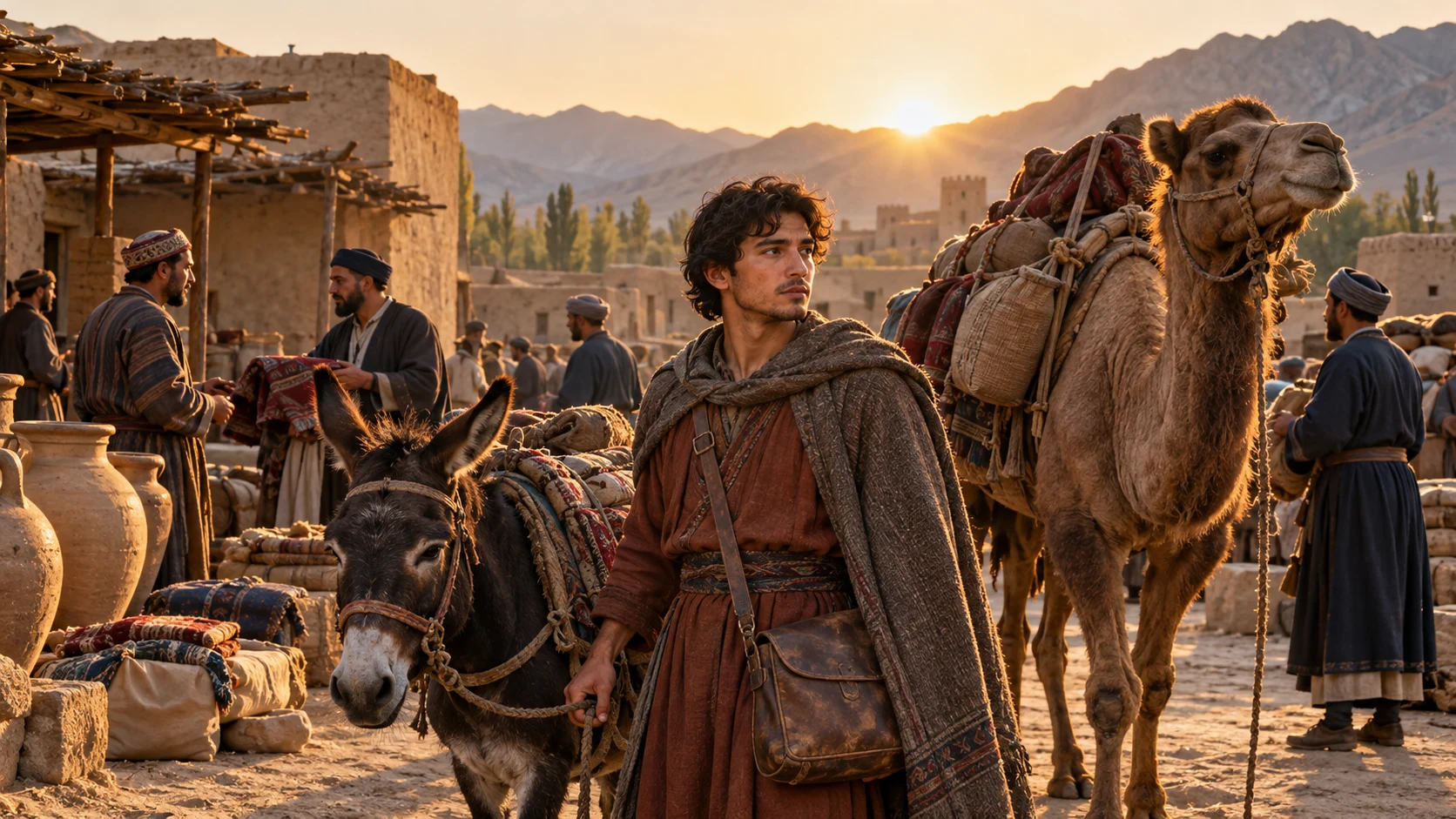
Around the eighth century · A fictional local stage near Samarkand
The blue cloth, into the next hands
A day with a young merchant near Samarkand
Deliver the frayed blue cloth to the next trader.
Saleable cargo will not get you home. You must carry water and food too.
Begin the storyPreparing your story…
Explore the diagram: Trade through many handovers
Trade through many handovers
Can goods travel far without one merchant making the entire journey?
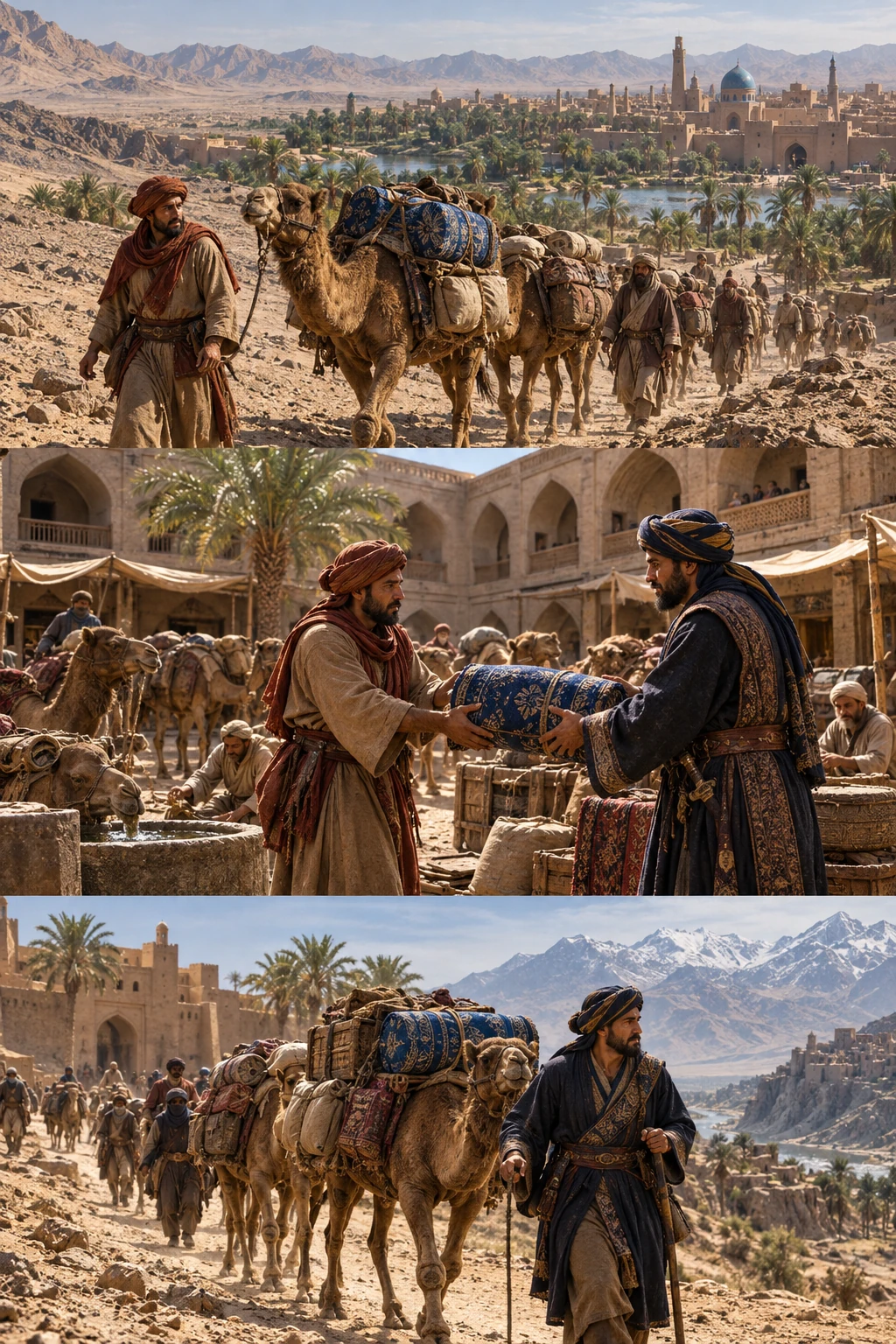
Goods travel one stretch.
Merchants connect particular stretches
Land and sea routes formed networks. Goods sold in an intermediate town could be carried onward by another trader. Cargo distance and one person’s journey are different.
Sources and scope
These illustrations explain processes and institutions rather than reconstructing actual people, buildings or layouts. Cutaways and insets show hidden structures or separate locations.
About the Silk Roads ↗Arman, Zara, Nabil, their experiences and dialogue are fictional, set around the eighth century rather than a specific recorded year. This is one local handover stage, not one person crossing the continent. Routes, effort points and load slots are simplified models, not reconstructed travel times or weights.
Explore the time and placeSources
- About the Silk Roads ↗
UNESCO · Land and sea networks, trade in stages and exchanges of knowledge and belief.
- Silk Roads: the Routes Network of Chang’an-Tianshan Corridor ↗
UNESCO World Heritage Centre · The network from the second century BCE, way stations, temples and trading cities.