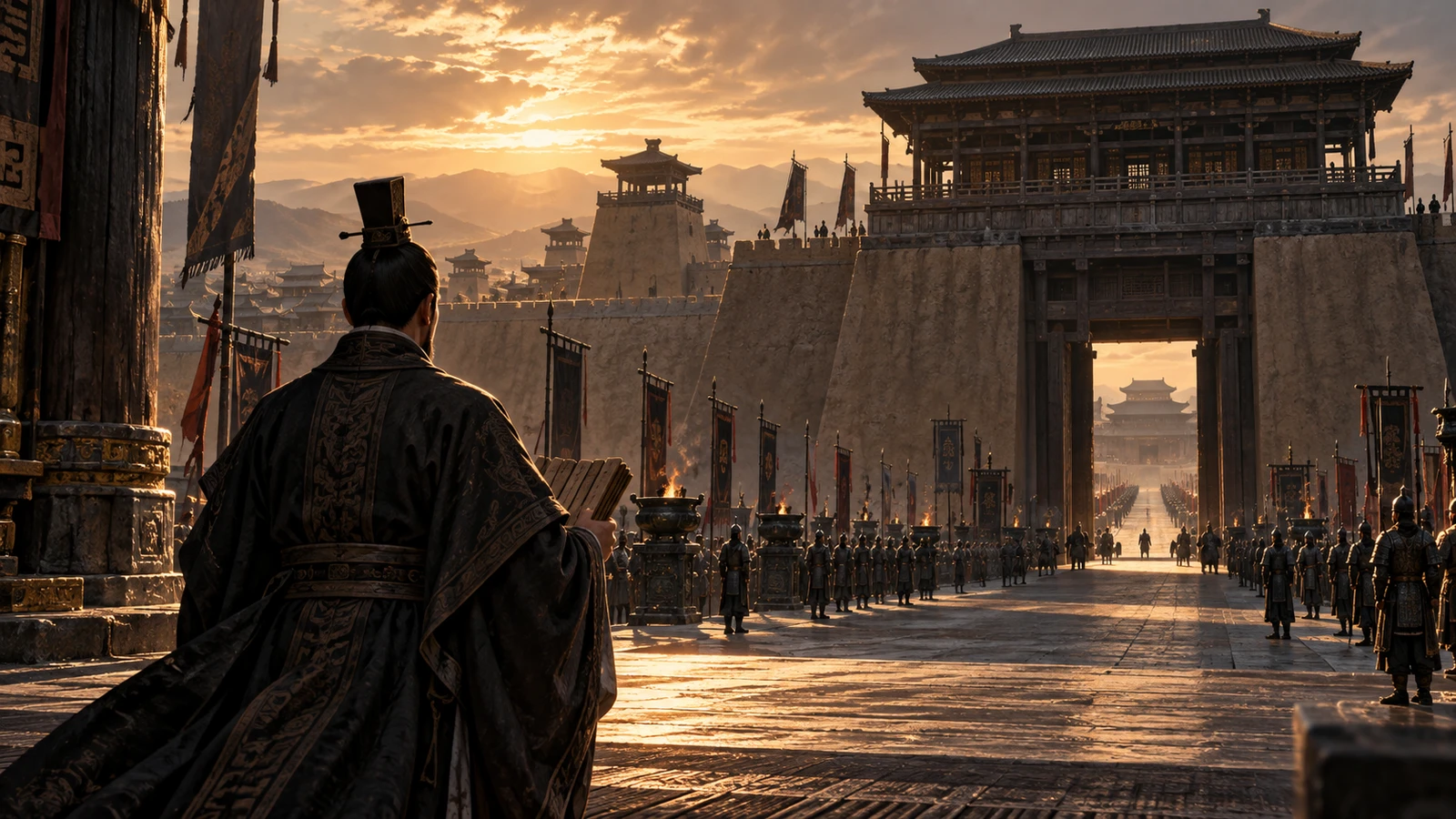
221–206 BCE
Qin unification and the First Emperor
A short-lived empire standardized writing and measures and left an extraordinary tomb.
Turning conquest into administration
Defeating six states did not ensure lasting rule. Qin linked commanderies and counties to appointed officials under the emperor, connecting taxation, supply and military authority with the center. This administrative approach outlasted the short dynasty.
Standardizing records, money and roads
Different weights and currencies complicated trade and collection. Standardization reduced conversion, while shared script aided official records. This did not make every spoken language identical overnight.
Standardized records aided administration, while book burning in 213 BCE reveals control over knowledge. Common formats and limits on permissible content were different effects of central power.
The legacy of a short dynasty
Roads and standards aided government, while walls and the imperial tomb demanded labor. Terracotta soldiers were one part of that project. Qin fell quickly, but administrative practices outlasted it, carrying different benefits and burdens.
Excavated figures form part of a larger mausoleum plan. The central chamber remains unexcavated; recorded mercury rivers are not directly observed structures. Different evidence informs figures and the overall plan.
Before and after
- 221 BCE
Qin completed the conquest of six states.
- 213 BCE
Burning of books.
- 206 BCE
The Qin dynasty ended.
- 1974
The terracotta army was discovered.
Key terms
- Weights and measures
- Standards of length, volume and weight.
- Administration
- Government through officials, records and orders.
- Terracotta army
- Clay soldiers and horses in the imperial mausoleum.
What supports the account?
Unification involved standardization.
Museum interpretation describes writing, money and measures.
This does not prove instant disappearance of regional differences.
The central chamber remains unexcavated.
Excavated material and museum accounts.
Descriptions in texts are not all physically verified.
Check your understanding
Choose an answer to reveal the explanation. Return to the article and sources when you are unsure.
Sources
- Qin Dynasty (221–206 B.C.)The Metropolitan Museum of Art
Conquest, administration, standardization and the unexcavated burial chamber.
- Mausoleum of the First Qin EmperorUNESCO World Heritage Centre
The mausoleum, terracotta army and discovery in 1974.
Keep exploring
Mainly seventh–tenth centuries
Gyeongju, capital of Silla
Temples and Buddhist sculpture in an ancient Korean capital open a wider East Asian view.
Gyeongju
690–705
Wu Zetian and Buddhist art at Luoyang
An emperor in her own right and Buddhist imagery in political life.
Luoyang
Mainly 1206–1368
Routes and people in the Mongol Empire
Read the violence of conquest alongside exchanges across imperial space.
Karakorum