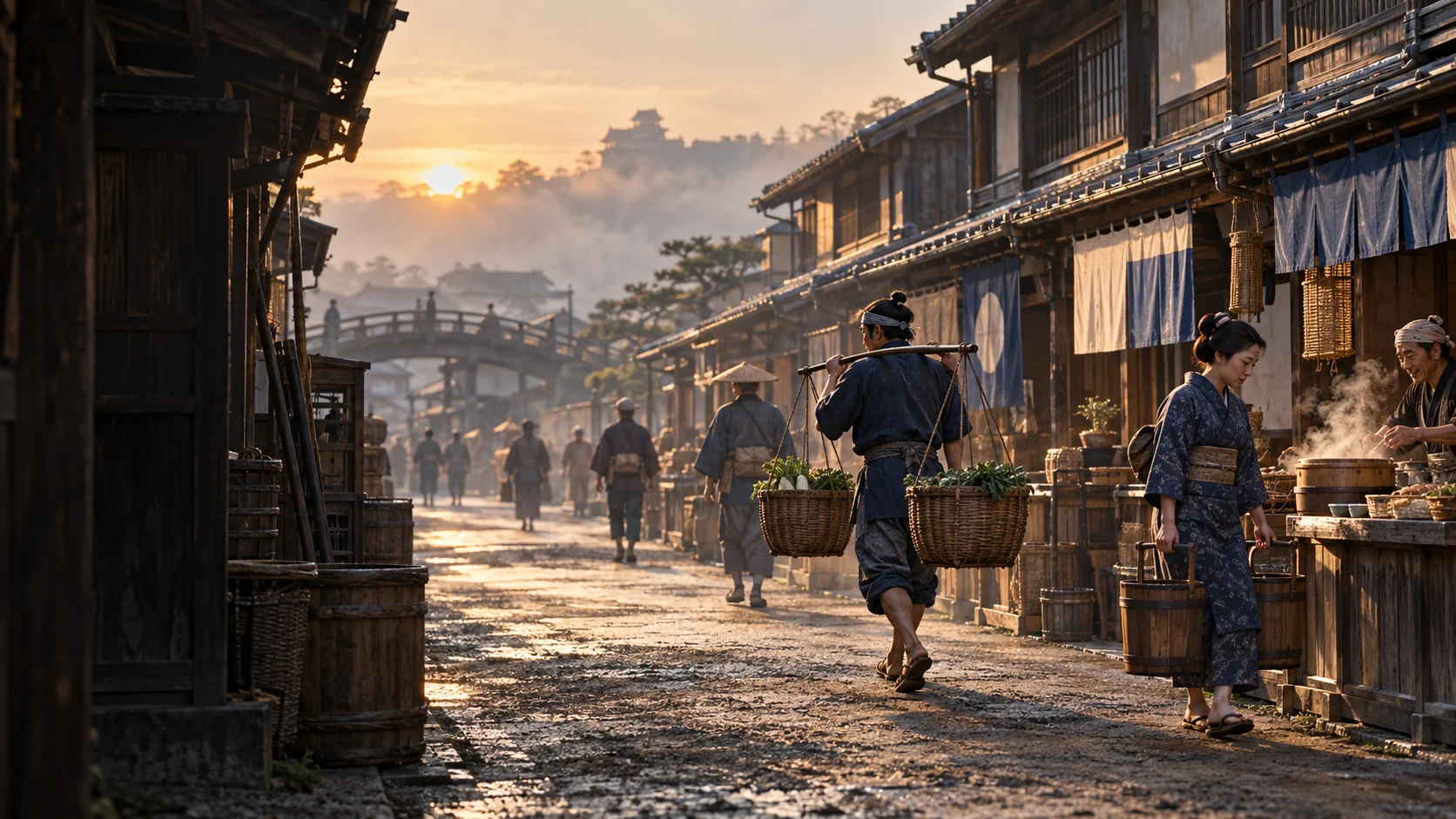
Early nineteenth century · Late Edo urban life
Water and commerce in everyday Edo
Look beyond individual homes to the systems supporting a large city.
Water connects Edo beneath its streets
Did an aqueduct mean every home had a tap?
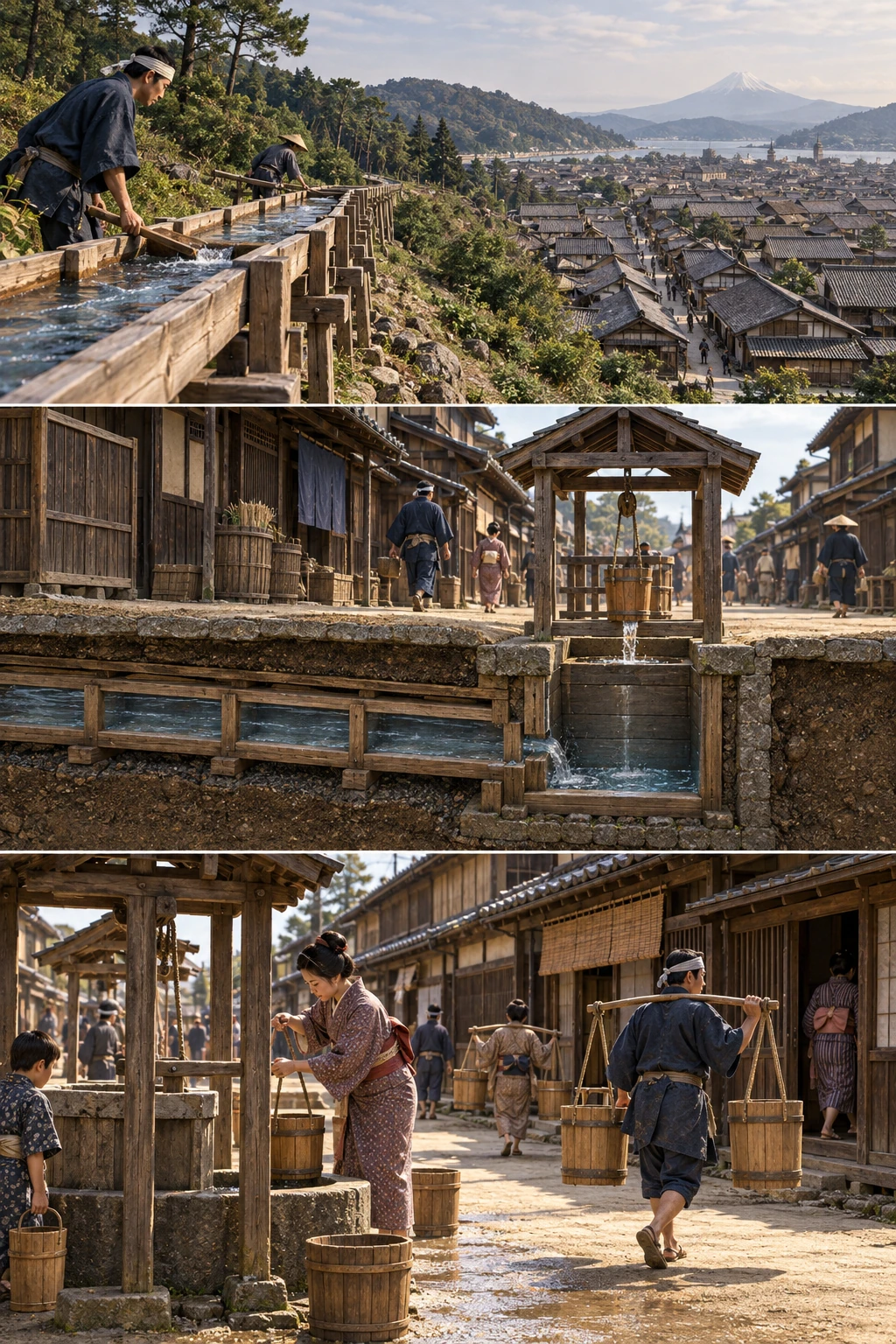
A route brings water into the city.
A large city needs a route for drinking water
Edo’s water systems brought water into the city. A nearby river did not make drinking water available everywhere; sources had to be connected to places of use.
Sources and scope
These illustrations explain processes and institutions rather than reconstructing actual people, buildings or layouts. Cutaways and insets show hidden structures or separate locations.
Tokyo Waterworks: Edo water supply ↗Life beyond the tenement room
A tenement’s shared water point need not have drawn only the groundwater directly beneath it. Edo distributed water from distant sources through conduits beneath the town. Lifting a bucket depended on intake, channels, distribution and repair. The everyday life of the crowded city extended well beyond an individual room.
Closely spaced timber buildings made fire and access important shared concerns. Gates, watch posts and observation facilities connected homes with neighbourhood management. Modern self-contained domestic arrangements cannot simply be projected onto an Edo room.
Bringing water into the city
Planning began in 1652, the channel was excavated in 1653, and underground distribution supplied neighbourhoods in 1654. The open route to Yotsuya and the pipes beyond it performed different stages. Reaching the city’s edge did not complete distribution.
Gravity required attention to heights and gradients. Proximity to a river alone did not ensure supply. Engineering linked the intake, trunk channel and distribution, placing a long chain of work behind ordinary water use.
Supplying shops by sea and river
Nearby production combined with distant shipping. Cotton, oil and paper from the Kamigata region linked Edo consumption to work elsewhere. Unloading and onward transport connected seaborne cargo with river routes and streets before products reached shops.
Channels and vessels still required maintenance and people to handle and sell goods. Edo combined consumption with organised supply. Following a meal or purchase back towards sources reveals both the city’s variety and its dependence on outside labour.
Before and after
- 1652
The shogunate plans to bring Tama River water to Edo.
- 1653
The Tamagawa channel is excavated.
- 1654
Underground distribution supplies neighbourhoods in Edo.
- Early nineteenth century
Edo townspeople depend on water systems and shipping.
Key terms
- Water-supply channel
- A channel supplying water to a town.
- Tenement
- A row of connected urban dwellings.
- Higaki cargo ship
- Cargo ships carrying goods such as cotton, paper and oil between Osaka and Edo.
What supports the account?
City water travelled from a distant intake.
The water authority documents the Hamura–Yotsuya route.
It does not imply a modern tap in every home.
Shipping supported consumption in Edo.
The museum covers shipping and its cargoes.
Do not assume everything was produced within Edo.
Check your understanding
Choose an answer to reveal the explanation. Return to the article and sources when you are unsure.
Sources
- Permanent exhibition: Edo commerce and neighbourhoods江戸東京博物館
Row houses, neighbourhood facilities, cargo ships and late Edo commerce.
- Exploring Tamagawa Aqueduct江戸東京博物館
Aqueduct route, length and water distribution into the city.
- Tamagawa Aqueduct東京都水道局
The forty-three-kilometre route and underground stone and wooden distribution conduits.
Keep exploring
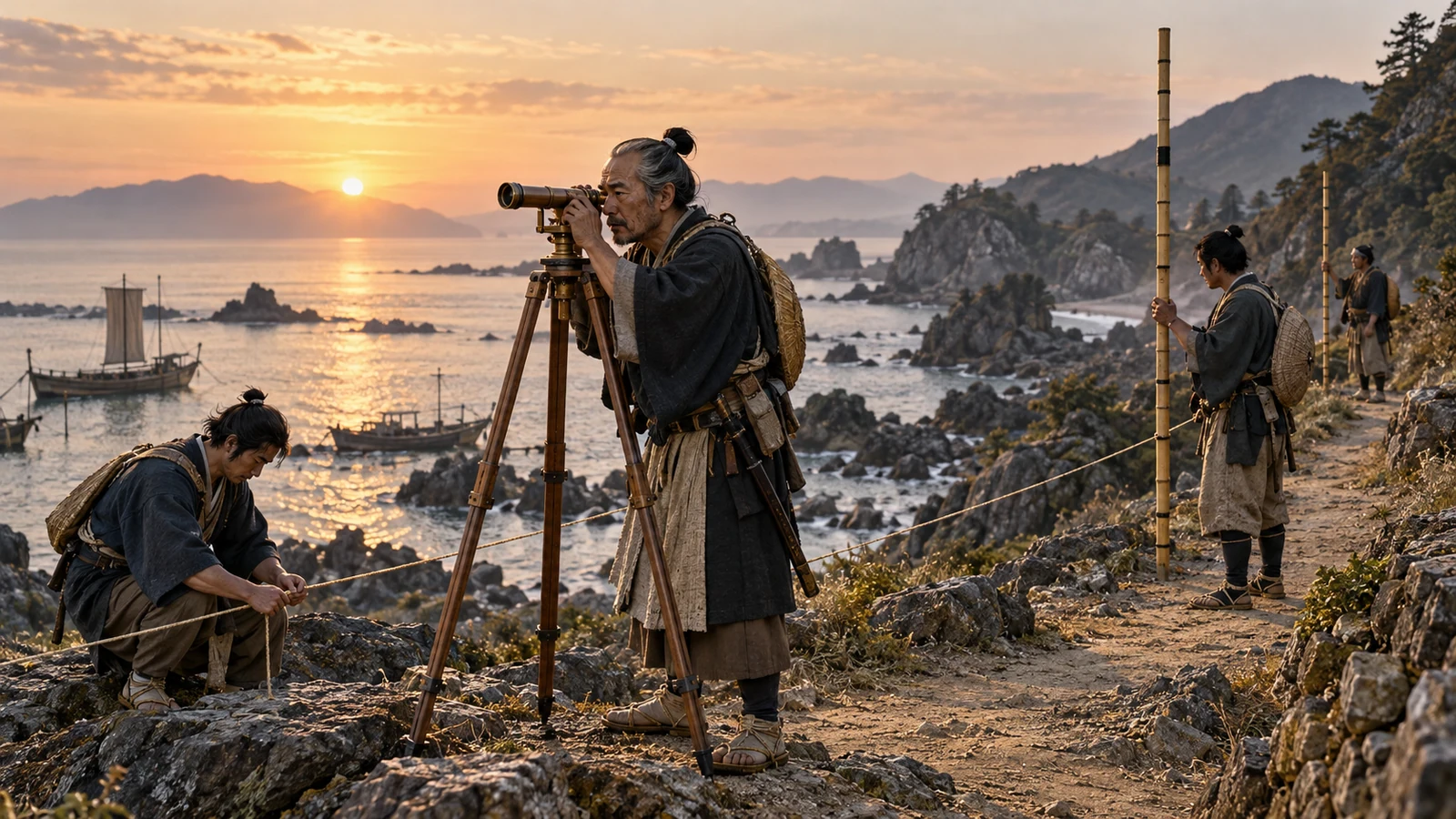
1800–1821 · Surveying and completing maps
How were the Inō maps measured and made?
Measured routes, recorded bearings and observed stars lay behind a team’s mapping work.
Sawara, Chiba / Fukagawa, Tokyo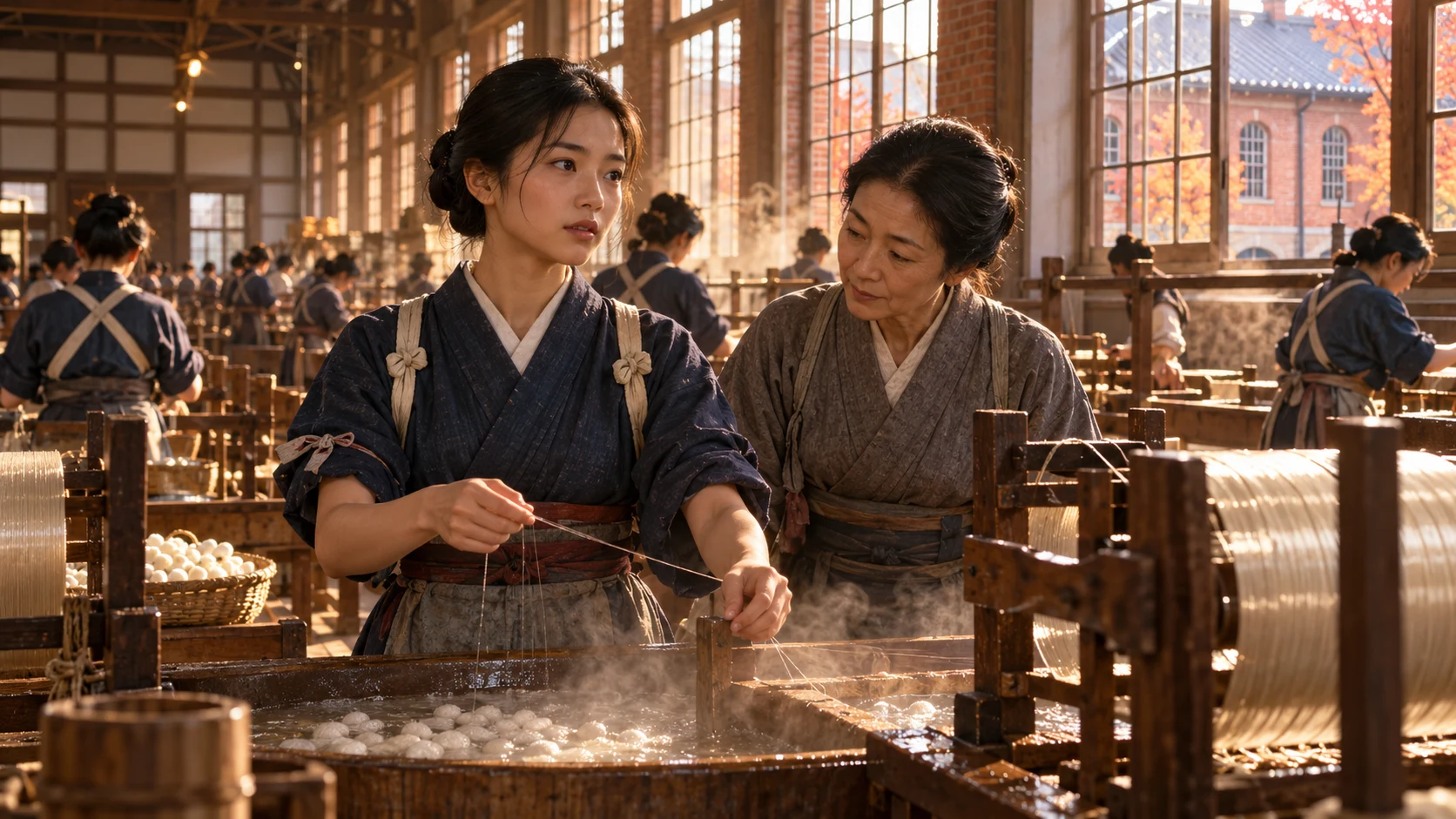
1872 · Tomioka Silk Mill starts operating
Reeling silk and sharing skills at Tomioka
Women at a government mill helped spread mechanised silk-reeling skills.
Tomioka, Gunma1889 · Promulgation of the Meiji Constitution
What the Meiji Constitution established
Original documents explain the emperor, parliament and subjects’ rights.
Tokyo