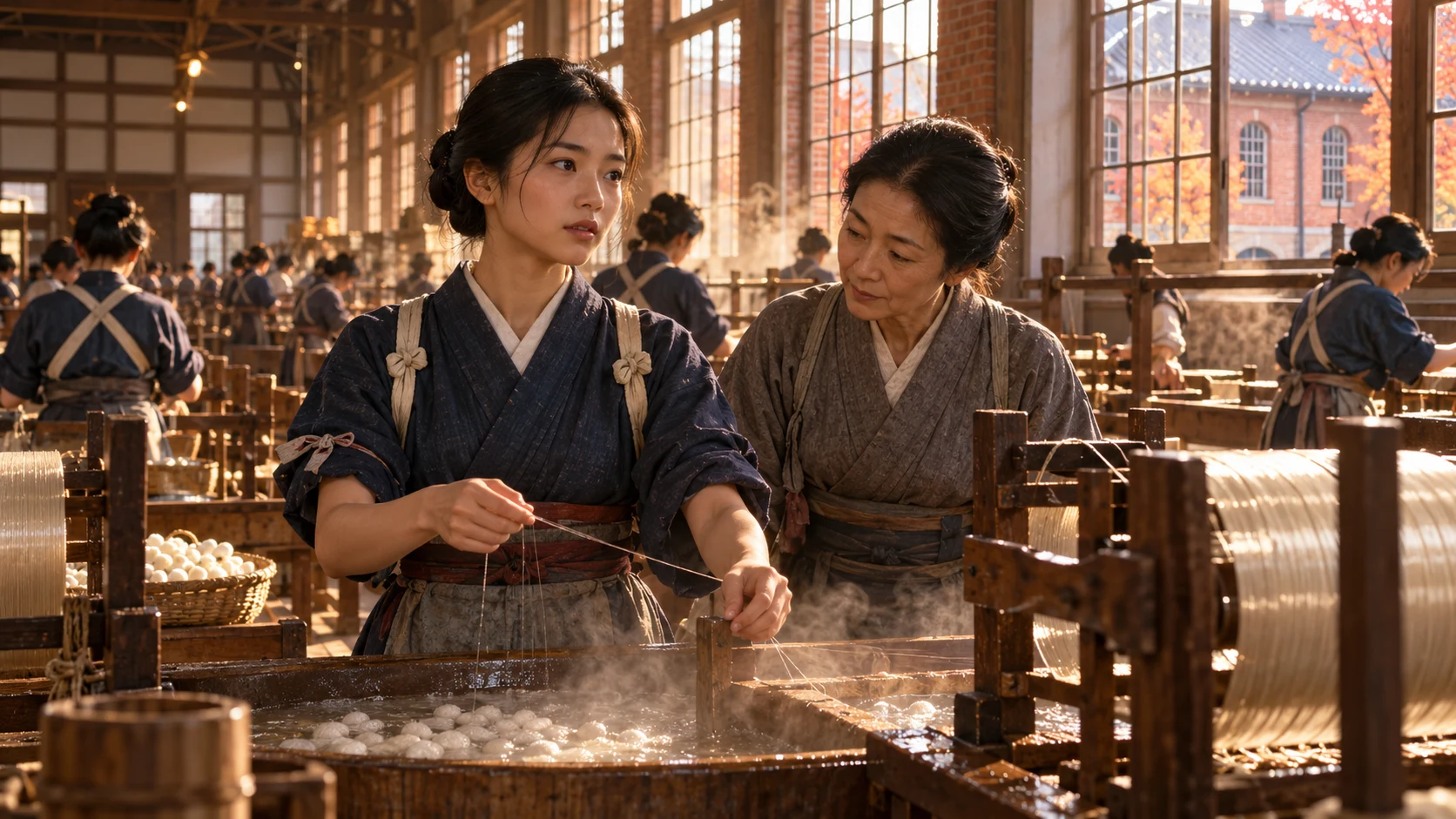
1872 · Opening of Tomioka Silk Mill · Tomioka, Gunma
Hands that learn to reel silk
Learning at a new mill
Check the reeled silk and explain the stages to another learner.
The thread has broken. What needs checking before work resumes?
Begin the storyPreparing your story…
Explore the diagram: Cocoons, the mill and the spread of skills
Cocoons, the mill and the spread of skills
Is installing machinery enough to change silk production elsewhere?
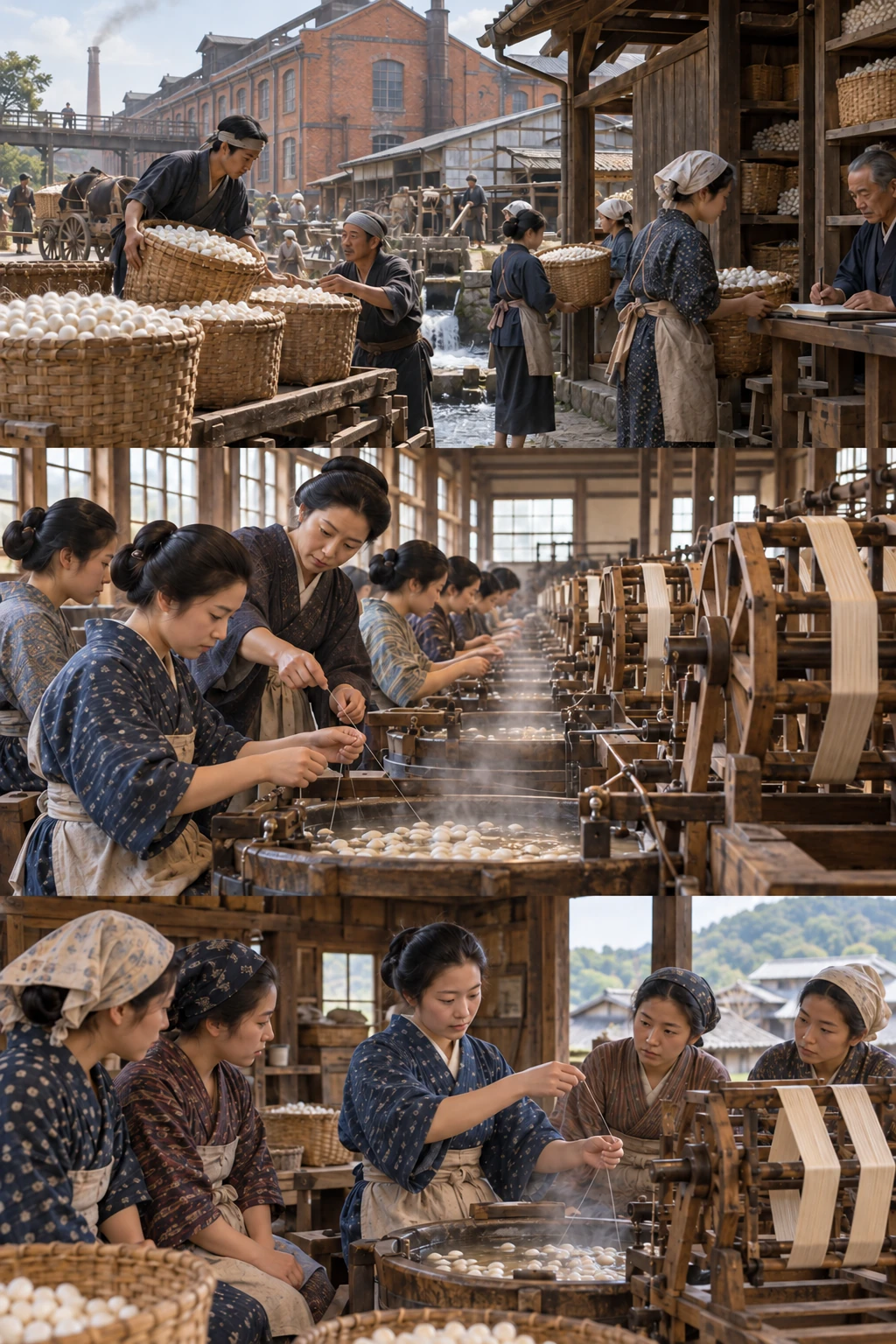
Materials and water feed into mechanical production.
Raw materials and quality support exports
Rising raw-silk exports made quality improvement important. Cocoon supply and water affected the mill’s location; machines required supporting conditions.
Sources and scope
These illustrations explain processes and institutions rather than reconstructing actual people, buildings or layouts. Cutaways and insets show hidden structures or separate locations.
History of Tomioka Silk Mill ↗Workers Haru and Mine, their mistakes, teaching scenes and dialogue are fictional. The sequence simplifies documented basic processes. The winding alignment is a conceptual model, not an operating instruction or actual adjustment setting for 1872 machinery.
Explore the time and placeSources
- Understanding Tomioka Silk Mill ↗
富岡市 · Purpose, location, opening, training, Wada Ei and operational history.
- Tomioka Silk Mill and Related Sites ↗
UNESCO世界遺産センター · The connected sites for reeling, sericulture, education and egg storage.
- The silk industry ↗
群馬県 · Basic stages including sorting, cooking, reeling and re-reeling. This modern process explanation is not treated as a detailed 1872 operating manual.