Eighth–ninth centuries
Walking Borobudur
Terraces and stone reliefs connect a Buddhist monument in Java with its conservation.
Moving through a stone monument
Built around a hill under the Shailendra dynasty, the monument rises from base and square galleries to three circular platforms and a great stupa. Worshippers followed reliefs upward. Its changing forms are interpreted through Buddhist realms of desire, form and formlessness: a route lies within the mountain-like outline.
Reliefs and ascending levels
Gallery reliefs unfold as narrative scenes; openwork stupas enclose Buddha images on the upper circular platforms. Space changes from following stories to approaching images. Nearby Mendut and Pawon also align with the monument. One relief photograph cannot convey its sequence or wider architectural setting.
Conservation against rain
The 1973–1983 restoration reused mainly original stones while treating structure and drainage. Ash from Mount Merapi posed another threat in 2010. Preserving stone requires both retaining material and addressing the environmental causes of damage.
Before and after
- Eighth–ninth centuries
Construction period.
- 1973–1983
International restoration project.
- 1991
World Heritage inscription.
Key terms
- Relief
- Sculpture projecting from a surface.
- Stupa
- A tower-like Buddhist sacred structure.
- Drainage
- Systems carrying rainwater away.
What supports the account?
Square lower and circular upper terraces offer different views. Movement along passages helps explain the structure.
The eighth- to ninth-century monument, terraces, reliefs and drainage-related restoration. The international conservation project and completion in 1983 stated in the official publication description.
Shape alone cannot reconstruct every visitor’s experience.
Reliefs contain people, tools and buildings selected for narratives. Clues to life are not documentary photographs.
The eighth- to ninth-century monument, terraces, reliefs and drainage-related restoration. The international conservation project and completion in 1983 stated in the official publication description.
Reliefs are not photographs of life.
Check your understanding
Choose an answer to reveal the explanation. Return to the article and sources when you are unsure.
Sources
- Borobudur Temple CompoundsUNESCO World Heritage Centre
The eighth- to ninth-century monument, terraces, reliefs and drainage-related restoration.
- The Restoration of BorobudurUNESCO
The international conservation project and completion in 1983 stated in the official publication description.
Keep exploring
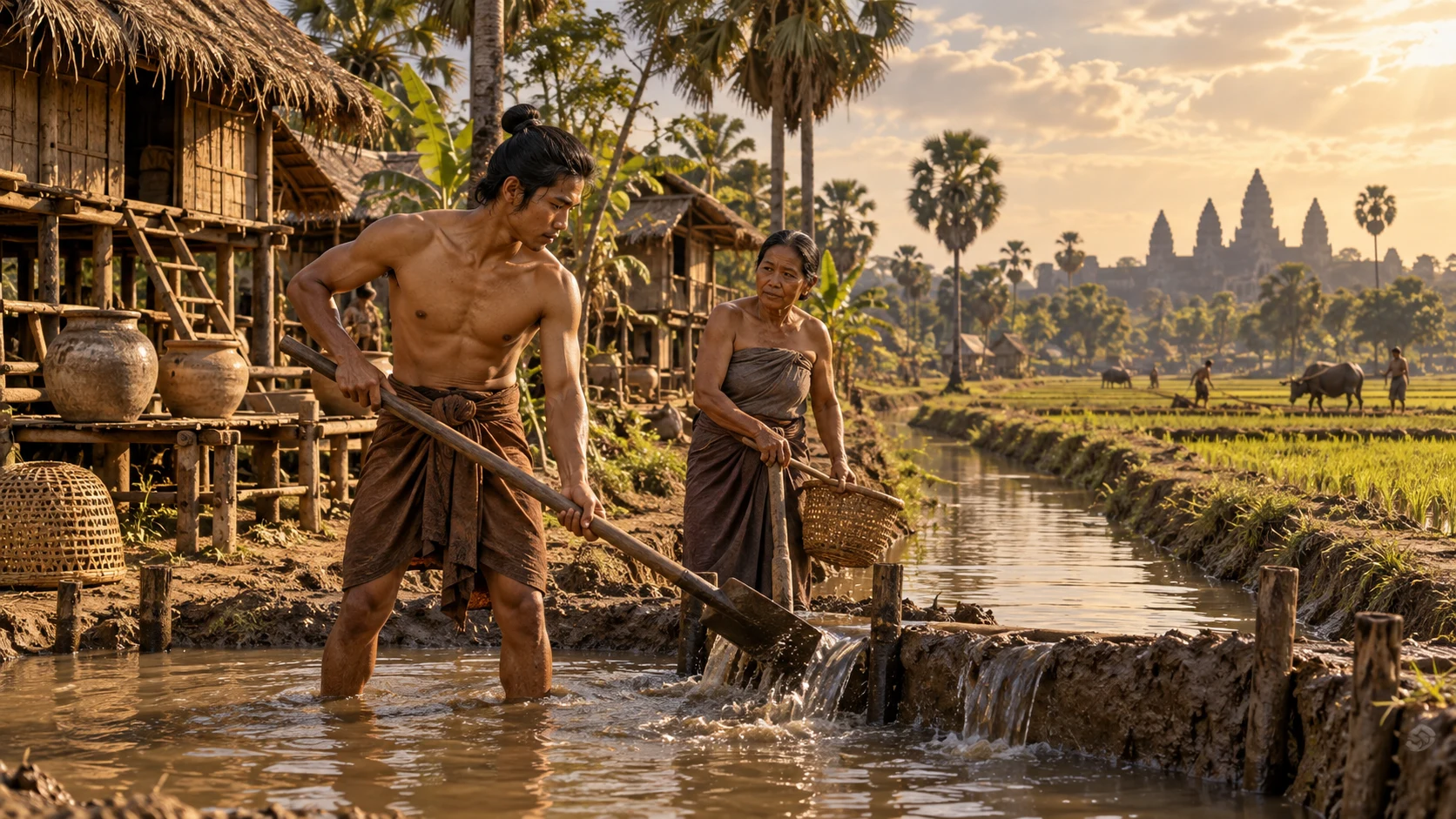
Ninth–fifteenth centuries
Water and the cities of Angkor
Beyond the temples lay a vast urban landscape of reservoirs and canals.
AngkorApril 1955
Bandung and decolonization
Asian and African delegations asserted international roles beyond the superpowers.
Bandung
690–705
Wu Zetian and Buddhist art at Luoyang
An emperor in her own right and Buddhist imagery in political life.
Luoyang