624–705
Wu Zetian
Ruler of Tang and Zhou
Ruled as empress and dowager before taking the imperial title in 690. Examine government, Buddhism and the biases of later accounts.
Turning an empress’s power into imperial rule
Wu Zetian exercised power as Gaozong’s empress and later as empress dowager. In 690 she took the imperial title and named her dynasty Zhou, moving from directing government to ruling a dynasty in her own name.
Royal relatives, officials and elite families competed for power. Opposition to female rule also shaped judgments of her career.
Imperial status governed ritual and the name under which orders were issued. Founding a dynasty changed these claims. Officials transformed them into administration; personal dominance alone could not run a large realm.
Governing through Buddhism and officials
Buddhist representations supported legitimacy, while examinations and appointments formed part of administration. Both religion and institutions matter.
Interpretations of the Great Cloud Sutra legitimized female rule, accompanied by Great Cloud temples. Religious patronage provided language and institutions for authority. It was more than evidence of a ruler’s private piety.
Luoyang gathered a court, temples, people, supplies and documents. Choosing a capital affected access to government and ceremonial settings. The new Zhou dynasty also expressed its authority through these places.
Tang restoration and hostile assessments
Wu left political power in 705 and died that year, after the Tang name was restored. Later histories assessed a reign that used institutions while changing dynastic order. Female rule also existed in seventh-century Japan under Jitō and others, but succession and administrative conditions differed.
Luo Binwang’s denunciation records an opponent’s political language, not proof of every allegation. Attacks on female rule shaped reputation. Distinguish hostile claims from independently supported actions.
Turning points
- 624
Born.
- 655
Became Gaozong’s empress.
- 683
After Gaozong’s death, exercised power as empress dowager.
- 690
Took the imperial title and established Zhou.
- 705
Lost the throne and died the same year.
Their legacy
Official recruitment and Buddhist patronage supported her government. After the Tang name returned in 705, histories and later stories continued to contest the memory of a female emperor.
Related history

690–705
Wu Zetian and Buddhist art at Luoyang
An emperor in her own right and Buddhist imagery in political life.
Luoyang
From the second century BCE through the medieval period
The Silk Roads were a network
Goods, languages and skills moved through connected land and sea routes.
Eurasian and Indian Ocean trade networksSources
Smithsonian National Museum of Asian Art · Wu Zetian’s dates, Tang and Zhou, and examination context.
Asian Art Museum, San Francisco · Accession in 690, Buddhism and hostile accounts.
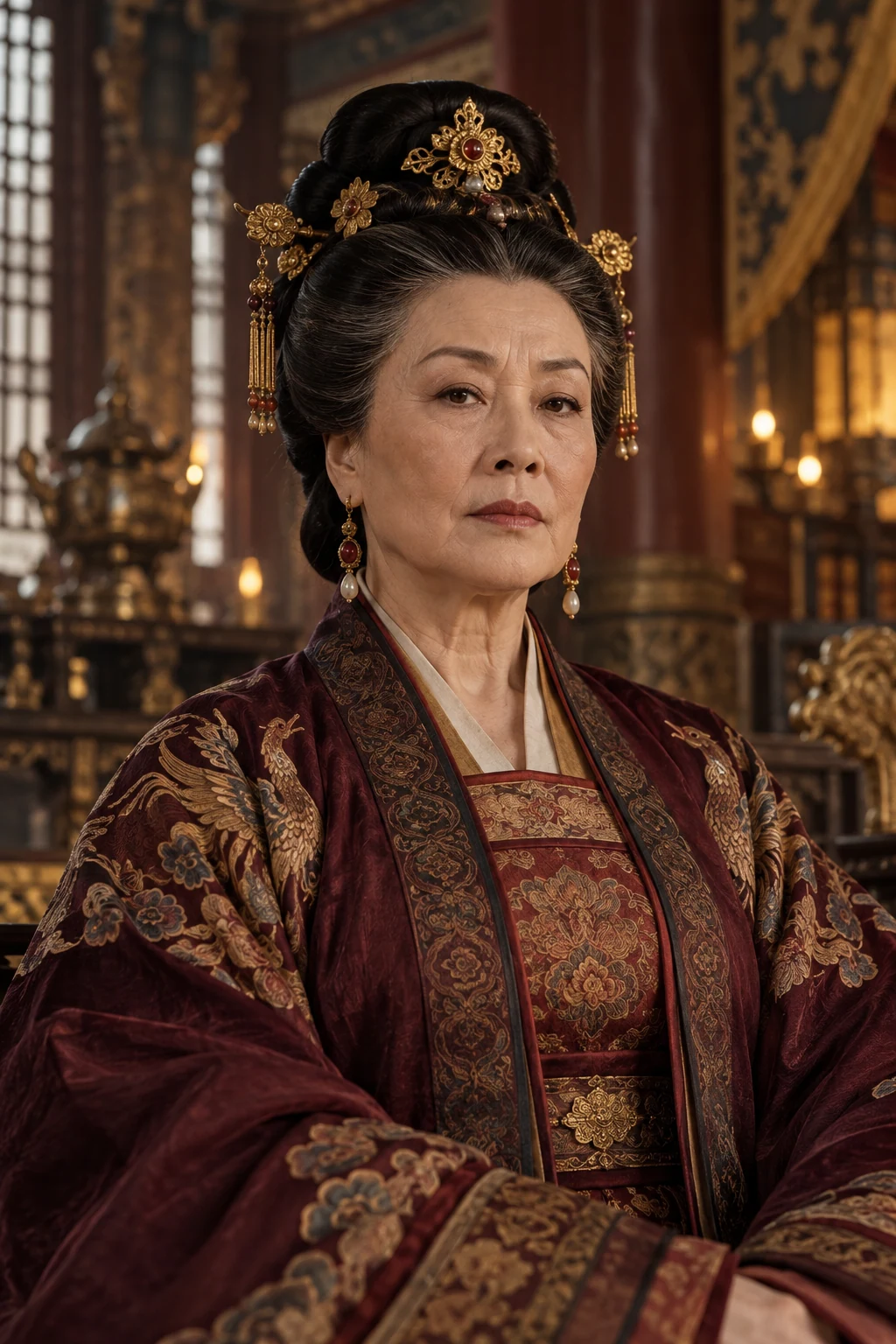
The portrait is an original historical imagining, not evidence of the person’s appearance.