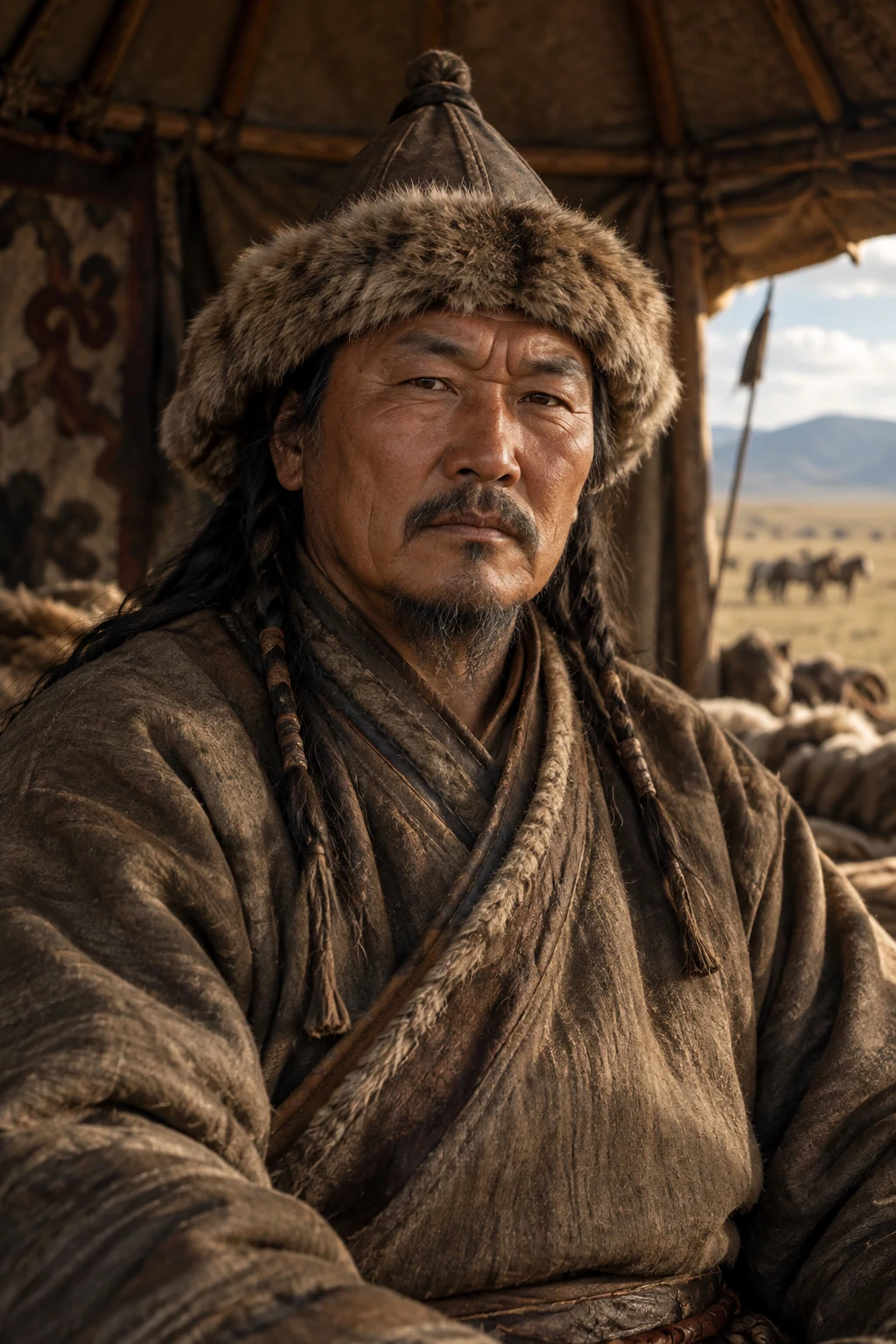
Birth year debated–1227
Genghis Khan
Founder of the Mongol Empire
Unified steppe groups in 1206. Study the devastation of conquest alongside the later movement of people, goods and technology.
From steppe alliances to territorial rule
After alliances and conflict, Temujin became Genghis Khan in 1206. Bringing groups under shared command enabled conquest beyond the steppe. Capturing cities then required governing people and institutions different from pastoral communities.
Campaigns from northern China into Central Asia demanded continuing supply. Taking settled cities differed from subordinating steppe groups. Command and recruitment of local expertise became linked as expanding conquest also made government more complex.
Urban government and forced movement
Conquests in northern China and Central Asia brought mass death, destruction and forced migration. Seized resources and displaced specialists could strengthen rulers while devastating communities.
Governing conquered cities required revenue and administrative expertise. Mongol rulers used local systems and officials beneath their own leadership. Effective conquest and management of settled societies were different tasks.
Movement of craftspeople and techniques changed art after conquest, but included coerced relocation. Rulers gained expertise while workers could lose homes and family connections. New combinations arose through both transport networks and the force used to move people.
Expansion and communication after his death
The greatest extent came after his death. Khubilai’s Yuan and Hülegü’s campaigns belong to later generations. Distinguishing a founder’s lifetime from subsequent expansion prevents an empire map from becoming a misleading personal itinerary.
Relay stations and passes supported movement of messages and envoys. Horses and provisions at stations mattered as much as riders. Later Mongol networks connected military command, diplomacy and commerce through an institutional transport system.
“Mongol peace” describes extensive communication and trade in a period, not a universal absence of violence. Destructive conquest and subsequent movement occurred under different conditions. Rule established by force also maintained routes used by new travelers and goods, connecting losses and expanded exchange across time.
Turning points
- Late twelfth century
Born as Temüjin; the year is disputed.
- 1206
Gained the title Genghis Khan.
- 1215
Captured Zhongdu, capital of Jin.
- Around 1220
Conducted conquests in Central Asia.
- 1227
Died.
Their legacy
Conquest and forced migration caused lasting losses; incorporated people and techniques also reshaped successor states. Imperial transport and exchange developed from that violent expansion.
Related history
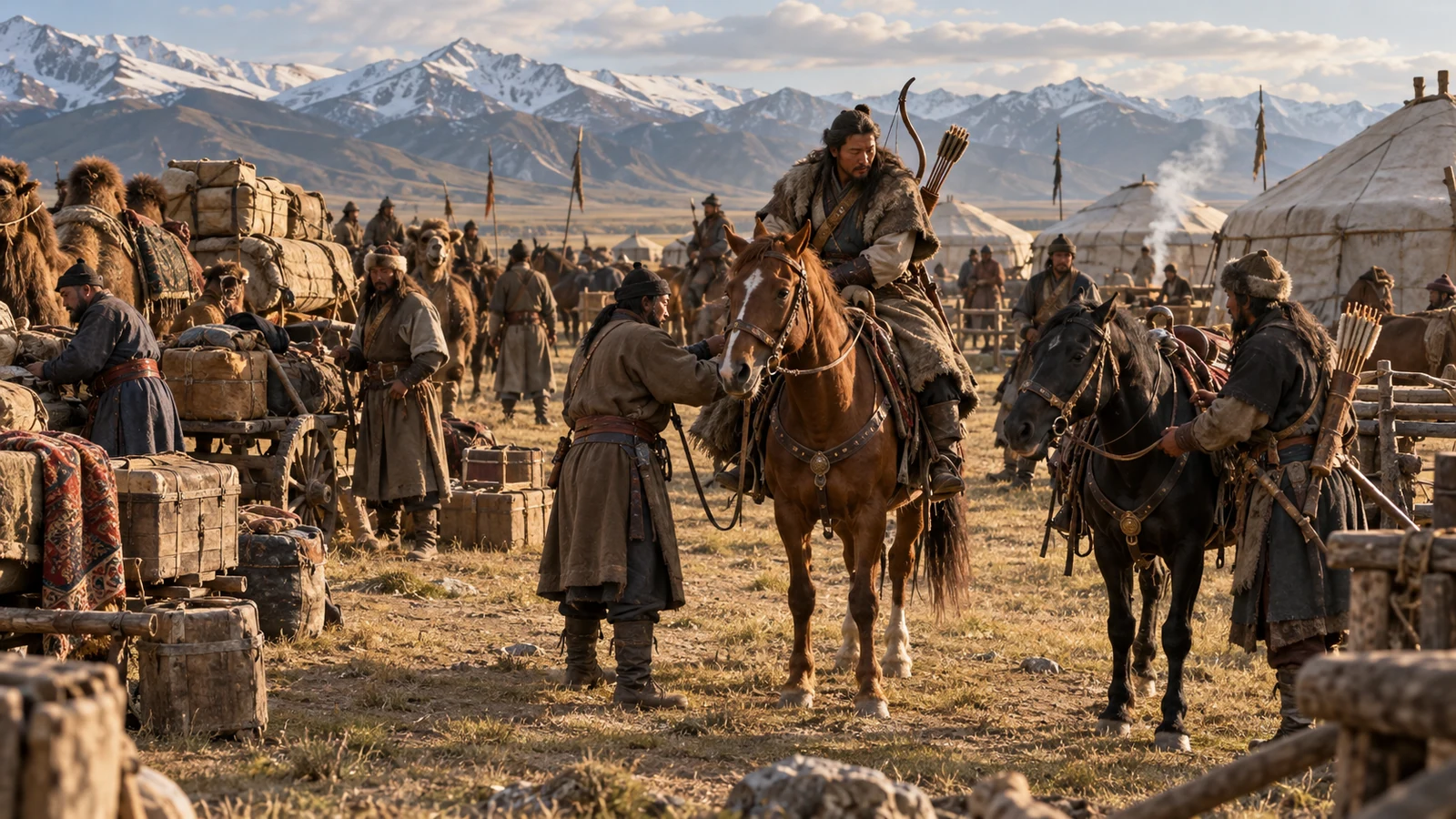
Mainly 1206–1368
Routes and people in the Mongol Empire
Read the violence of conquest alongside exchanges across imperial space.
Karakorum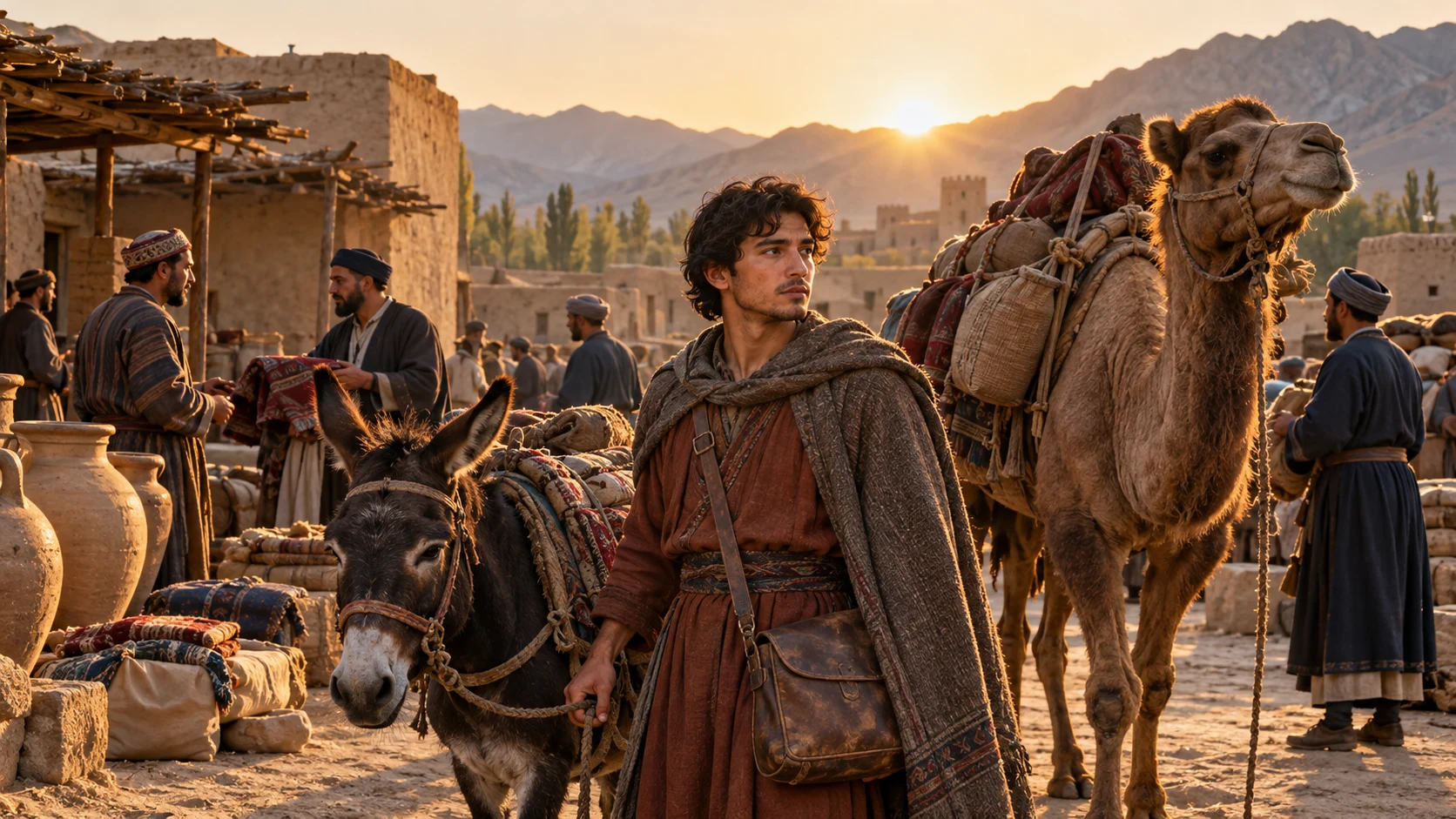
From the second century BCE through the medieval period
The Silk Roads were a network
Goods, languages and skills moved through connected land and sea routes.
Eurasian and Indian Ocean trade networksSources
The Metropolitan Museum of Art · Destructive conquest, successor states and cultural exchange.
British Museum · The reign in 1206–1227 and westward expansion.
The portrait is an original historical imagining, not evidence of the person’s appearance.