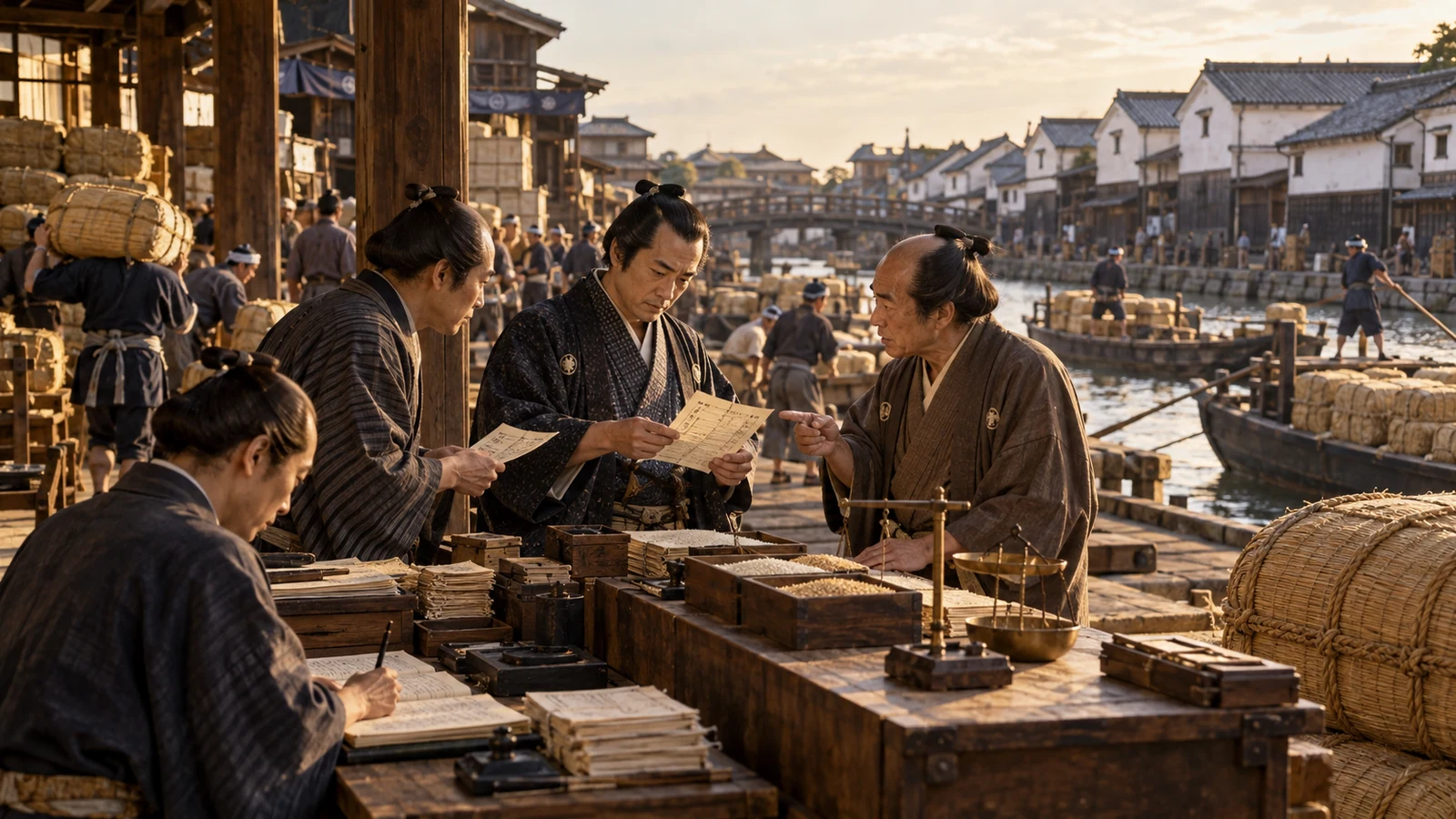
1730–1869 · Dōjima rice market
Setting prices in a city receiving rice
Domain warehouses, rice receipts and contracts connected rice to money in Osaka.
Trading a rice bill while the rice stays put
Does acquiring a bill mean the rice bales have already arrived?
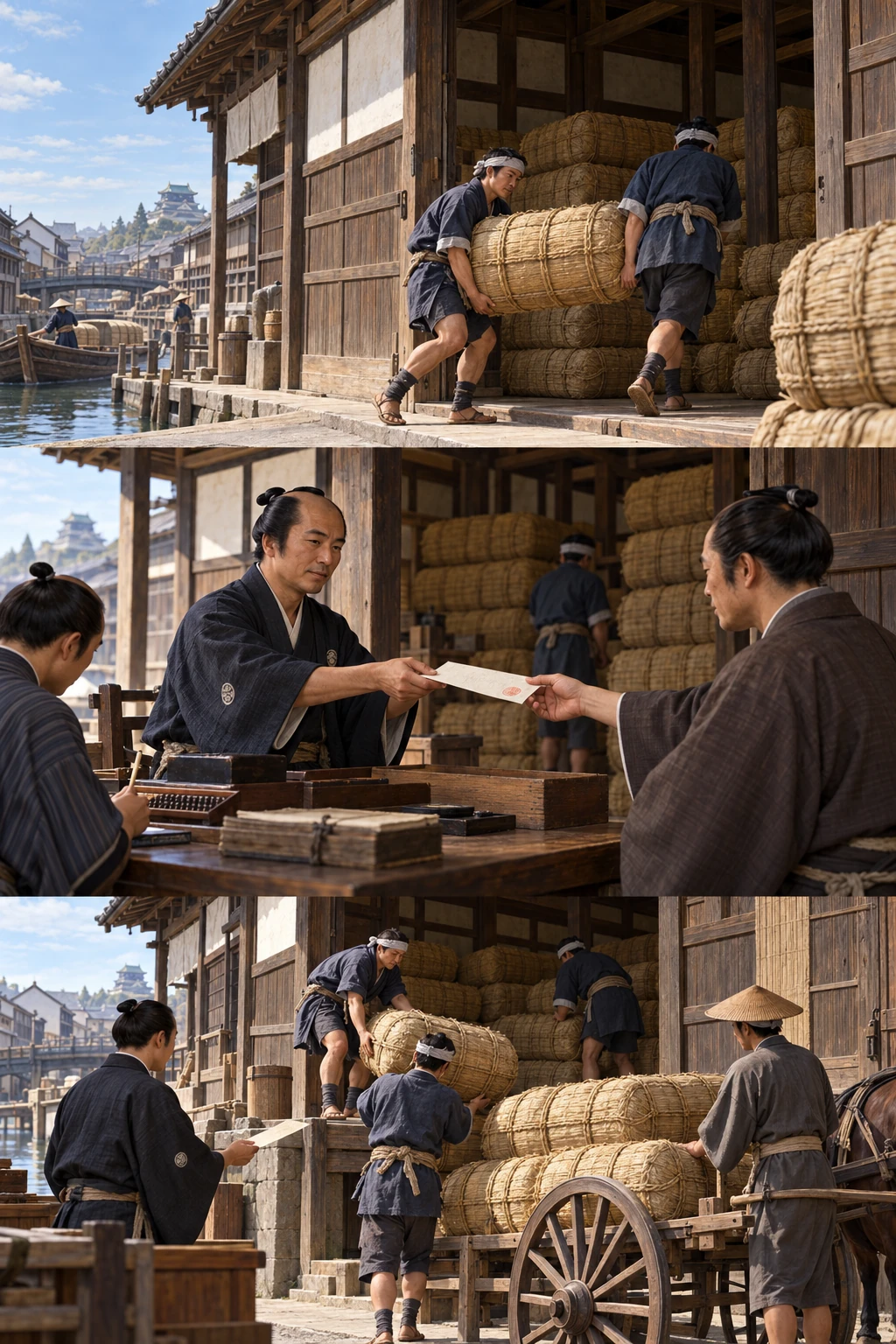
The rice is held in the warehouse.
A place to sell tax rice
Domains brought tax rice to cities such as Osaka and sold it from warehouses. Raising funds depended on transporting and storing the same goods.
Sources and scope
These illustrations explain processes and institutions rather than reconstructing actual people, buildings or layouts. Cutaways and insets show hidden structures or separate locations.
Dojima rice exchange ↗Rice reaches domain warehouses
Domains sent tax rice to Osaka warehouses and sold it for revenue. Production and wholesale selling occurred in different places, requiring transport, storage and auction. The concentration of warehouses at Nakanoshima connected regional crops with an urban market.
Rice bills promised delivery and could themselves be traded. A claim could move without moving the bales after every sale. That depended on identifiable promises and organised dealings, connecting warehouse stocks with documentary rights.
Delivery claims and future contracts
In 1730 the shogunate authorised spot dealings in rice bills and book-entry futures in representative rice. Both involved documents but were not identical transactions. Distinguishing delivery claims from future contracts explains the coexistence of two markets.
Book-entry rice dealings used opposite trades and settlement of price differences rather than moving bales for every transaction. Expiry and clearing arrangements prevented promises simply accumulating. Prices were also linked to the spot market, connecting the book-entry system with underlying rice dealings.
Trade at Dōjima preceded authorisation in 1730 after relocation around 1697. Commercial congregation and recognised organisation were distinct; political concern with rice prices joined merchants’ trading interests.
Prices travel beyond the city
Couriers and flag signals carried Dōjima prices to other cities. Information moved as well as goods, informing decisions beyond the riverside market. Its influence depended on those communications, not only the trading location.
Trading was prohibited in 1869 and revived in 1871, rather than continuing unchanged. A widely used price reference did not guarantee equal benefits. Producers, carriers, domains and traders held different interests and bore different costs.
Before and after
- c. 1697
The rice market moves from Kitahama to Dojima.
- 1730
The shogunate recognises spot and futures markets.
- 1869
The Meiji government prohibits trading.
- 1871
Rice trading resumes in Dojima.
Key terms
- Domain warehouse residence
- A domain facility receiving and selling supplies such as rice.
- Rice receipt
- A document promising receipt of rice, including claims concerning rice not yet arrived or future harvests.
- Book-entry rice futures
- Book-entry dealings in future rice transactions.
What supports the account?
Different trading forms were authorised in 1730.
Osaka distinguishes spot and futures dealings.
Do not describe both as exchanging physical bales every time.
Market depictions differ from price records.
The exchange and library present prints and maps.
A lively scene cannot establish everyone’s income.
Check your understanding
Choose an answer to reveal the explanation. Return to the article and sources when you are unsure.
Sources
- Dōjima rice market site大阪市
Authorisation in 1730, spot and futures dealings, and national prices.
- Dōjima rice market日本取引所グループ
Warehouses, trading organisation, receipts and the 1869 suspension.
- Markets of Osaka国立国会図書館
Changes in the market and its depiction in prints and maps.
- Dojima Rice Exchange日本取引所グループ 大阪取引所
Warehouse auctions and bills, membership and clearing, courier and flag signals, prohibition and revival.
- Markets and securities in history, part 21日本取引所グループ
Opposite trades, cash-difference settlement, expiry and pricing linked to the spot market.
Keep exploring
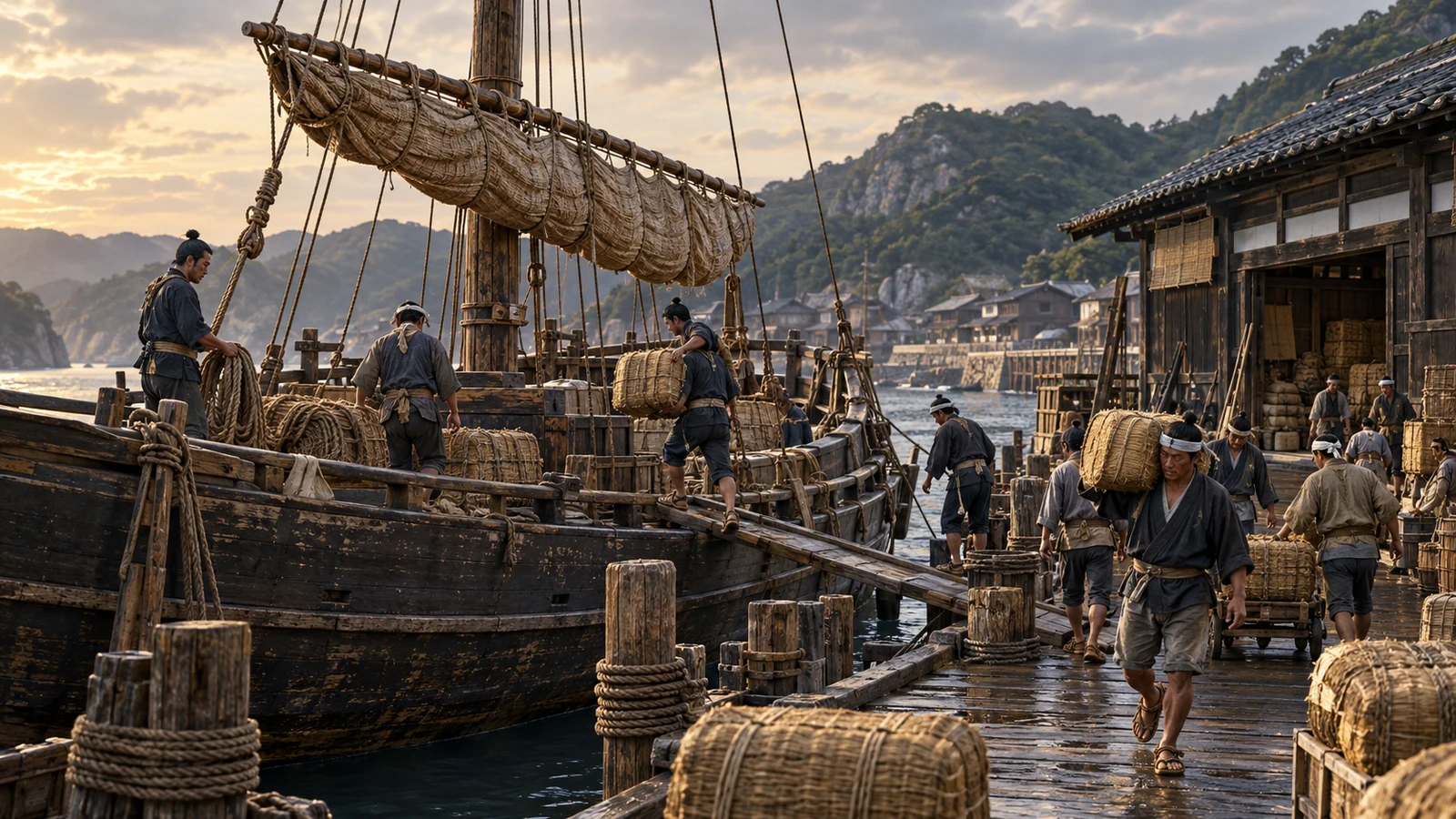
Eighteenth century–mid-Meiji · Sea of Japan routes
Trading at each port aboard a kitamae ship
Rice, kelp, herring and used clothes: voyages profited from trading, not only freight.
Hashitate, Ishikawa / Ishikari, Hokkaidō / Osaka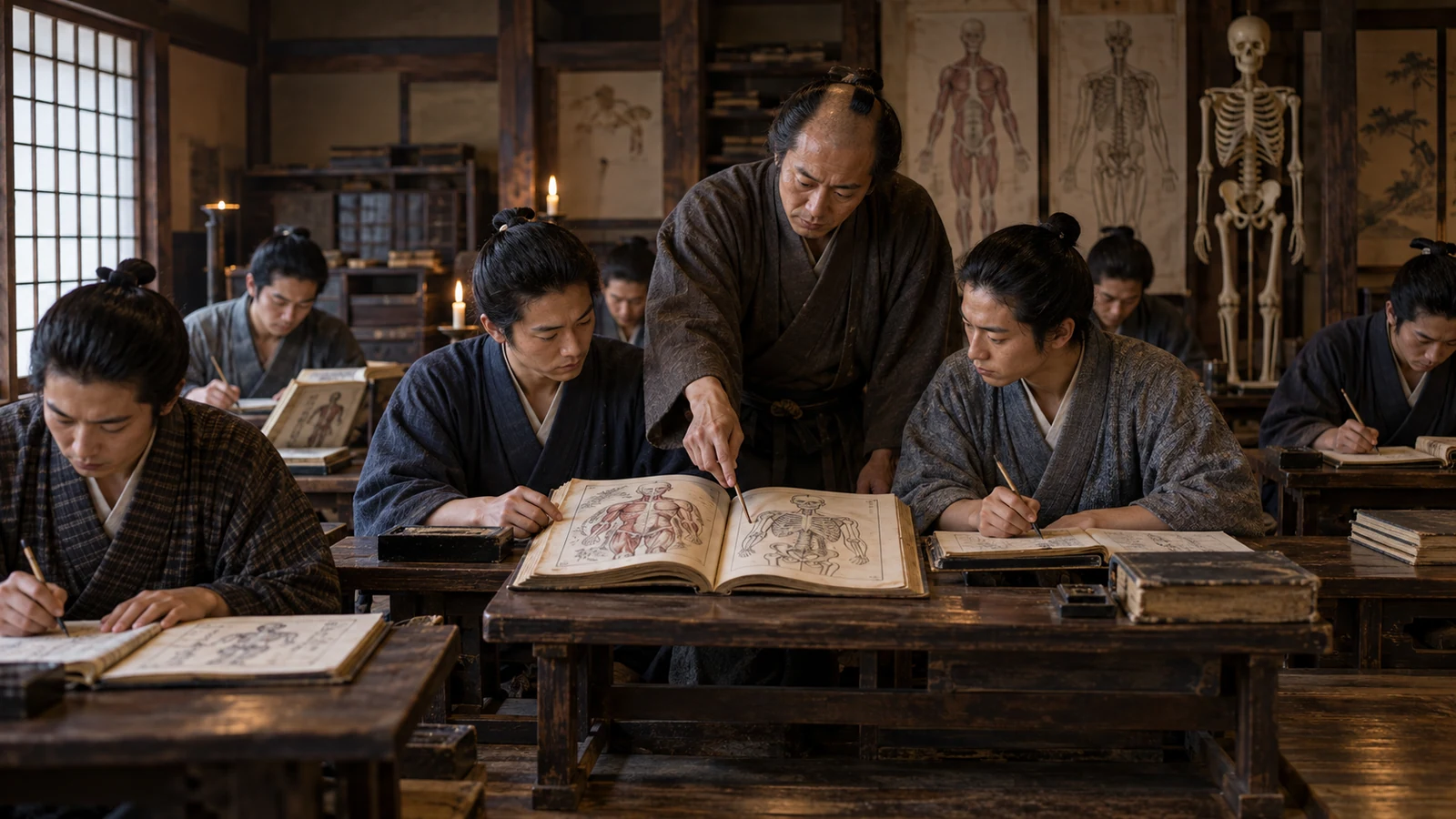
1838–1862 · Ogata Kōan and Tekijuku
Reading medicine at Tekijuku and treating the town
Students reading Dutch texts and doctors addressing disease connected learning to public life.
Kitahama, Osaka
645–701 · From coup to legal codes
The Taika reforms were not a single-day change
Separate the assassination of Soga no Iruka from the later formation of state institutions.
Asuka, Nara / Naniwa, Osaka