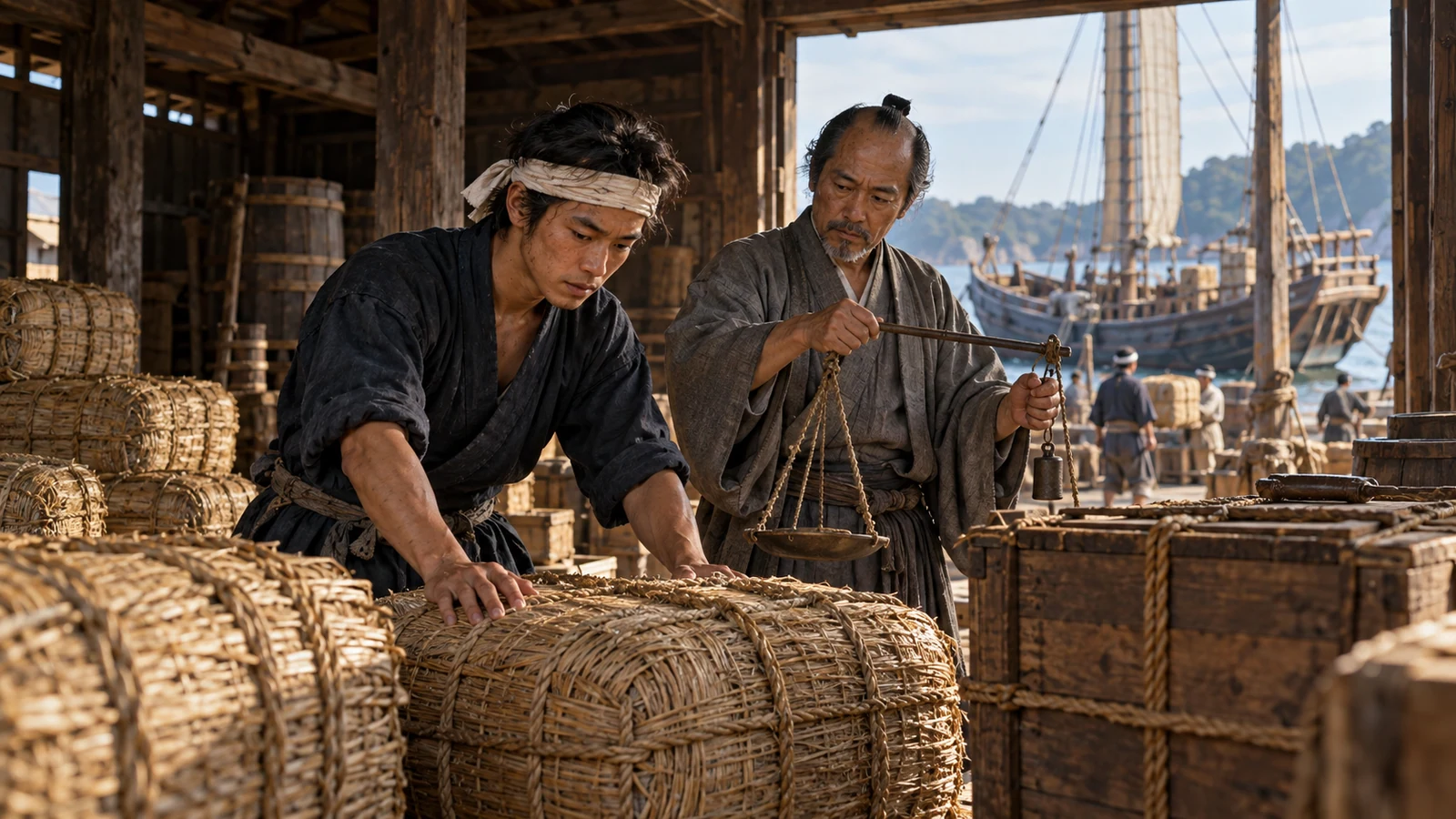
Around 1840 · A Sea of Japan port · Coastal ports and a trading ship
Sell one cargo and load another
Ren, a kitamae sailor
Check the cargo and the goods sold and bought at the next port.
The trade is more than transport: cargo is sold and different goods are bought.
Begin the storyPreparing your story…
Explore the diagram: A shipowner can also be the merchant
A shipowner can also be the merchant
Do freight carriage and buying cargo for resale earn money in the same way?
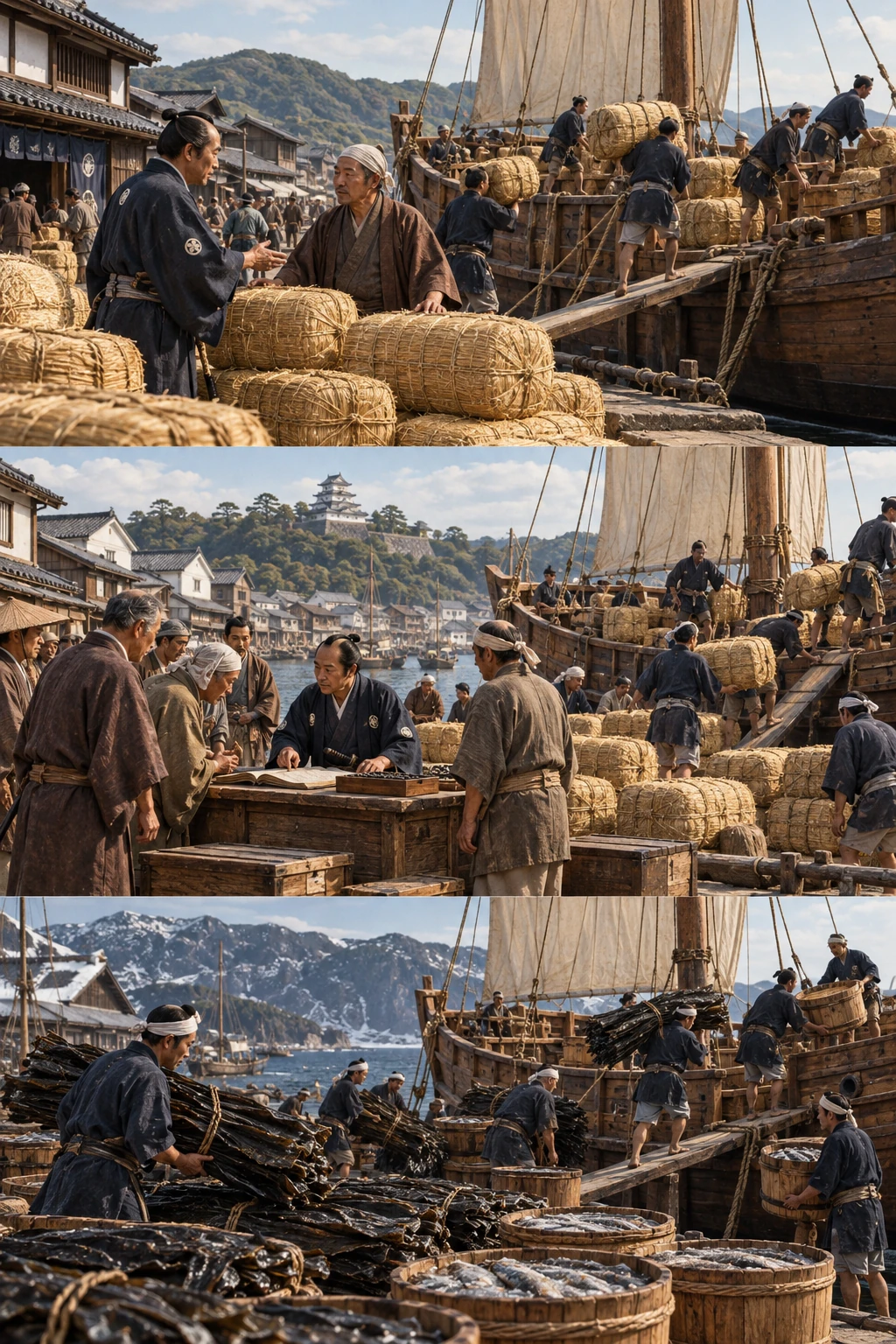
Purchasing cargo requires money before resale.
The shipowner owns the cargo
In buying-and-selling voyages, shipowners purchase cargo for resale. This differs from carrying someone else’s goods for a freight payment.
Sources and scope
These illustrations explain processes and institutions rather than reconstructing actual people, buildings or layouts. Cutaways and insets show hidden structures or separate locations.
Kitamae ship museum ↗Kitamae heritage ↗Ren, twenty-two, the cargo master, merchants, cargo damage and port decisions are fictional. Route and allocation numbers are game conditions, not prices, days or ship capacity.
Explore the time and placeSources
- Kitamae ship museum ↗
加賀市 · Owner-trading versus freight, chronology and routes.
- Kitamae ports and shipowner settlements ↗
文化庁・日本遺産 · Trading on both legs, commodities and port heritage.
- Kitamae ships ↗
石狩市 · Routes between Matsumae and Osaka, owner-trading and changing vessel forms.