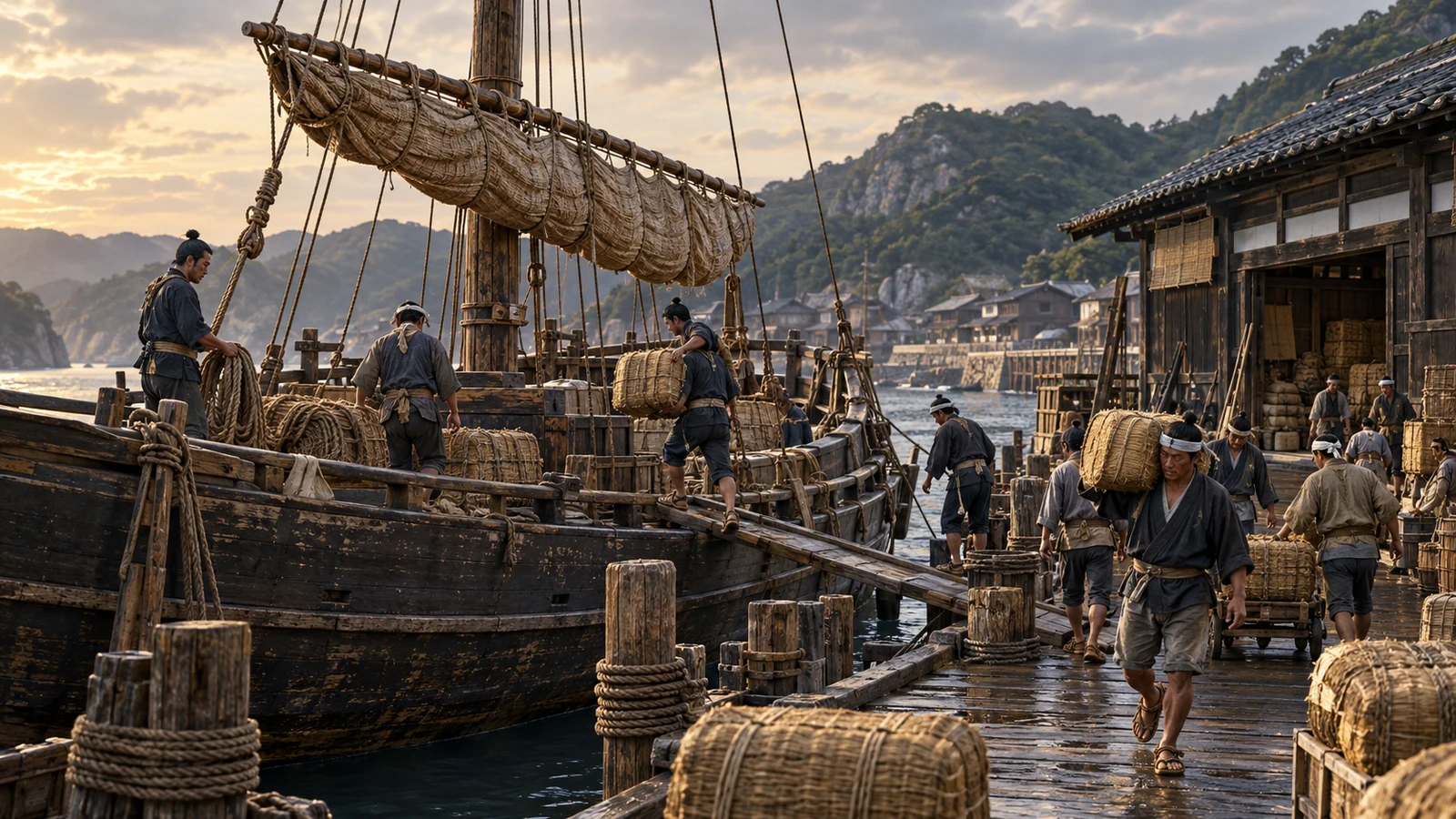
Eighteenth century–mid-Meiji · Sea of Japan routes
Trading at each port aboard a kitamae ship
Rice, kelp, herring and used clothes: voyages profited from trading, not only freight.
A shipowner can also be the merchant
Do freight carriage and buying cargo for resale earn money in the same way?
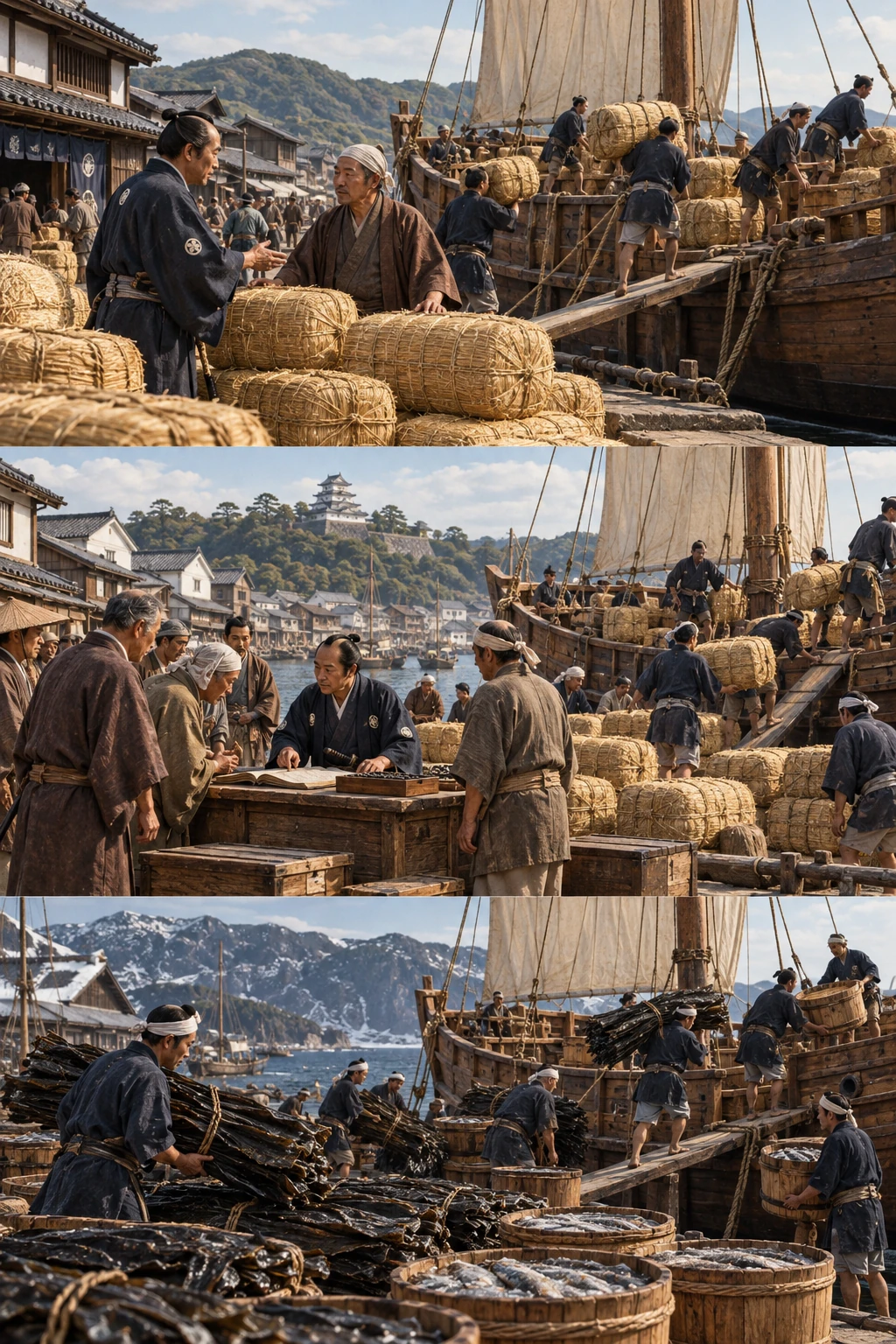
Purchasing cargo requires money before resale.
The shipowner owns the cargo
In buying-and-selling voyages, shipowners purchase cargo for resale. This differs from carrying someone else’s goods for a freight payment.
Sources and scope
These illustrations explain processes and institutions rather than reconstructing actual people, buildings or layouts. Cutaways and insets show hidden structures or separate locations.
Kitamae ship museum ↗Kitamae heritage ↗Freight and trading are different businesses
Kitamae owners bought and sold their own cargo rather than relying only on freight charges. Herring used as fertiliser in western Japan and used clothing sold northwards met different regional demands. Safe navigation and decisions about where to buy and sell jointly determined the results of a voyage.
Ports enabled unloading, storage and renewed loading, linking sea routes with production and urban trade. A single line between Osaka and the north identifies a route while omitting intermediate business. The voyage depended on more than its endpoints.
Kawamura’s western route of 1672 extended sea transport around Shimonoseki toward Osaka, differing from transshipment through Tsuruga and Lake Biwa. Route choice affected handling and trading opportunities.
Kitamae identifies routes and business while benzaisen describes vessel form. Ishikari distinguishes Edo-period activity at Matsumae ports from local contractor vessels. Similar ships did not automatically undertake identical trade.
Different uses create price differences
Herring from Hokkaidō found demand as fertiliser for cotton in western Japan, while used clothing travelled north. Regional differences in production, supply and use created trading opportunities. Treating every marine cargo simply as food misses why some goods moved such long distances.
Trading on both legs was called saw-like trading. Buying cargo did not guarantee profit: a lower selling price reduced returns, and shipwreck threatened goods and lives. Successful owners’ houses show outcomes, while price risk and maritime danger explain the conditions of earning them.
Wealth and labour in port towns
Merchant buildings, handling sites, votive ship pictures and festivals preserve different traces of the routes. Movement of people also transmitted practices, but similar festivals do not establish a single ship or year of transmission. Separate dates and records reveal overlapping exchanges.
An owner’s house documents accumulated wealth, not every sailor’s earnings. Navigation, handling and selling involved different positions. Distinguishing ownership, work and exposure to danger turns a streetscape from a list of grand buildings into evidence for transport, commerce and labour.
Before and after
- 1672
Kawamura Zuiken establishes successful westward transport to Osaka.
- Edo period
Buy-and-sell voyages develop between Osaka and Matsumae ports.
- Meiji period
Changed institutions accompany expanded calls and Western sailing vessels.
Key terms
- Owner-trading
- Shipowners buying and selling their own goods.
- Freight carriage
- Carrying someone else’s cargo for a fee.
- Port of call
- A port visited during a voyage.
What supports the account?
Trading and freight have different revenue structures.
The Kaga museum describes owners trading their own cargo.
Do not classify every Sea of Japan vessel identically.
Vessel forms changed over time.
Ishikari distinguishes Japanese vessels and later Western sailing ships.
The term does not imply one immutable design.
Check your understanding
Choose an answer to reveal the explanation. Return to the article and sources when you are unsure.
Sources
- Kitamae ship museum加賀市
Owner-trading versus freight, chronology and routes.
- Kitamae ports and shipowner settlements文化庁・日本遺産
Trading on both legs, commodities and port heritage.
- Kitamae ships石狩市
Routes between Matsumae and Osaka, owner-trading and changing vessel forms.
Keep exploring
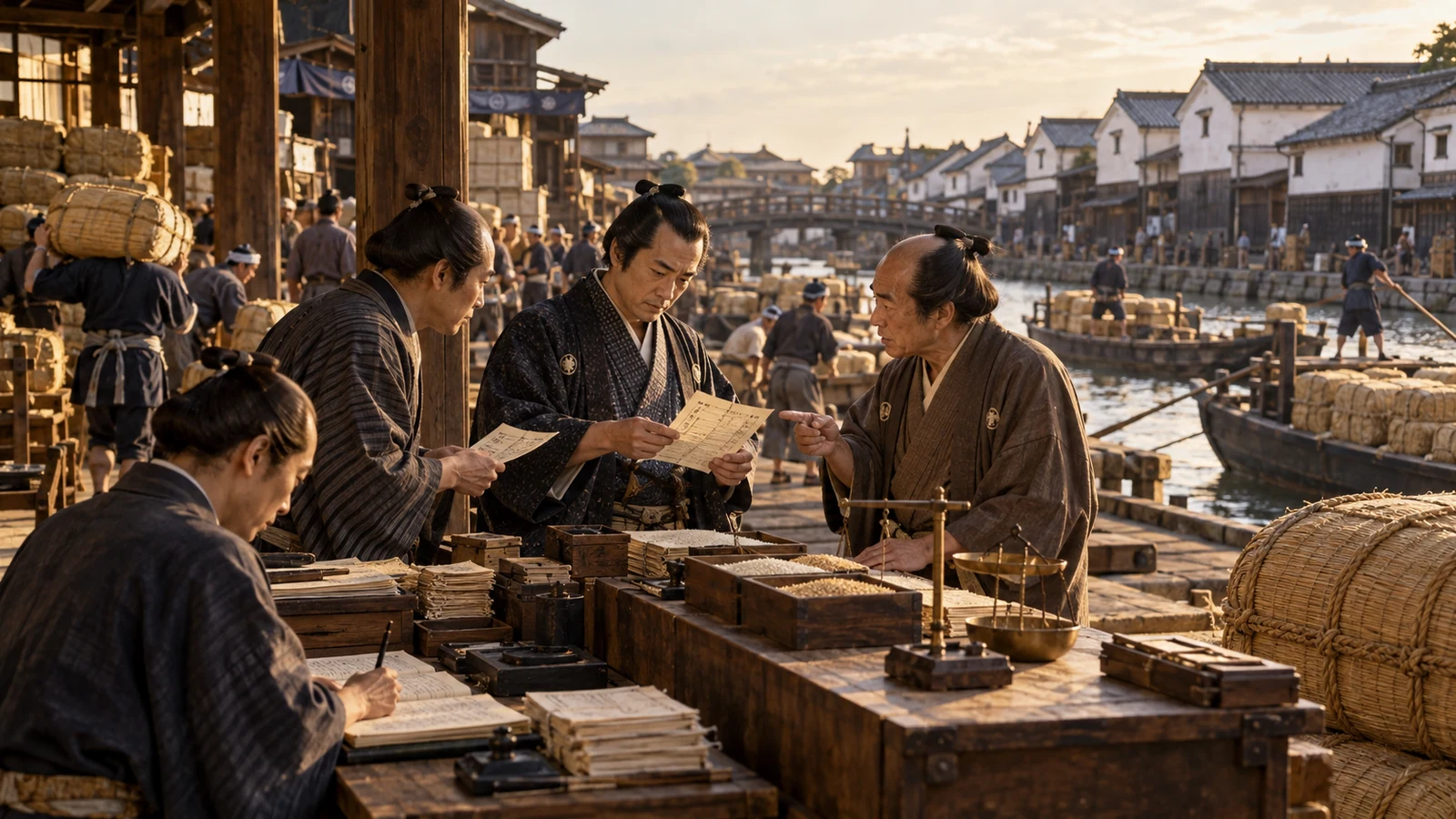
1730–1869 · Dōjima rice market
Setting prices in a city receiving rice
Domain warehouses, rice receipts and contracts connected rice to money in Osaka.
Dōjima, Osaka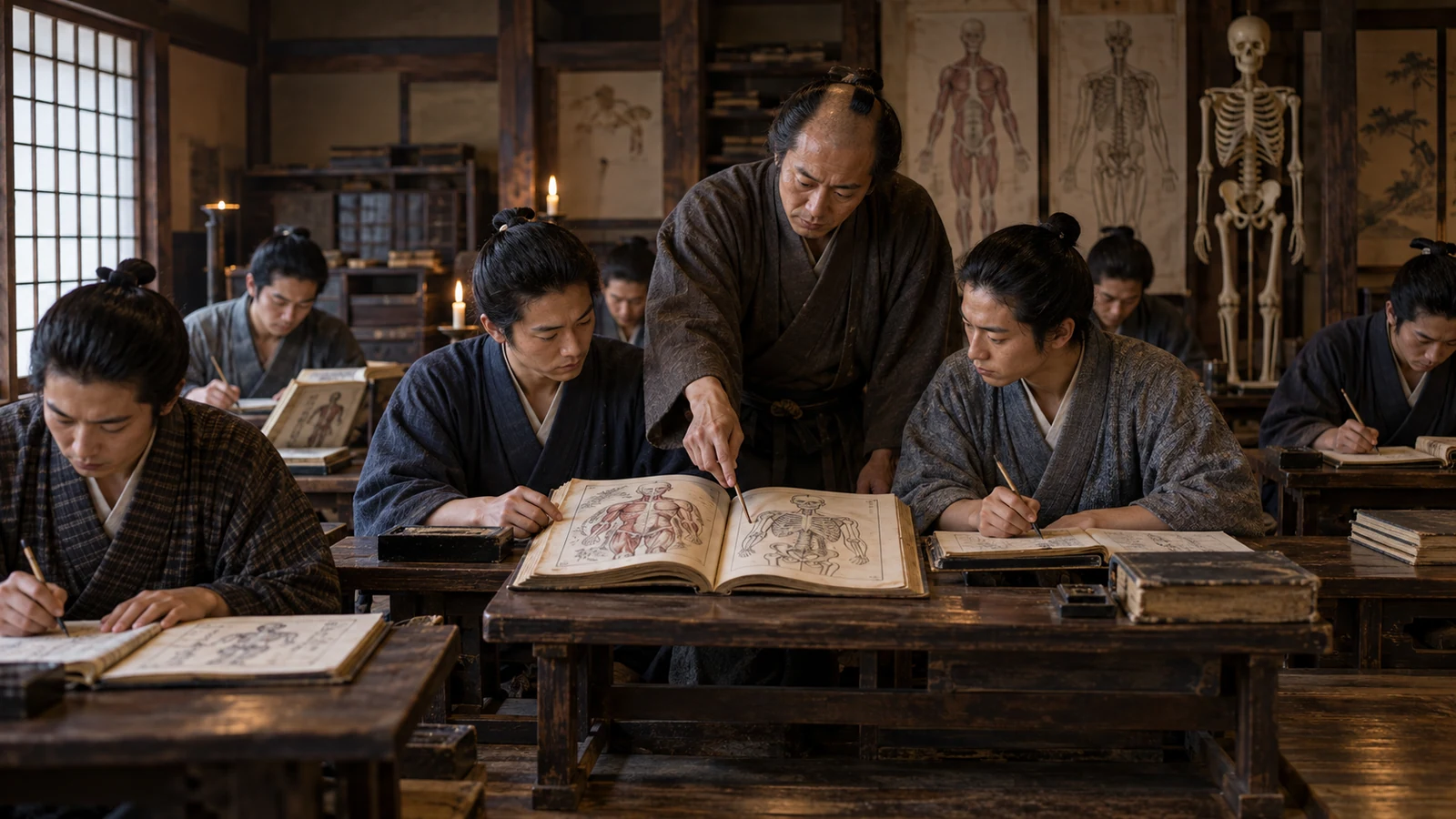
1838–1862 · Ogata Kōan and Tekijuku
Reading medicine at Tekijuku and treating the town
Students reading Dutch texts and doctors addressing disease connected learning to public life.
Kitahama, Osaka
645–701 · From coup to legal codes
The Taika reforms were not a single-day change
Separate the assassination of Soga no Iruka from the later formation of state institutions.
Asuka, Nara / Naniwa, Osaka