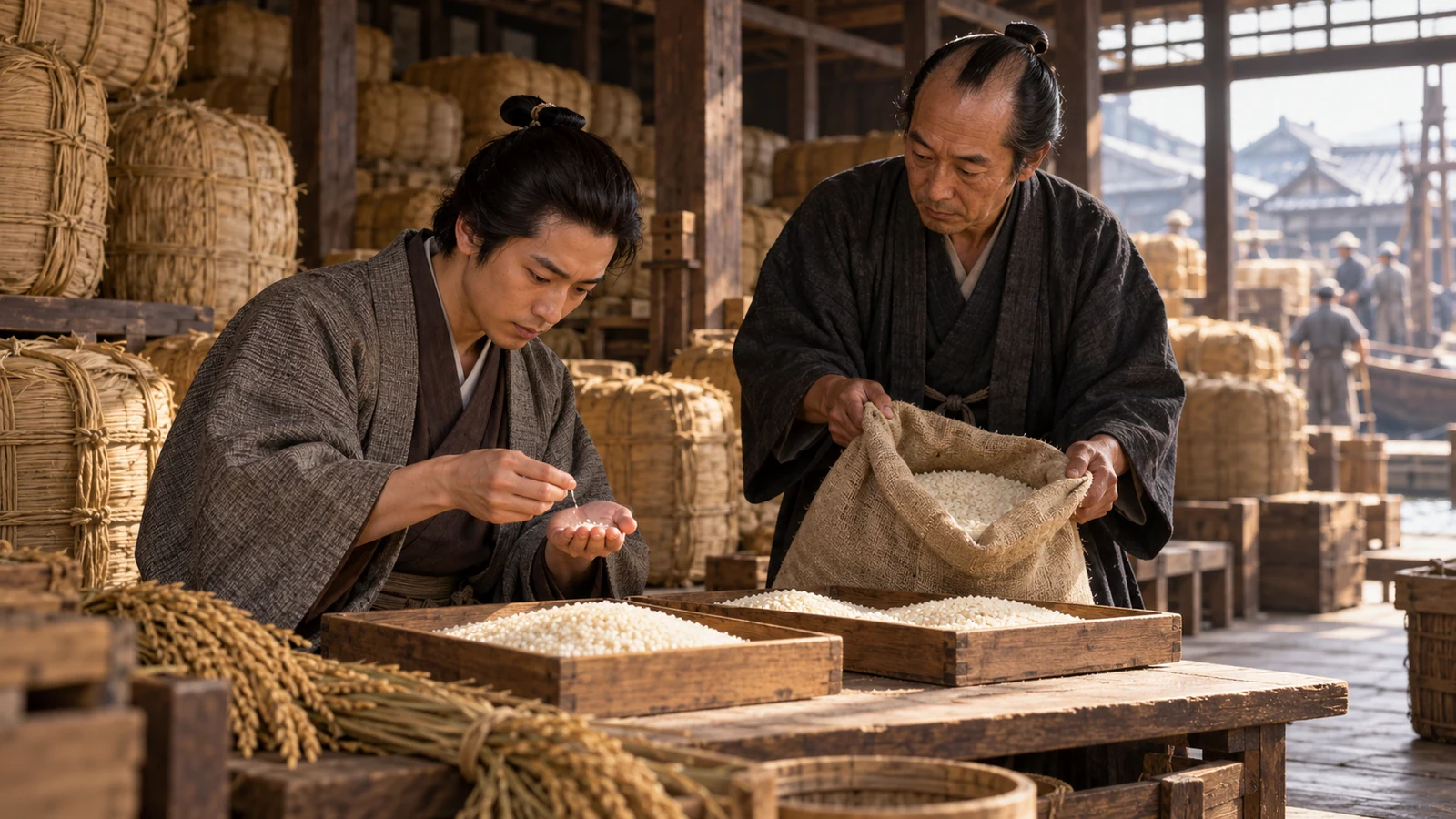
Around 1730 · Dōjima, Osaka · Warehouses, Dōjima market and the canals
A day when the bales stay put
Ichiro, an Osaka merchant’s clerk
Match the rice sample and its papers so the warehouse can trace the lot.
You hold paper; the rice it represents is still in a warehouse.
Begin the storyPreparing your story…
Explore the diagram: Trading a rice bill while the rice stays put
Trading a rice bill while the rice stays put
Does acquiring a bill mean the rice bales have already arrived?
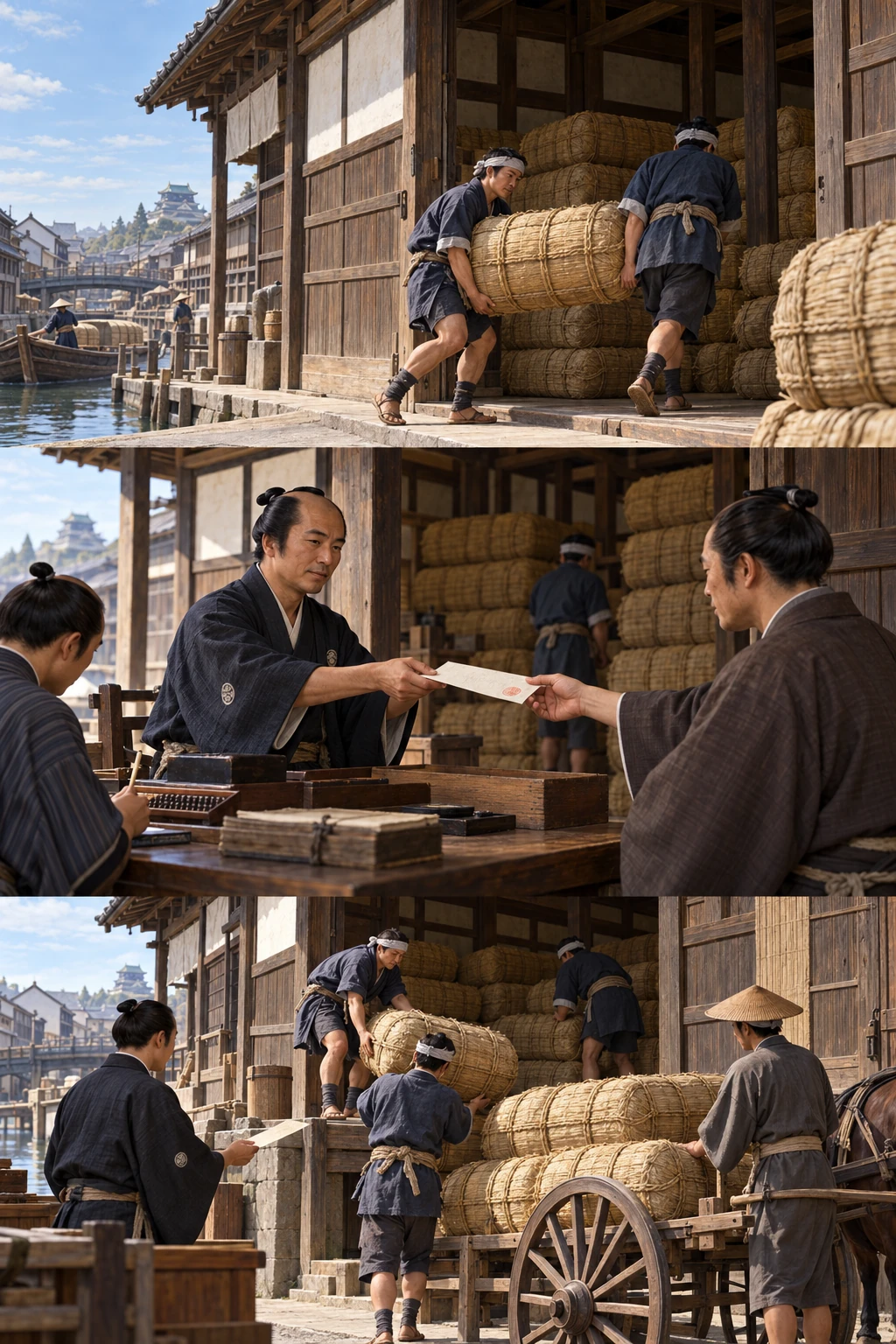
The rice is held in the warehouse.
A place to sell tax rice
Domains brought tax rice to cities such as Osaka and sold it from warehouses. Raising funds depended on transporting and storing the same goods.
Sources and scope
These illustrations explain processes and institutions rather than reconstructing actual people, buildings or layouts. Cutaways and insets show hidden structures or separate locations.
Dojima rice exchange ↗Ichiro, twenty-four, the warehouse clerk, brokers and dealings are fictional. Illustrated papers are not copies of actual receipts. Allocation and route numbers are game units, not rice prices or contract quantities.
Explore the time and placeSources
- Dōjima rice market site ↗
大阪市 · Authorisation in 1730, spot and futures dealings, and national prices.
- Dōjima rice market ↗
日本取引所グループ · Warehouses, trading organisation, receipts and the 1869 suspension.
- Markets of Osaka ↗
国立国会図書館 · Changes in the market and its depiction in prints and maps.