1428–1453
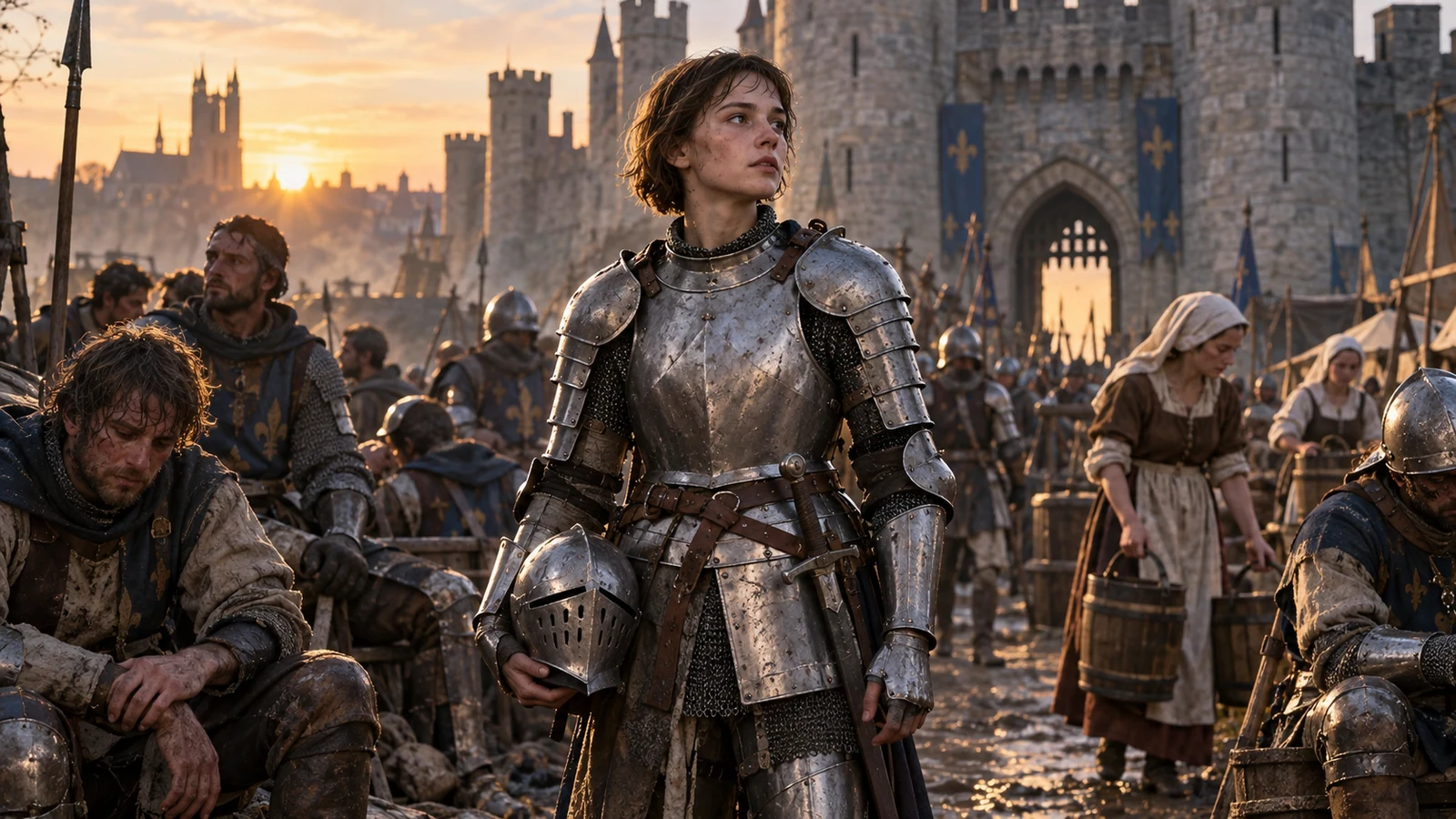
Joan of Arc and the siege of Orléans
Read siege, coronation and trial within the Hundred Years War.
War over succession and alliances
When Joan arrived, soldiers and inhabitants were already sustaining besieged Orléans. Royal claims and regional alliances shaped the conflict. People did not align neatly by today’s French and English national identities.
Armagnac–Burgundian rivalry and Anglo-Burgundian alliance complicate modern national categories. Orléans mattered within Charles VII’s political and military position.
From Orléans to Reims
Relief in 1429 changed the military situation; Charles VII’s coronation at Reims followed. Military capacity and royal legitimacy reinforced each other. Joan acted within the work of commanders, soldiers and suppliers.
War after the execution
Joan’s execution in 1431 did not end the war. The Treaty of Arras changed alliances in 1435; major fighting continued to Castillon in 1453. Later images and names often condensed this longer political and military history into one heroic symbol.
Before and after
- 1428
The siege began.
- 1429
Relief and coronation at Reims.
- 1431
Execution at Rouen.
- 1435
The Treaty of Arras altered alliances.
- 1453
Conventional endpoint of the Hundred Years’ War.
Key terms
- Siege
- Surrounding a place and restricting movement or supplies.
- Coronation
- A ritual presenting royal status.
- Legitimacy
- Recognition of a claim to rule as valid.
What supports the account?
Different forces also existed within France. Rival claims cannot be reduced to two uniform groups following modern borders.
The siege, rival claims, coronation, trial and course of war. Names, later historical writing and heroic representation.
Later national images differ from contemporary alliances.
Military relief and royal coronation served different purposes. Legitimacy involved more than force alone.
The siege, rival claims, coronation, trial and course of war. Names, later historical writing and heroic representation.
One hero cannot explain the full military course.
Check your understanding
Choose an answer to reveal the explanation. Return to the article and sources when you are unsure.
Sources
- La guerre de Cent AnsBibliothèque nationale de France
The siege, rival claims, coronation, trial and course of war.
- Jeanne d’Arc: teaching resource on heroesBibliothèque nationale de France
Names, later historical writing and heroic representation.
- La fin de la guerreBibliothèque nationale de France
The continuation of war after 1431 until 1453.
- Siege and changing alliancesMusées d’Orléans
Rival royal claims, relief in 1429, the Treaty of Arras in 1435 and 1453.
Keep exploring
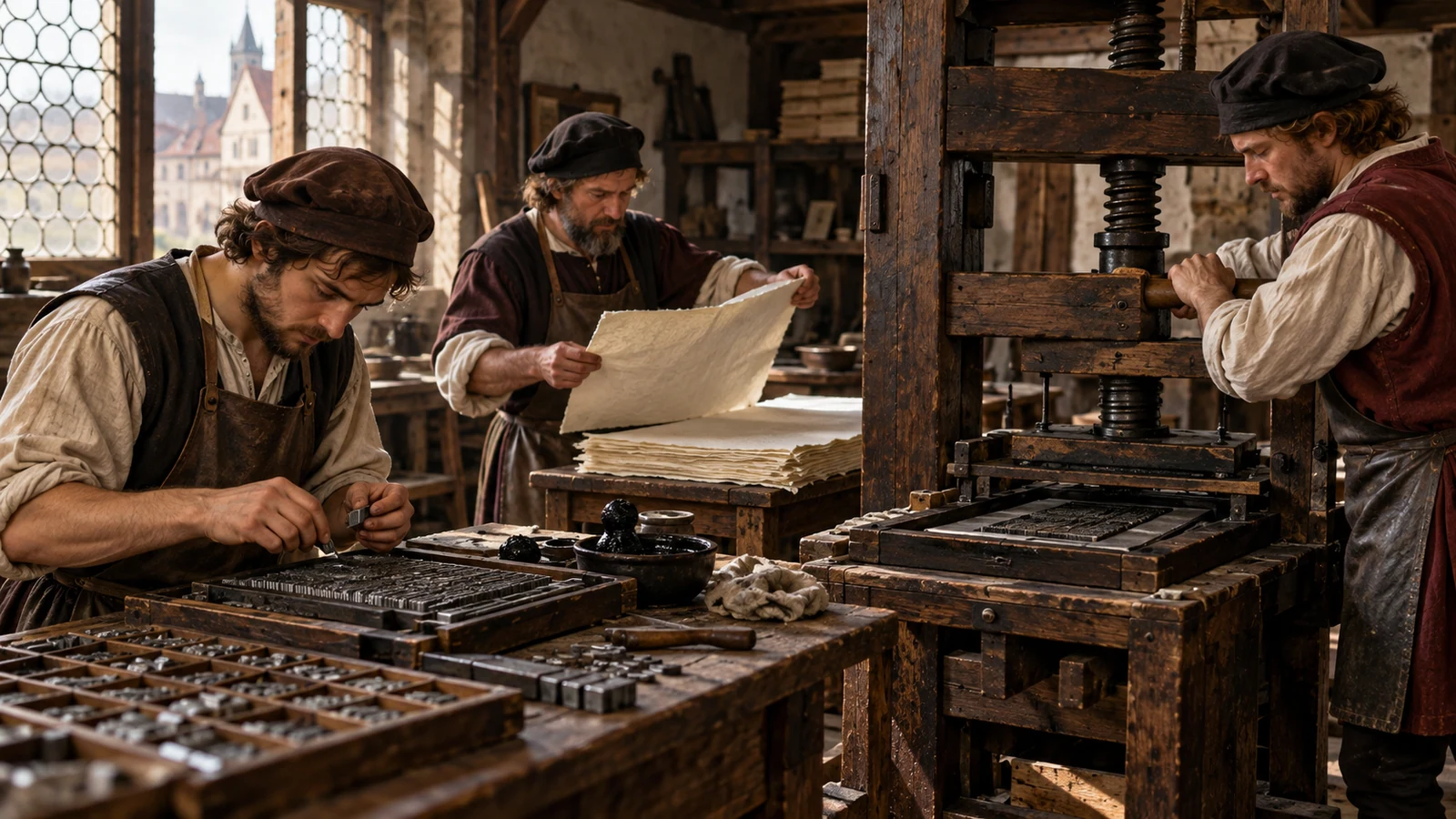
Comparing 1377 and the 1450s
Gutenberg and the work of movable type
Type, printing and hand decoration reveal workshop processes.
Mainz / Cheongju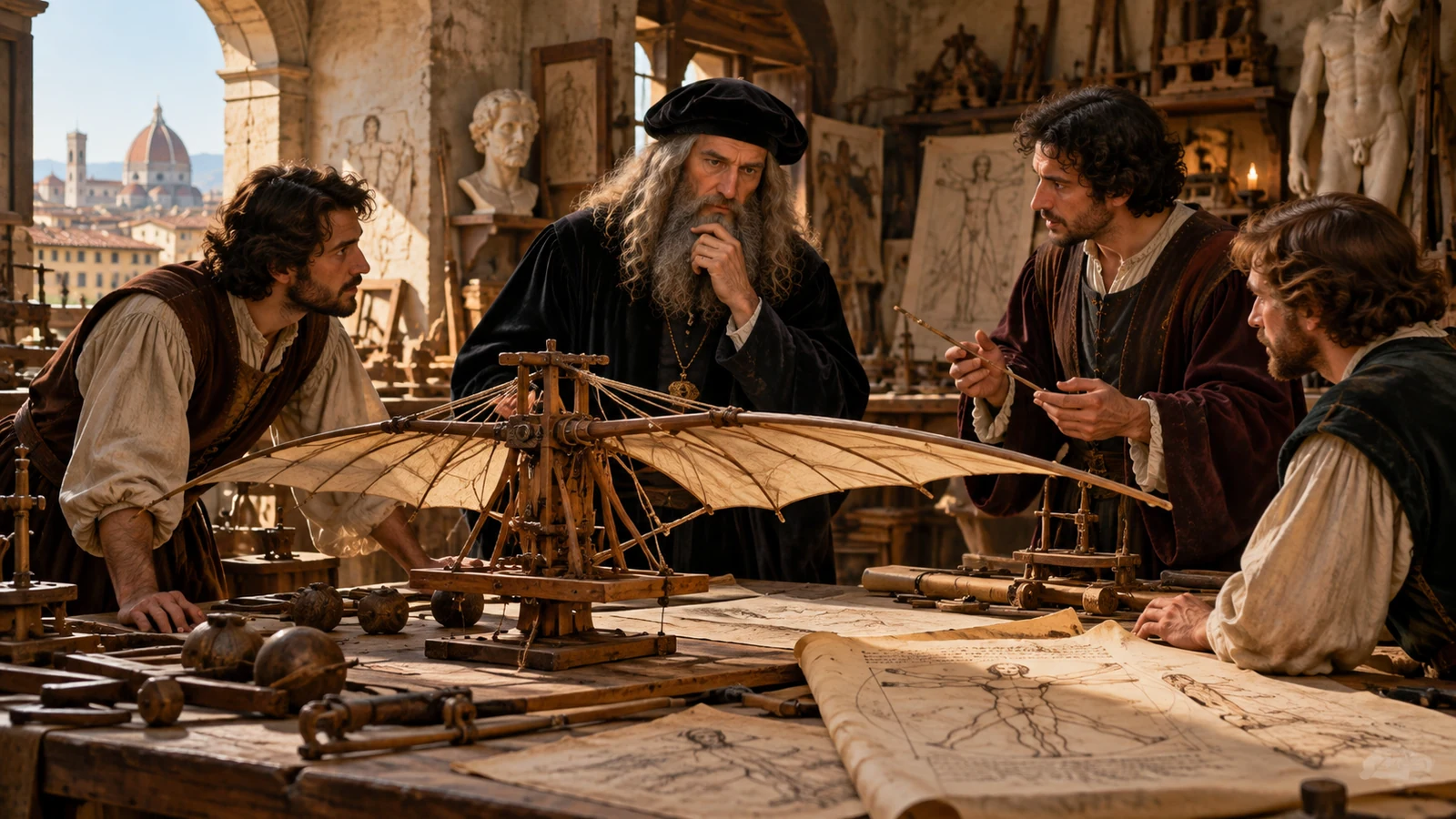
Notebooks from around 1487–1505
Reading Leonardo’s notebooks
Water, weights and anatomy reveal observation and design.
Milan / FlorenceLate eighteenth–early nineteenth centuries
Steam engines and working lives
Powering factories also changed working hours and children’s lives.
Industrial Britain