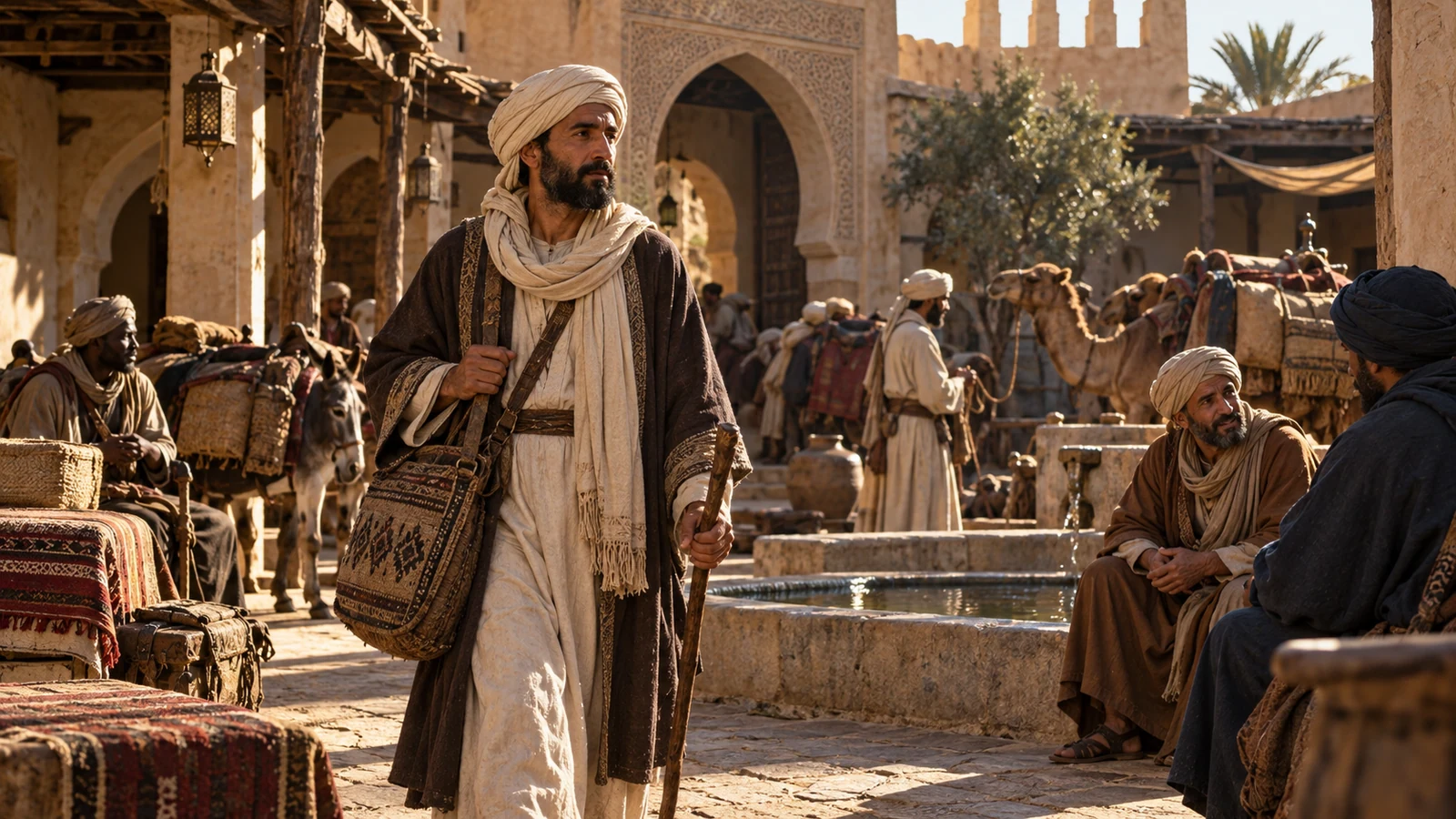
1325–1355
How to read Ibn Battuta’s travels
A pilgrimage became a long journey recorded afterward.
Networks supporting pilgrimage
How did Ibn Battuta keep traveling after setting out on pilgrimage in 1325? Faith and legal knowledge helped connect him to support. Changing purposes brought new relationships with courts and merchants.
A legal scholar serving as envoy
Delhi’s court offered rewards and protection but also ordered an embassy to China. Shipwreck and changing plans led through the Maldives and Sri Lanka. His East African account describes both trading wealth and enslaving expeditions. Welcomed travelers and coerced people moved within the same sea under very different conditions.
Journeys narrated after return
The account of roughly twenty-nine years of travel was narrated after return, with dictation recorded in 1355. Observation, hearsay and organized memory overlap. Certainty varies by passage, while the author’s work and position shaped what he emphasized.
Before and after
- 1325
Departure for pilgrimage.
- Around 1328–1330
Travel around the Red Sea, East Africa and Arabian Sea.
- Around 1334
Approximate arrival in Delhi.
- 1355
The travel account was written.
Key terms
- Hajj
- Islamic pilgrimage to Mecca.
- Rihla
- A term for a journey or travel account.
- Dictation record
- Writing down a spoken account.
What supports the account?
Shared belief and legal learning aided connections. A traveler’s treatment does not establish how everyone living there was treated.
Pilgrimage, routes, scholarly connections and dictation. Sea travel, descriptions of Kilwa, exchange and references to enslavement.
Accounts of hospitality do not establish social equality.
Port descriptions combine prosperous exchange with raiding and enslavement. Favorable accounts of rulers still require scrutiny of their actions.
Pilgrimage, routes, scholarly connections and dictation. Sea travel, descriptions of Kilwa, exchange and references to enslavement.
The traveler’s judgment is not every subject’s voice.
Check your understanding
Choose an answer to reveal the explanation. Return to the article and sources when you are unsure.
Sources
- The Travels of Ibn BattutaUniversity of California, Berkeley ORIAS
Pilgrimage, routes, scholarly connections and dictation.
- The Red Sea to East Africa and the Arabian SeaUniversity of California, Berkeley ORIAS
Sea travel, descriptions of Kilwa, exchange and references to enslavement.
- Escape from Delhi to the Maldive Islands and Sri LankaUniversity of California, Berkeley ORIAS
Ruler’s orders, an envoy’s role and dangers.
Keep exploring
1324–sixteenth century
Mali and learning in Timbuktu
Gold and salt trade supported a West African city of mosques, manuscripts and learning.
Timbuktu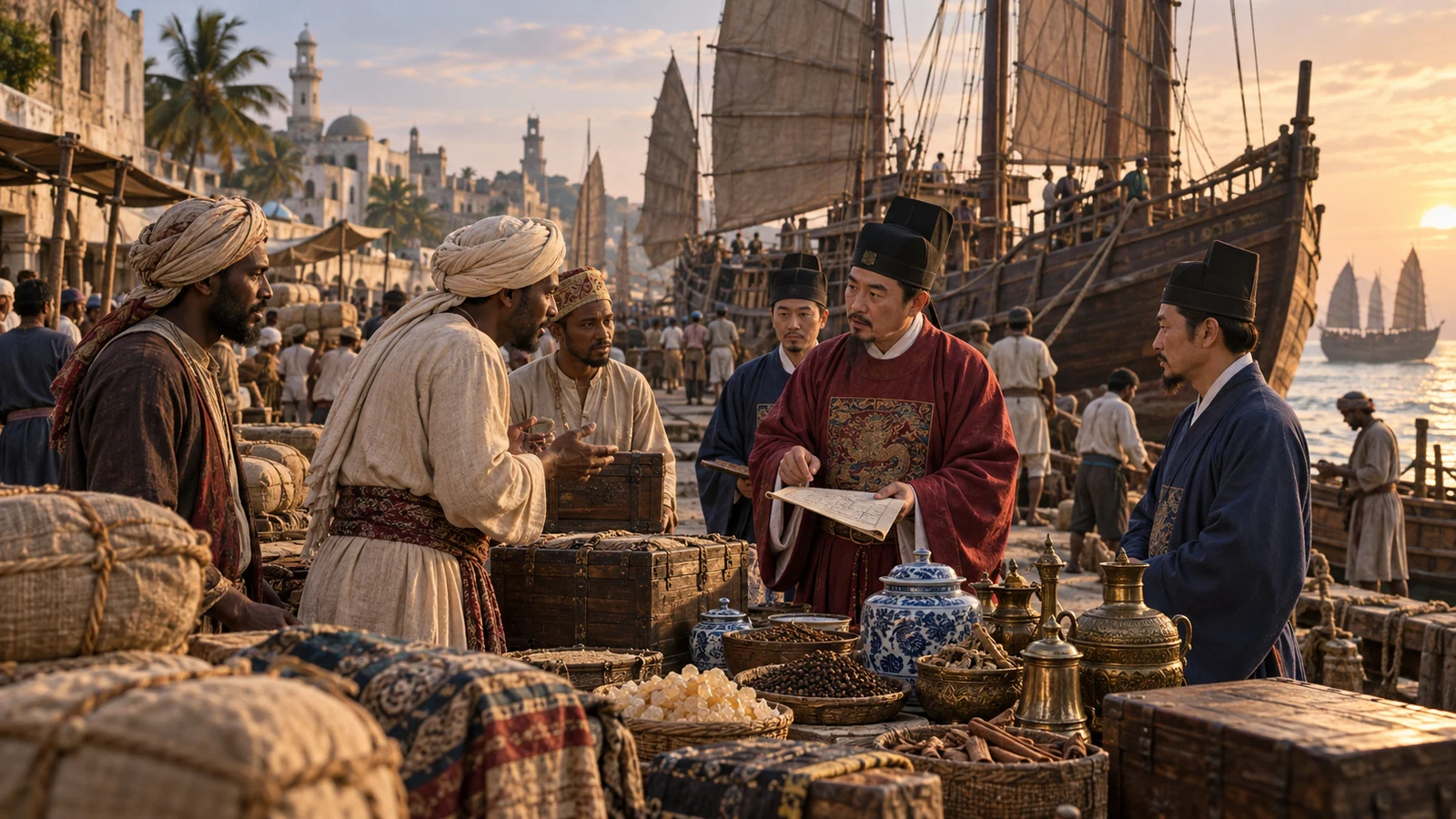
1405–1433
Zheng He’s fleets and Indian Ocean ports
Read Ming expeditions through charts, winds and port labor.
Nanjing / Calicut (Kozhikode)Mainly thirteenth–fourteenth-century prosperity
Kilwa and the Indian Ocean
A Swahili port connected eastern Africa’s interior with Indian Ocean trade.
Kilwa Kisiwani