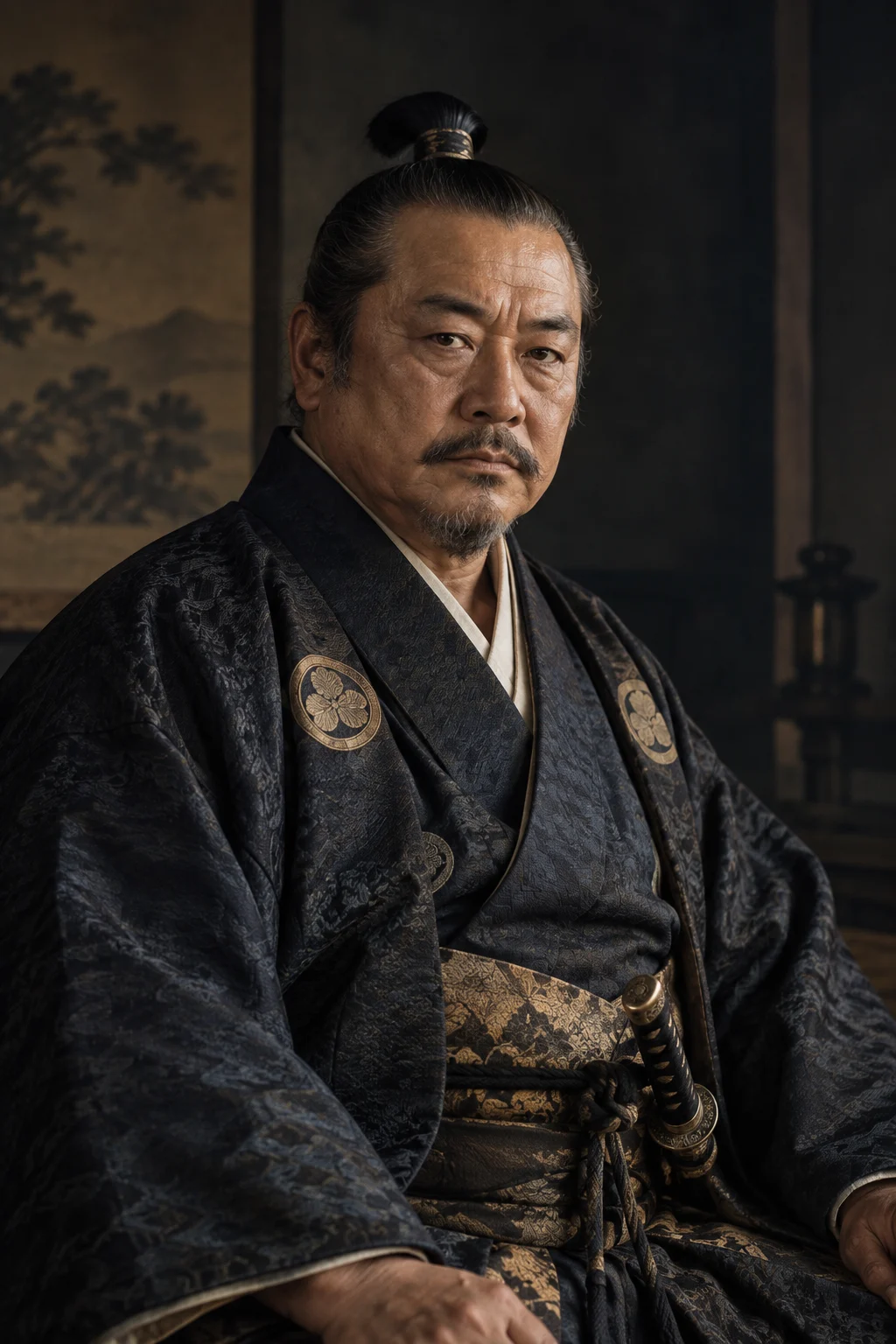
1543–1616
Tokugawa Ieyasu
First Tokugawa shogun
Appointed shogun in 1603. The birth year is expressed as solar 1543. His connection to the Edo story is political background, not an appearance within its fictional day.
From a hostage child to a domain ruler
As a child, Ieyasu’s residence depended on relations with the Oda and Imagawa. Elite hostages helped secure alliances. After Yoshimoto’s death he returned to Okazaki and began forming his own regional authority and alliances.
After Yoshimoto died in 1560, Ieyasu returned to Okazaki and allied with Nobunaga. Conflict within Mikawa challenged his position.
Names including Matsudaira Motonobu and Motoyasu preceded the Tokugawa surname and court rank in 1566. They mark changes within one career and relationships with lineage and court. Leaving Imagawa influence, managing local opposition and partnering with Nobunaga preceded the shogunal office.
Moving to Edo and transferring the shogunal office
After moving to Kantō in 1590, he developed Edo as a political center. Waterways, roads, housing and transport required extensive collective work.
Victory in 1600, shogunal appointment in 1603 and transfer to Hidetada in 1605 were distinct stages. Ieyasu retained influence as retired ruler at Sunpu while Hidetada held the office at Edo. This joined formal succession with continuing paternal power in an inherited Tokugawa regime.
Post stations on the Tōkaidō supported movement of people and messages. Transport institutions sustained everyday government but imposed obligations on communities supplying horses and labor. Roads therefore belong to the history of political resources as well as travel.
The Osaka campaigns and rules for lords
The Osaka campaigns of 1614–1615 defeated the Toyotomi. Their place in later peace must also include the immediate destruction of war.
Regulations after Osaka helped move rule beyond Ieyasu’s personal relationships. Enduring government needed usable procedures after a ruler’s death. Later systems, including formalized alternate attendance, should not all be credited to his lifetime.
Foreign relations and posthumous worship
He welcomed Korean envoys and negotiated Dutch and English trade. Later restrictions should not be projected unchanged onto his lifetime. Commercial interest and religious concern coexisted in relations that developed over time.
After death he was worshipped as Tōshō Daigongen, central to Tōshōgū ritual and art. A living maker of alliances and commander of wars became a divine protector of the regime. Shrine chronologies combine biography with commemoration.
Turning points
- Late 1542 in the historical calendar; 1543 Gregorian
Born at Okazaki.
- 1560
Returned to Okazaki.
- 1590
Moved to Kantō.
- 1600
Won at Sekigahara.
- 1603 and 1605
Became shogun and later transferred the title to Hidetada.
- 1616
Died at Sunpu.
Their legacy
Passing the shogunate to Hidetada during his lifetime and formalizing rules for daimyo helped transfer personal victory into authority continued by later rulers and institutions.
Related history
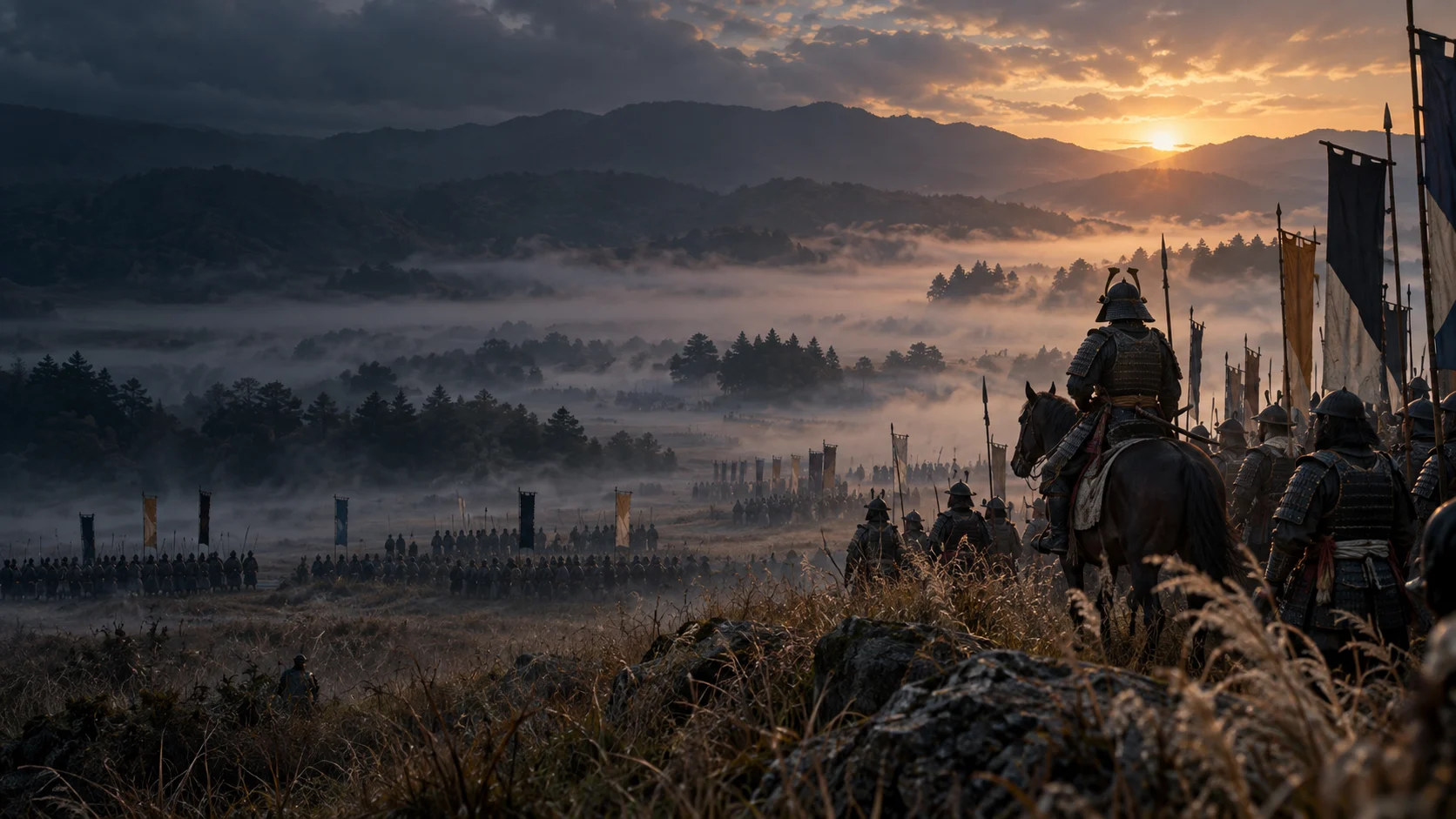
1600 · Fifteenth day of the ninth lunar month
Reading Sekigahara through its records
Separate the battle’s date from the later stories told about it.
Sekigahara, Gifu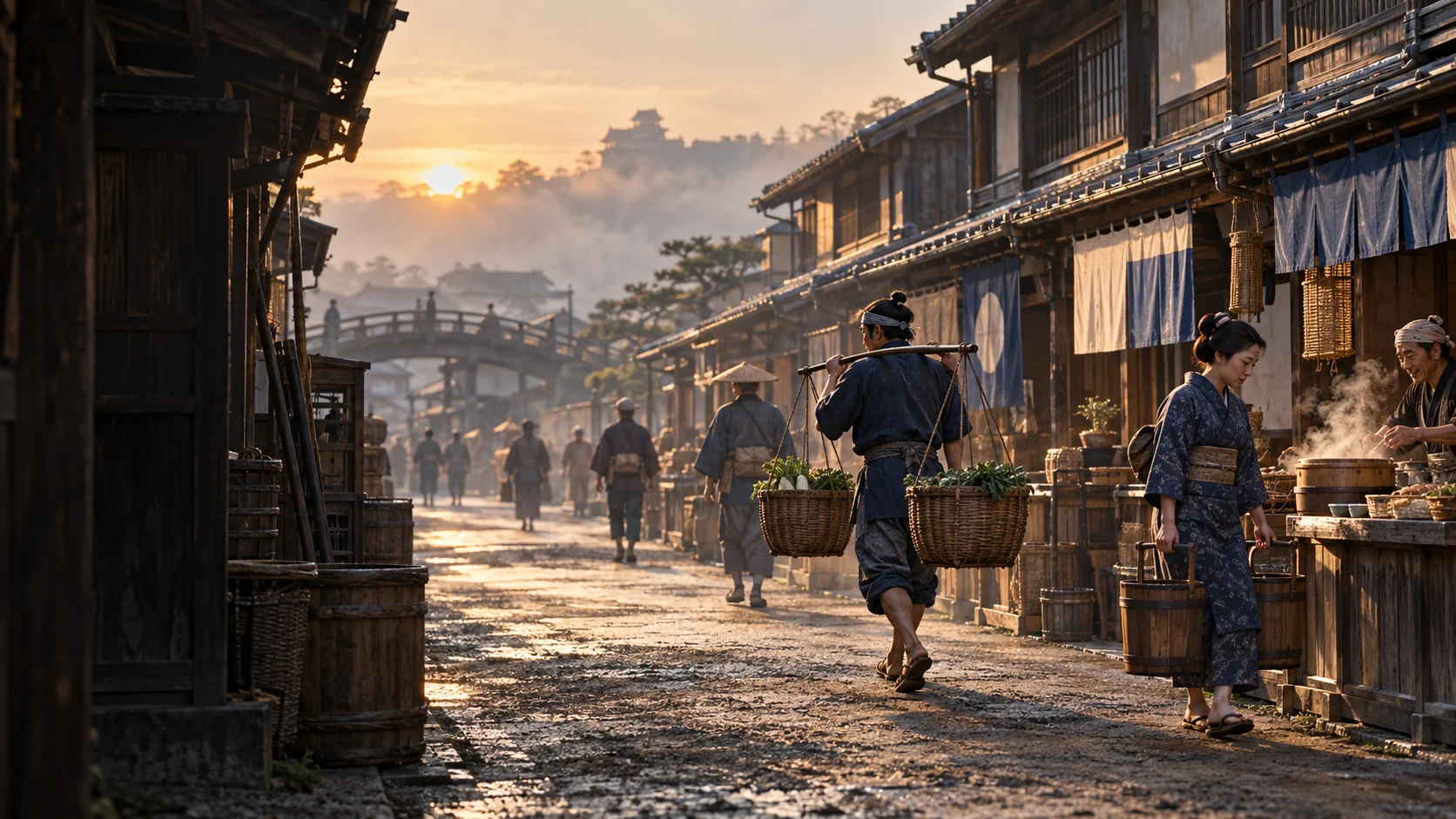
Early nineteenth century · Late Edo urban life
Water and commerce in everyday Edo
Look beyond individual homes to the systems supporting a large city.
Edo, present-day Tokyo1609 · Completion of the present great keep
Dating the buildings of Himeji Castle
The great keep and western enclosure belong to different stages of construction.
Himeji, HyōgoRelated stories
Sources
久能山東照宮 · Chronology of Ieyasu, alongside the shrine’s commemorative interpretation.
The Metropolitan Museum of Art · Unifying regimes, art and Hideyoshi’s invasions of Korea.
The portrait is an original historical imagining, not evidence of the person’s appearance.