
10th–11th century; exact dates unknown
Murasaki Shikibu
Author of The Tale of Genji and court lady
An early eleventh-century court lady who wrote The Tale of Genji. Exact life dates and a personal birth name remain uncertain. Explore the court through her diary and everyday life beyond its walls.
Writing from inside the court
Rank and reputation changed what people could say and do within the same court. Serving Shōshi, Murasaki wrote within that network. Her fiction’s emotional detail belongs to a society of waiting, dependence and concern for reputation.
Shōshi, Michinaga’s daughter, gathered learned attendants. Literary reading shared a setting with imperial relationships and princely births. Appointments and patronage supported women’s writing and ritual work. Murasaki’s individual achievement gained readers and reputation within this working court.
The diary’s birth ceremonies involve attendants preparing settings and managing visits. Court women performed work, not merely decorative presence. Her position within this activity helps explain the detail of her observation.
Rank and experience within the tale
The Tale of Genji explores people’s feelings and positions. Its material detail is useful, but it is not a direct record of specific historical events.
Women in Genji experience different possibilities according to rank, residence and reputation. Some can communicate or act while others depend on intermediaries or wait. These differences animate relationships within fiction, whose characters’ careers are not real individuals’ biographies.
Women’s writing developed alongside male-dominated classical-Chinese work. Court relationships, rituals, gifts and reputation formed part of her setting.
People transmitting texts and scenes
Picture scrolls selected scenes for text and image; later furnishings used recognizable motifs. Readers supplied the remembered story. Copyists, artists and patrons continually chose how to translate the work into new forms after the author’s lifetime.
Manuscript traditions differ; commentary explained language and scenes that later readers found difficult. Translation reached new languages and pictures recalled episodes. Text and interpretation reached the present through generations of work.
The story of composition beginning at Ishiyamadera belongs to the temple’s long association with the work, not a complete record of the autograph or life. The received author image combines evidence from texts with later imagination. Manuscript provenance and artwork dates distinguish transmission from remembrance.
Turning points
- Tenth–eleventh centuries
Born into the Fujiwara family; exact life dates are uncertain.
- Early eleventh century
Served Shōshi at court.
- Around 1008
Her diary records court events.
- From the twelfth century
Copies and picture scrolls transmit the tale.
Their legacy
Copyists, commentators and artists carried The Tale of Genji forward. Later readers continued the courtly narrative by selecting, interpreting and representing its scenes and words.
Related history

1008 · The Tale of Genji appears in a diary
Heian Kyoto and The Tale of Genji
Read a courtly tale alongside the geography of the real capital.
Kyoto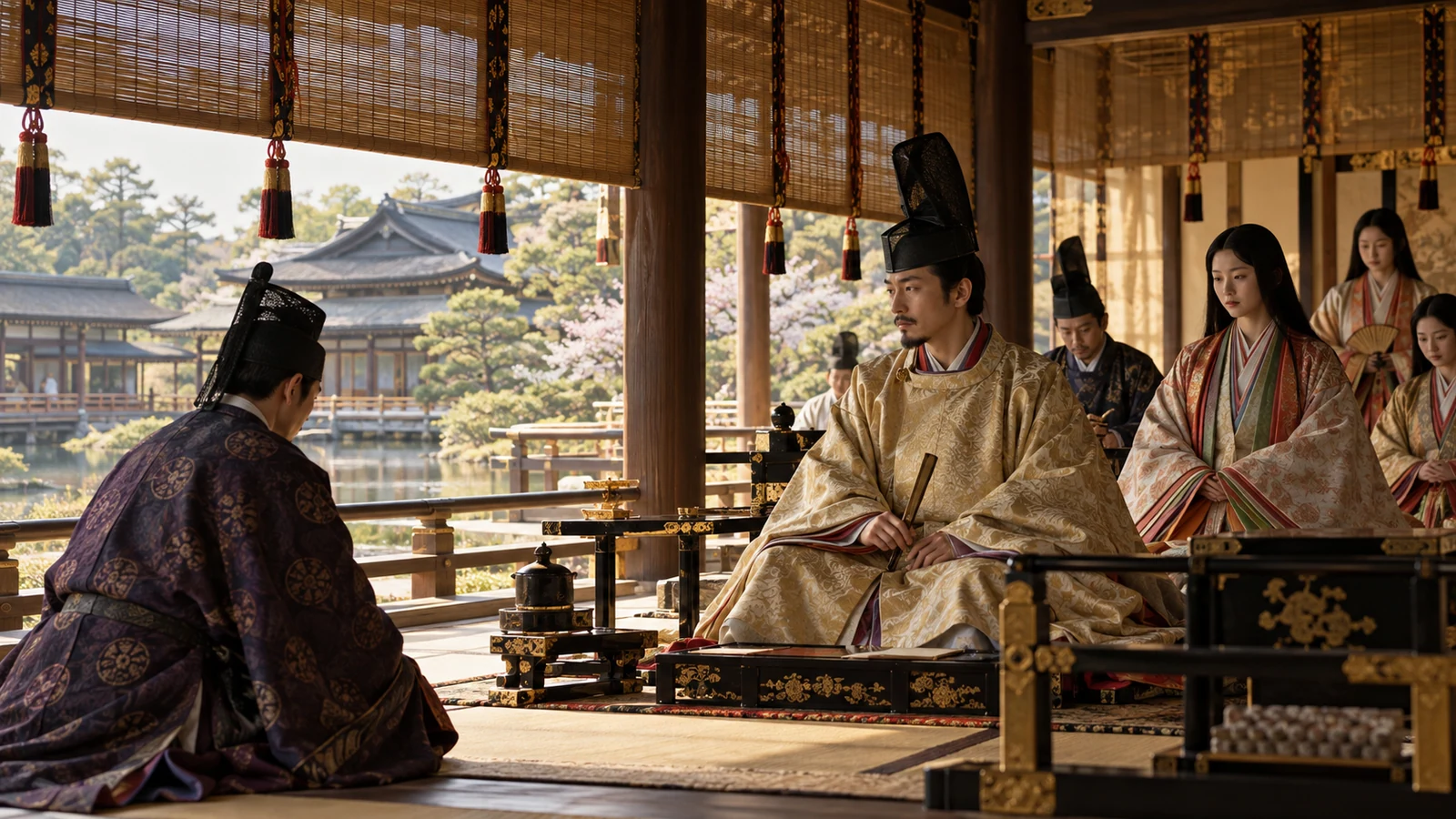
c. 995–1021 · The age of Fujiwara no Michinaga
Family and office behind Michinaga’s power
Imperial marriages, family connections and diaries reveal the workings of regency politics.
Heian-kyō, KyotoRelated stories
Sources
The Metropolitan Museum of Art · Eleventh-century court literature and its later artistic reception.
東京大学附属図書館 · Murasaki’s diary and the later transmission of the tale and picture scrolls.
京都国立博物館 · Relationships among Michinaga, Shōshi and Murasaki and the court setting.
The portrait is an original historical imagining, not evidence of the person’s appearance.