1452–1519
Leonardo da Vinci
Painter and investigator
Investigated bodies, water and machines alongside painting. A design in a notebook is not automatically evidence of a working invention.
Experiment within the work of a commissioned artist
Leonardo worked on commissioned pictures while investigating unresolved forms and mechanisms. Trained in a Florentine workshop, he moved among cities and courts for patronage. Observation depended on materials and opportunities as well as curiosity.
Workshop training joined materials, drawing and commissioned production. Under Ludovico Sforza in Milan he also designed for performances. Courtly practical work broadens a career often reduced to a few celebrated paintings.
Movement among Milan, Florence, Rome and France brought changing patrons, commissions and opportunities for investigation.
Working notebooks and experiments with materials
Codex Forster mixes geometry and hydraulics with locks, costumes and artistic recipes. Mirror writing and upside-down use reflect a working notebook. Adjacent notes do not necessarily form a finished, orderly treatise.
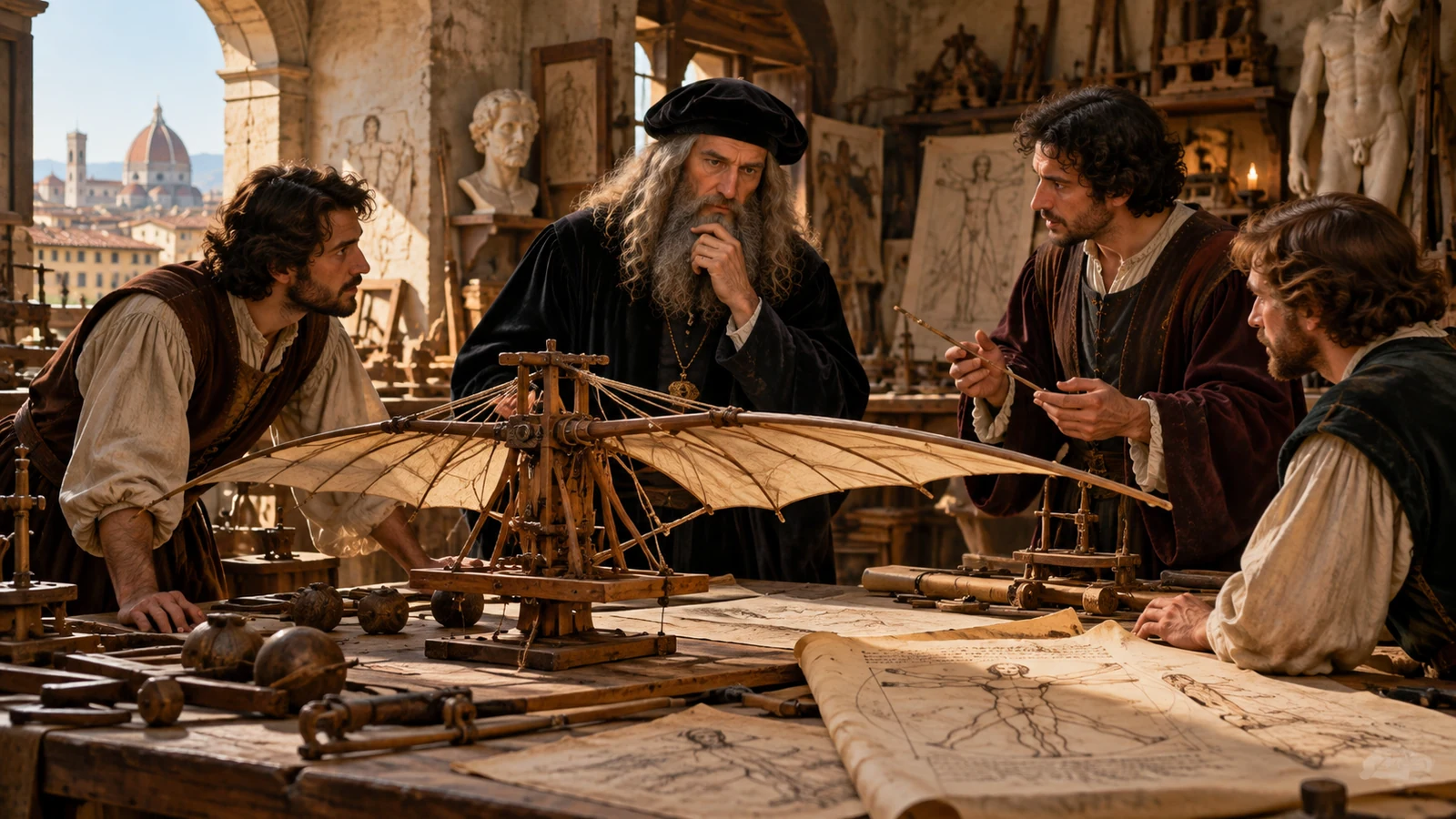
Machine drawings include proposed mechanisms, distinct from documented working constructions. Even without a surviving device, they preserve attempts to understand the transfer of force or the movement of water.
The Last Supper used a wall-painting method different from ordinary fresco and began deteriorating during Leonardo’s life. Material experimentation left conservation weaknesses alongside celebrated figures and space. Later restoration had to address both composition and damaged physical material.
Pictorial composition and surviving manuscripts
Christ anchors the Last Supper, with architectural lines directing attention toward the center. Different gestures express reactions. Relationships and movement organize the religious scene rather than a uniform row; spatial direction and bodily expression work together.
Sfumato in the Mona Lisa blends transitions of light and shade to model form beyond an enclosing line. Written and drawn observation relates to this transformation into visual expression, without making every notebook study a preparatory drawing for this one painting.
Manuscripts dispersed after Leonardo’s death. Collecting and donation brought the Forster material to the V&A. Later custodians assembled, preserved and made papers available for study; the present grouping does not contain all his investigations. Conservation helped transmit the observations.
Turning points
- 1452
Born near Vinci.
- 1470s
Worked as a painter in Florence.
- 1480s–1490s
Worked and investigated at the Milanese court.
- About 1516–1517
Moved to France.
- 1519
Died at Amboise.
Their legacy
Notebooks turned observations into words and diagrams; paintings arranged light and gesture. The fragile materials of The Last Supper also show how artistic experiment could create conservation problems.
Related history
Sources
The Metropolitan Museum of Art · Training, movement and investigation through drawing.
Victoria and Albert Museum · Notebook studies of geometry, water and devices alongside practical jottings.
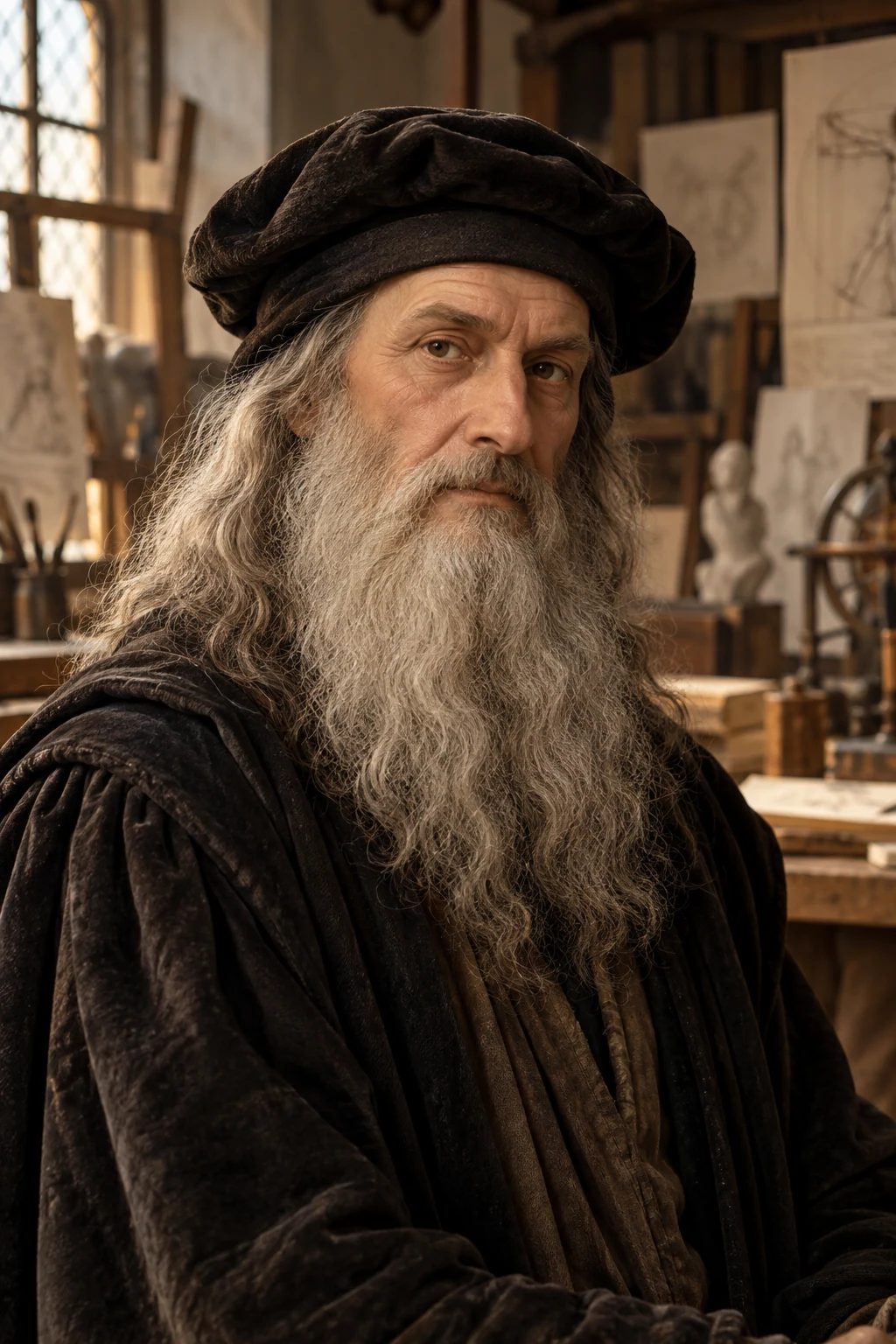
The portrait is an original historical imagining, not evidence of the person’s appearance.