1760–1849
Katsushika Hokusai
Ukiyo-e artist
Worked in actor prints, book illustration, landscapes and painting. Explore the publishing and collaborative craft behind Thirty-six Views of Mount Fuji.
What a small Mount Fuji can reveal
In The Great Wave, Mount Fuji appears small beyond towering water. Hokusai made boats and workers prominent even in a series about the mountain. The Edo artist continually changed subjects and compositions, from actor prints and book illustrations to landscapes.
First issued in 1814, Hokusai Manga collected figures, animals and tools as drawing models. It differed from modern narrative comics. Learners copied images and craftspeople could use them for designs. His work circulated as reusable visual instruction as well as objects of appreciation.
His fiction illustrations used ink density, empty space and composition to create depth and tension. Skill was not confined to multicolored prints. The museum’s chronology helps trace experiments across different media.
Fuji prints and collaborative production
Thirty-six Views of Mount Fuji appeared in the early 1830s. It depicts workers, travelers and boat crews as well as the mountain.
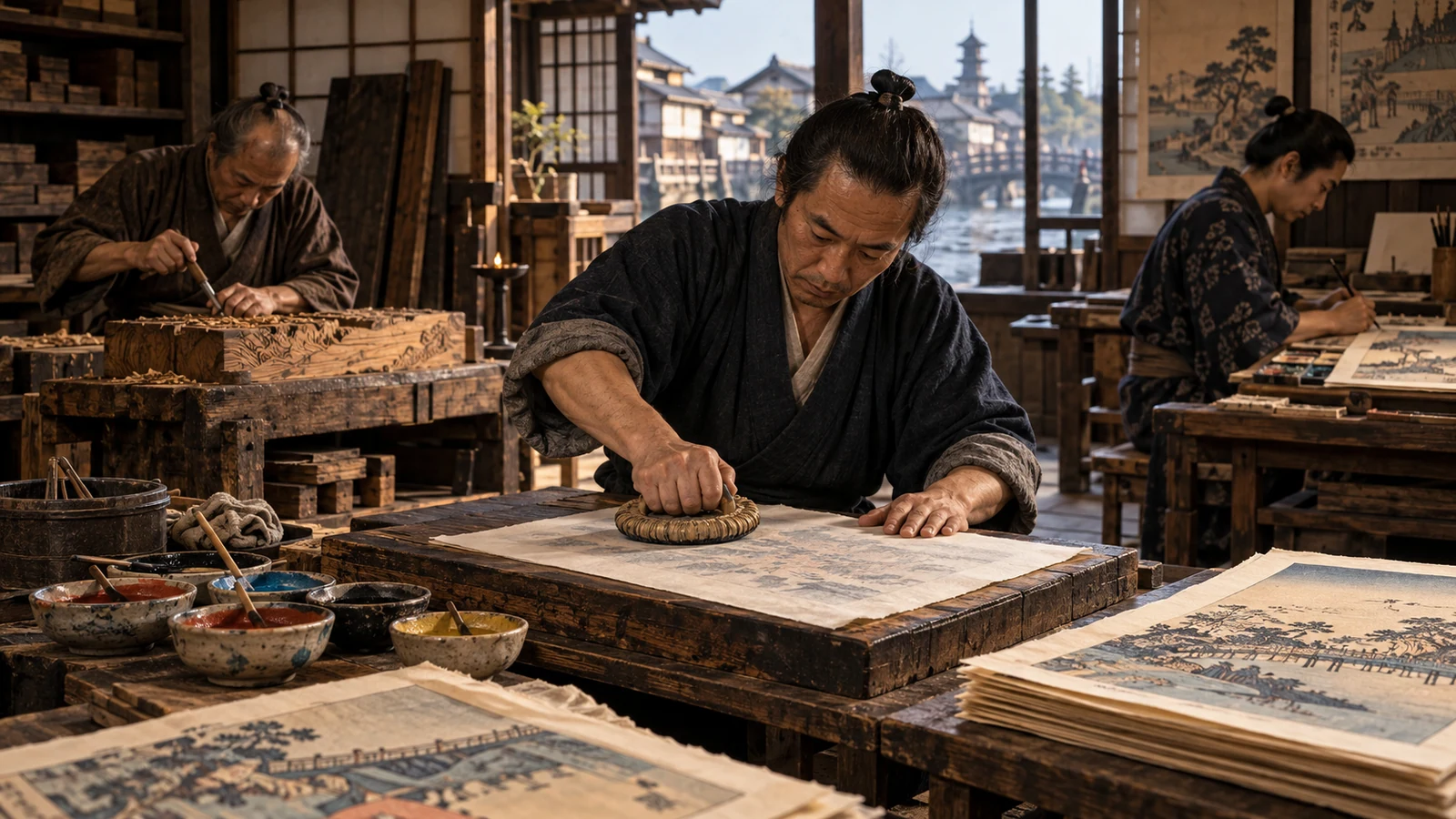
Designers, block cutters, printers and publishers shared production. A print bearing Hokusai’s name embodies several kinds of labor.
Boats and waves dominate the foreground while Fuji forms a small distant triangle. Moving water contrasts with a stable mountain. The shapes and placement of wave, boats and peak construct distance within one sheet.
Painting and reception beyond Edo
After Fugaku hyakkei in 1834, painting became increasingly important. Brush paintings bypassed print carving and printing but still relied on patrons and pupils. Religious and historical themes joined everyday subjects. He worked until his death in 1849, changing media and working relationships late in life.
His work gained wider European recognition after his death. Original audiences and later international reception belong to different stages of its history.
Models, illustrated stories and landscape prints served different buyers. Objects used as books and commodities in Edo later traveled abroad and entered art displays. Reproduction and sale, then conservation and exhibition, were different activities that expanded Hokusai’s reputation.
Turning points
- 1760
Born in Edo.
- Late 1770s
Trained with Katsukawa Shunshō.
- 1814
The first volume of Hokusai Manga was published.
- Early 1830s
Thirty-six Views of Mount Fuji was issued.
- 1849
Died.
Their legacy
Drawing manuals reached learners, illustrations reached readers, and landscape prints reached buyers. Work for different publishing markets produced images that later entered museums around the world.
Related history
1765–early nineteenth century · Colour woodblock printing
Four professions behind a woodblock print
Publisher, designer, carver and printer: a celebrated artist’s print depended on a team.
Edo, Tokyo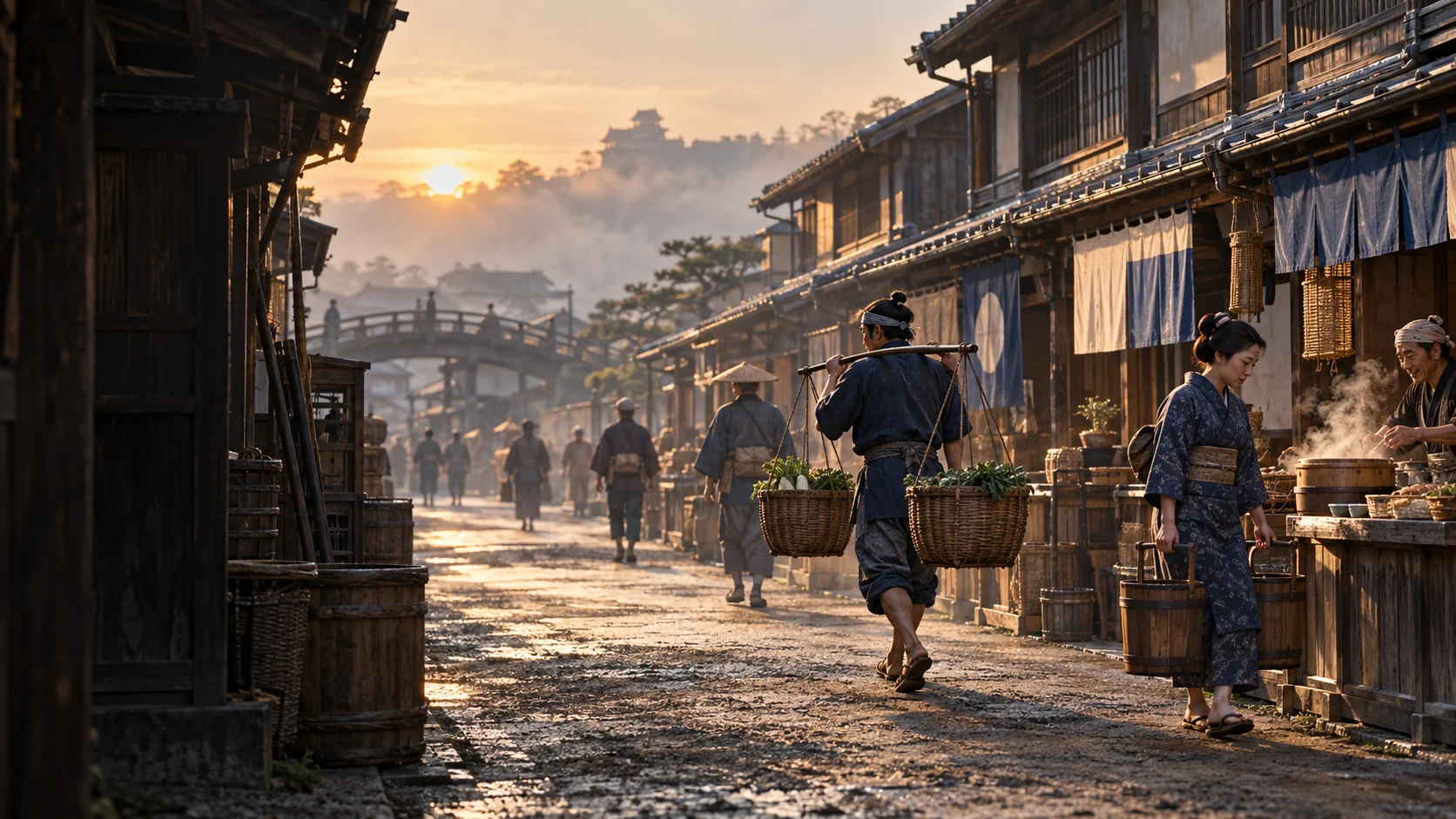
Early nineteenth century · Late Edo urban life
Water and commerce in everyday Edo
Look beyond individual homes to the systems supporting a large city.
Edo, present-day TokyoSources
すみだ北斎美術館 · Artistic phases, works and dates; ages in the source use traditional counting.
すみだ北斎美術館 · The range of works and international reception.
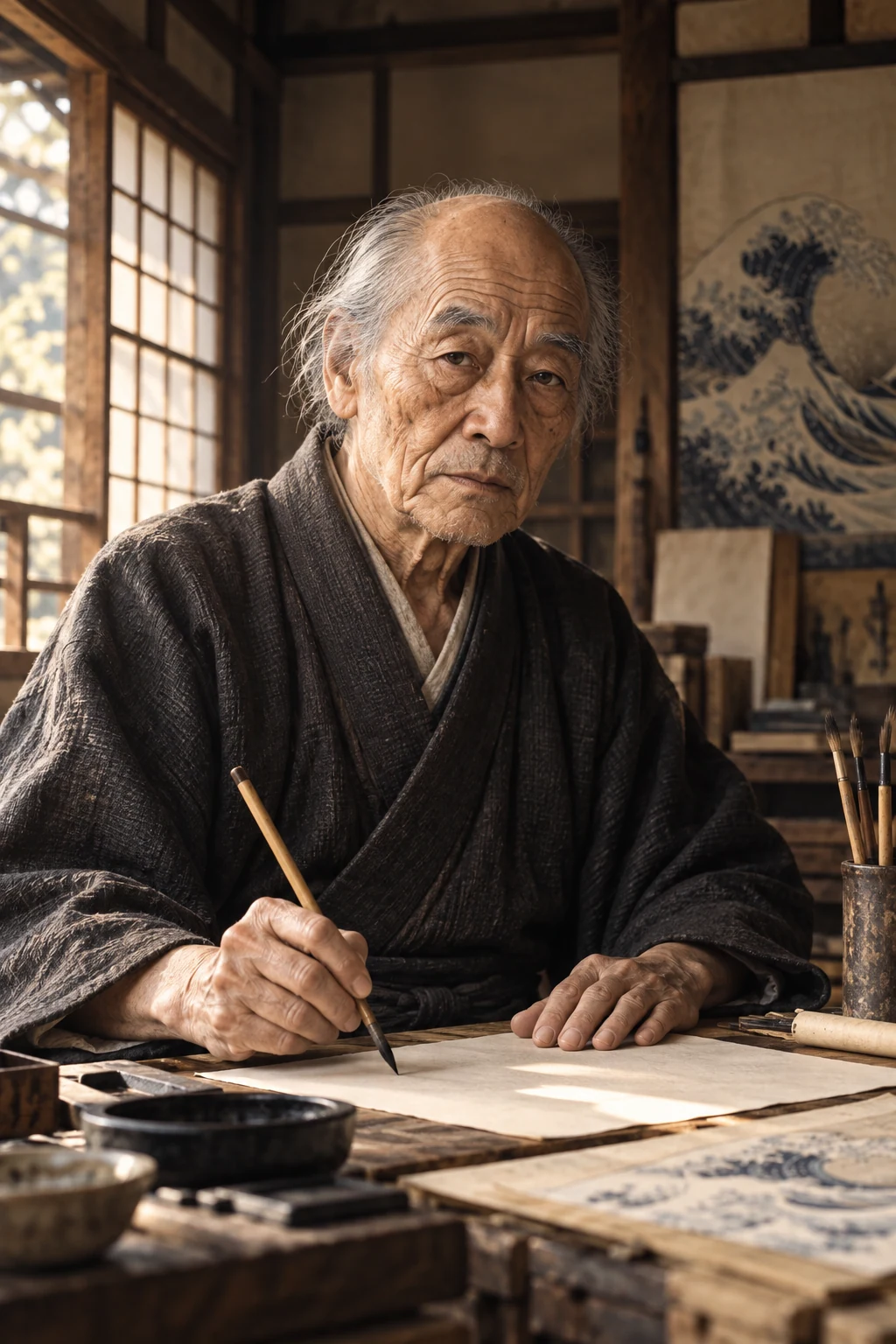
The portrait is an original historical imagining, not evidence of the person’s appearance.