966–1027
Fujiwara no Michinaga
Heian court statesman
A statesman whose power rested on marriage ties to the imperial family. Diaries and a sutra container reveal administration and religious concerns.
How an imperial marriage changed power
Shōshi’s son became Emperor Go-Ichijō. As the emperor’s maternal grandfather, Michinaga gained influence beyond formal office. Imperial marriage strengthened his position in competition within the Fujiwara family.
Shōshi and Teishi belonged to different Fujiwara networks within Ichijō’s court. Marriage determined the maternal family of future rulers. Michinaga’s position as Go-Ichijō’s grandfather shows how kinship became political influence.
A regent acted for a young emperor; a kanpaku assisted an adult ruler. Michinaga served as regent, not kanpaku, despite the familiar name Midō Kanpaku. Maternal kinship, official appointments and influence over other courtiers combined into practical power.
Supporting Shōshi’s court
His authority depended on emperors, other Fujiwara and administrative officials. His diary records ceremonies, illness and routine business.
The Kyoto National Museum connects Murasaki’s service with Shōshi’s education. Recruiting accomplished women strengthened a court’s cultural standing. Patronage, appointments and literary achievement intersected, without making a work merely an instrument of politics.
Daily life in a diary and sutra container
The copper sutra container deposited at Kinpusen in 1007 records rank and circumstances. A named, dated object connects with the diary’s account: the powerful politician also performed this act of devotion.
Shōshi bore a prince the following year. For those who interpreted this as the efficacy of prayer, the birth also concerned the family’s future. Religious hopes and the politics of succession met in the same event.
The Midō Kanpakuki records ceremony, movements and illness within daily administration and life. Later Ōkagami organizes careers into a retrospective story of rise and fall. The celebrated image of magnificence and the diary’s continuing work illuminate different aspects of the same career.
Turning points
- 966
Born into the Fujiwara family.
- 995
Rose to prominence after his brother Michitaka’s death.
- 1007
Deposited scriptures at Kinpusen.
- 1016
Became regent following Go-Ichijō’s accession.
- 1027
Died.
Their legacy
Literature flourished around Shōshi while Michinaga’s diary recorded ceremony and government. Power gained through marriage extended into cultural appointments and daily administration.
Related history
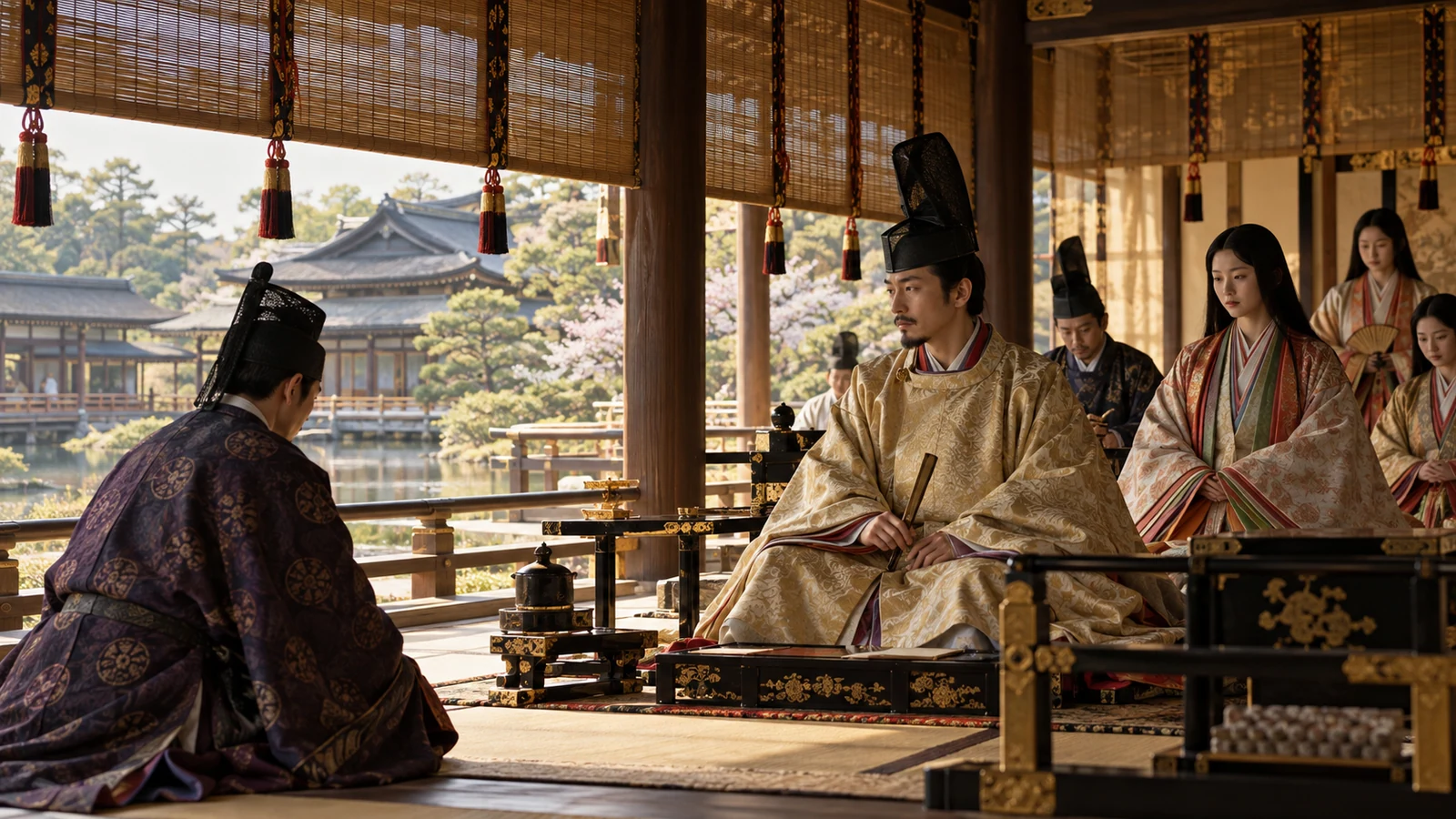
c. 995–1021 · The age of Fujiwara no Michinaga
Family and office behind Michinaga’s power
Imperial marriages, family connections and diaries reveal the workings of regency politics.
Heian-kyō, Kyoto
1008 · The Tale of Genji appears in a diary
Heian Kyoto and The Tale of Genji
Read a courtly tale alongside the geography of the real capital.
KyotoSources
京都国立博物館 · Connections with Shōshi and Murasaki and the 1007 inscription.
国立国会図書館 · Bibliographic evidence for Michinaga’s diary and dates; the catalogue is not a full-text verification.
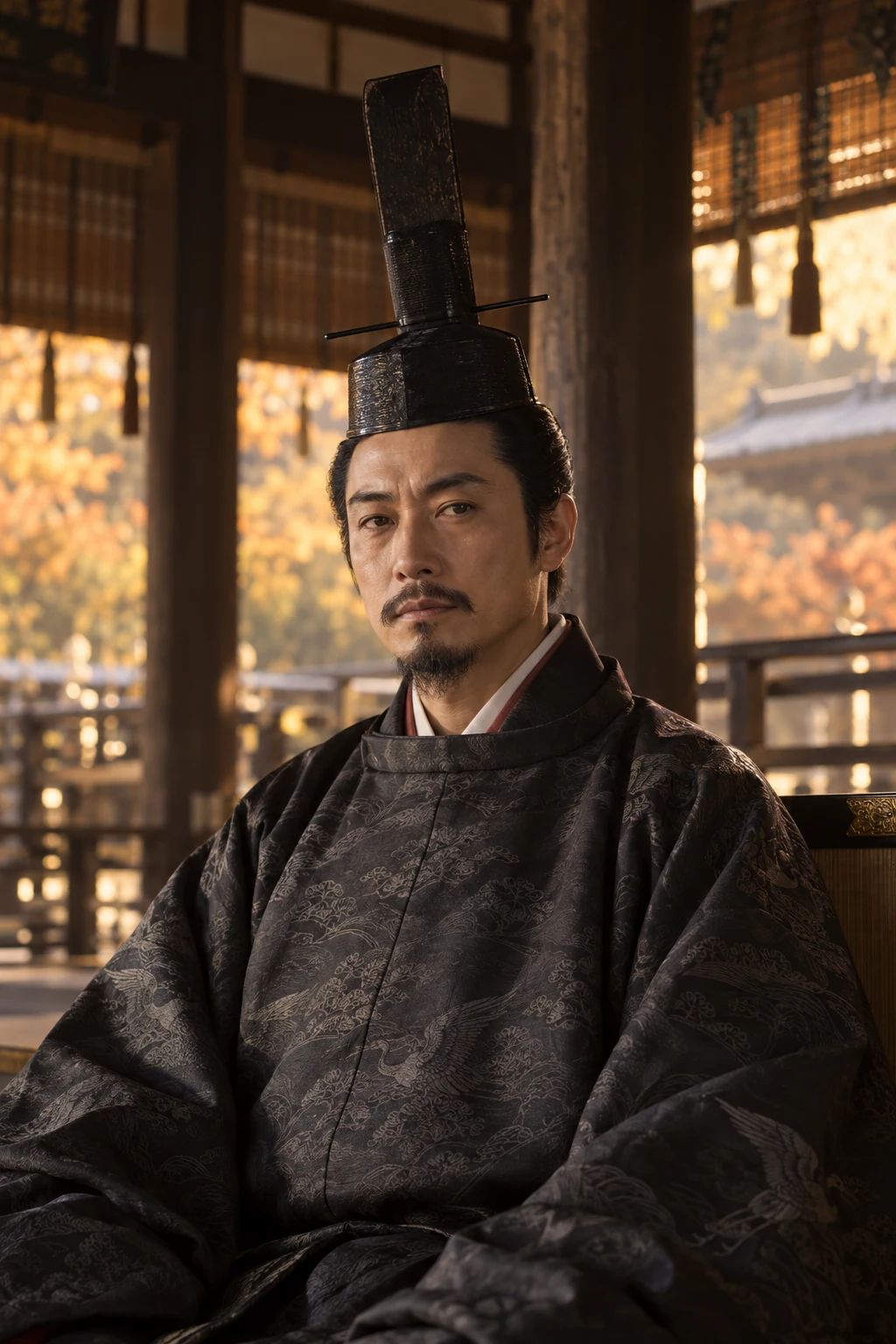
The portrait is an original historical imagining, not evidence of the person’s appearance.