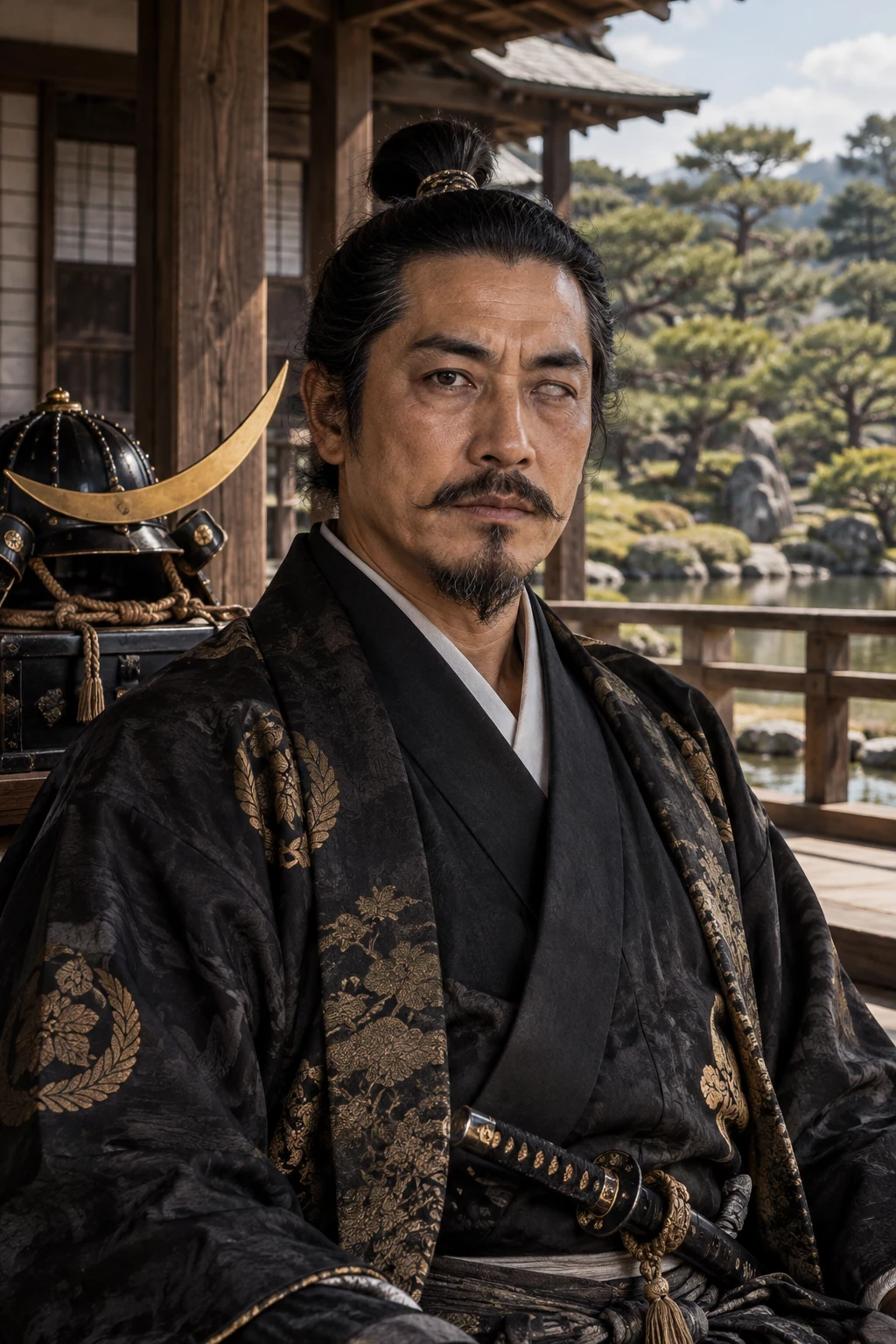
1567–1636
Date Masamune
First lord of Sendai
Built Sendai’s castle and town after the wars of unification. Letters and armor reveal a daimyo’s changing role under national rule.
Regional victory under a national ruler
After defeating the Ashina in 1589, Masamune was required to join Hideyoshi’s Odawara campaign the next year. A regional conqueror had to preserve his position within national government. Military success alone no longer determined his future.
Victory over the Ashina in 1589 preceded participation in Hideyoshi’s Odawara campaign. In 1591 Masamune’s holdings and base changed. Regional conquest and preserving standing within a national government were different political tasks.
Building a castle and a working town at Sendai
Castle construction began in 1601. The castle and town became centers of administration and material flows as well as defense.
Moving to Sendai involved homes, markets, new farmland and ways to collect regional supplies. Craftspeople and merchants needed sites and transport as well as relocated retainers. Food, tools, processing and trade sustained the town and the castle’s administrative role.
Under national government, Masamune had to accept territorial transfers and develop new bases. Sendai’s construction and the Keichō embassy belong to efforts to sustain the domain and seek trade after his years of expansion.
Hasekura Tsunenaga’s overseas negotiations
Hasekura Tsunenaga’s mission sought Mexican trade and missionaries for Sendai. It crossed the Pacific via Mexico to Spain and Rome. Masamune communicated with the shogunate; this was not diplomacy by an independent state.
Hasekura’s oil portrait preserves a religious presentation formed in Europe. It is evidence for the envoy’s experience, not a portrait of Masamune. Distinguishing patron and traveler makes the mission’s division of labor visible.
Armor and surcoats served protection and status. Their materials and provenance distinguish surviving equipment from modern costumes. The crescent helmet is a starting point, not a substitute for studying government and relationships.
Turning points
- 1567
Born into the Date family.
- 1584
Inherited leadership.
- 1601
Began building Sendai Castle.
- 1613
The Keichō embassy departed.
- 1636
Died.
Their legacy
He developed Sendai and entrusted overseas negotiations to Hasekura Tsunenaga and others. His career spans the transition from territorial warfare to governing a domain under the Tokugawa.
Related history
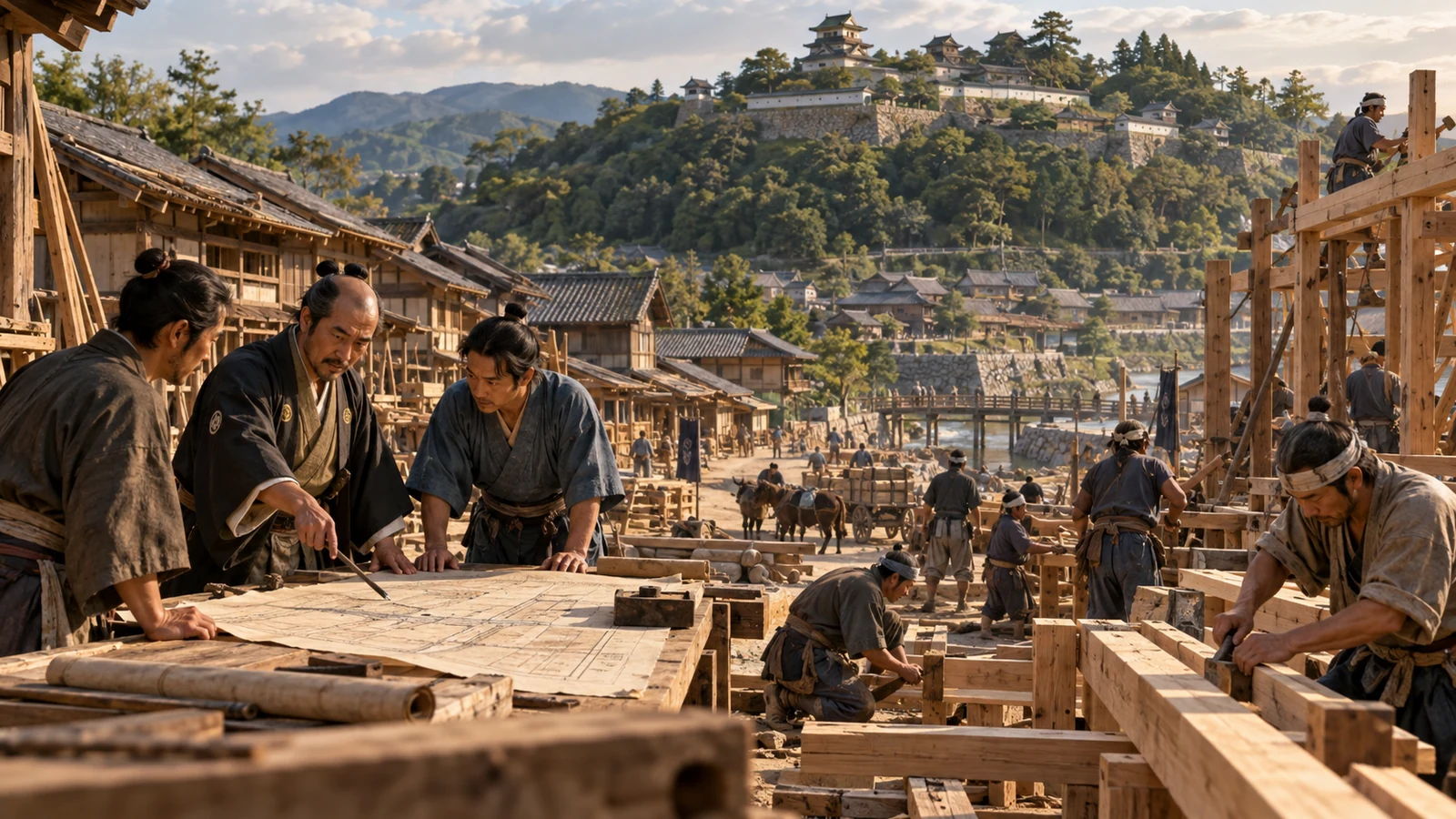
1601 · Sendai Castle and its town
The town Date Masamune built at Sendai
From warlord to domain ruler: castle and town reveal Masamune’s changing role.
Sendai, Miyagi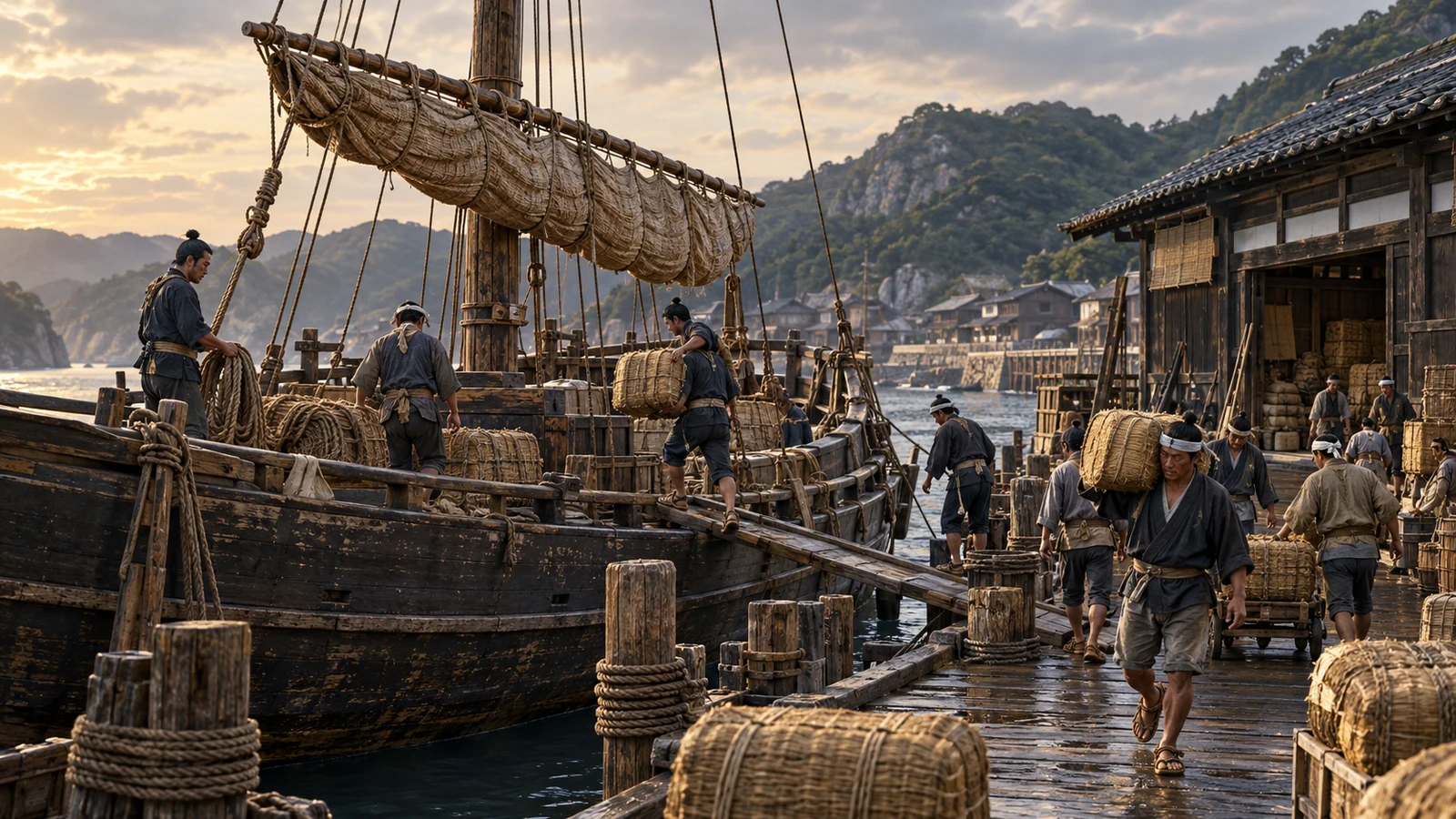
Eighteenth century–mid-Meiji · Sea of Japan routes
Trading at each port aboard a kitamae ship
Rice, kelp, herring and used clothes: voyages profited from trading, not only freight.
Hashitate, Ishikawa / Ishikari, Hokkaidō / OsakaSources
仙台市博物館 · Masamune’s life and military context.
仙台市 · Masamune’s castle and archaeological remains.
仙台市博物館 · The move to Sendai, land development, mission aims and route, and surviving portrait.
The portrait is an original historical imagining, not evidence of the person’s appearance.