August 1947
Independence and Partition in South Asia
Independence and displacement unfolded together; borders and personal memories reveal different sides.
From colonial rule to two states
Drawing a border did not divide empty land. When India and Pakistan became independent in 1947, communities of different religions and languages shared towns and villages. New national lines crossed homes, farmland and family relationships.
Punjab and Bengal were divided internally. Religious political categories did not neatly match settlement; boundaries crossed mixed towns, villages and fields.
Boundaries dividing places and families
Pakistan became independent on 14 August and India on the 15th; borders were announced on the 17th. Some people still did not know their town’s status. Amid migration and violence, families chose possessions, lost homes and work, and rebuilt elsewhere.
State records and personal experience
Government maps show boundary-making. Oral accounts describe loss, rescue and rebuilding across that line. Neither alone captures both state independence and the human costs accompanying it.
Before and after
- 14 August 1947
Pakistan became independent.
- 15 August 1947
India became independent.
- 17 August 1947
The principal boundary award was announced.
Key terms
- Partition
- Dividing a formerly governed territory.
- Boundary
- A line defining a state or other territory.
- Oral history
- Recorded accounts of personal experiences.
What supports the account?
National achievement and loss of home could coexist. Examine political decisions rather than treating violence as inevitable from religious difference.
Independence and boundary announcements in 1947, with records and testimony of displacement. Recorded experiences and family memories of people who lived through Partition.
Religion alone cannot explain political decisions and violence.
Post-independence boundary announcements created uncertainty over residence. Drawing a line also affected everyday life.
Independence and boundary announcements in 1947, with records and testimony of displacement. Recorded experiences and family memories of people who lived through Partition.
One testimony does not represent every region.
Check your understanding
Choose an answer to reveal the explanation. Return to the article and sources when you are unsure.
Sources
- Partition of British IndiaThe National Archives (UK)
Independence and boundary announcements in 1947, with records and testimony of displacement.
- Oral HistoryThe Partition Museum
Recorded experiences and family memories of people who lived through Partition.
- Boundary of 17 August 1947 and population movementsCVCE, University of Luxembourg
Map held by the UK National Archives, boundary date and population movements.
Keep exploring
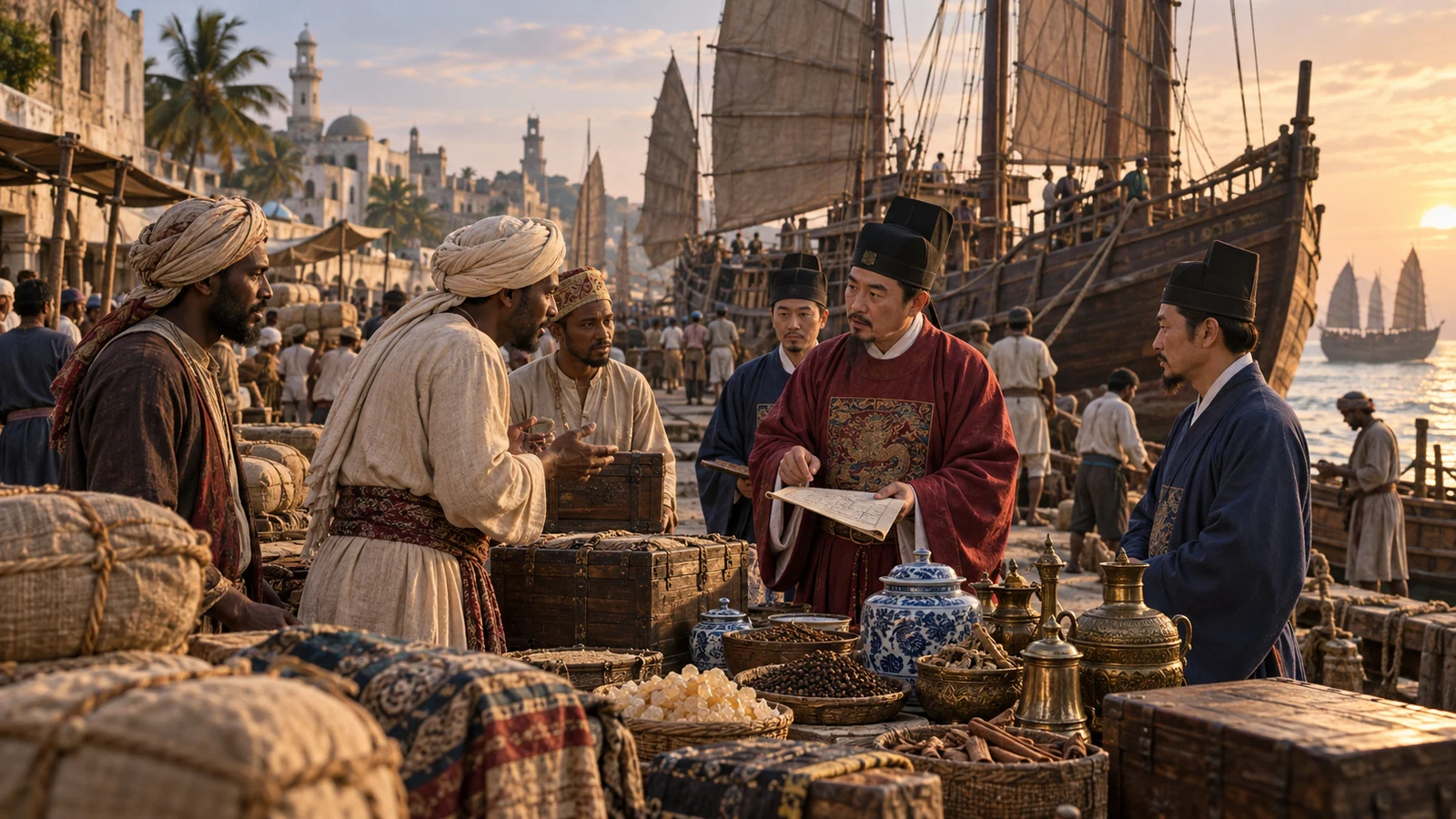
1405–1433
Zheng He’s fleets and Indian Ocean ports
Read Ming expeditions through charts, winds and port labor.
Nanjing / Calicut (Kozhikode)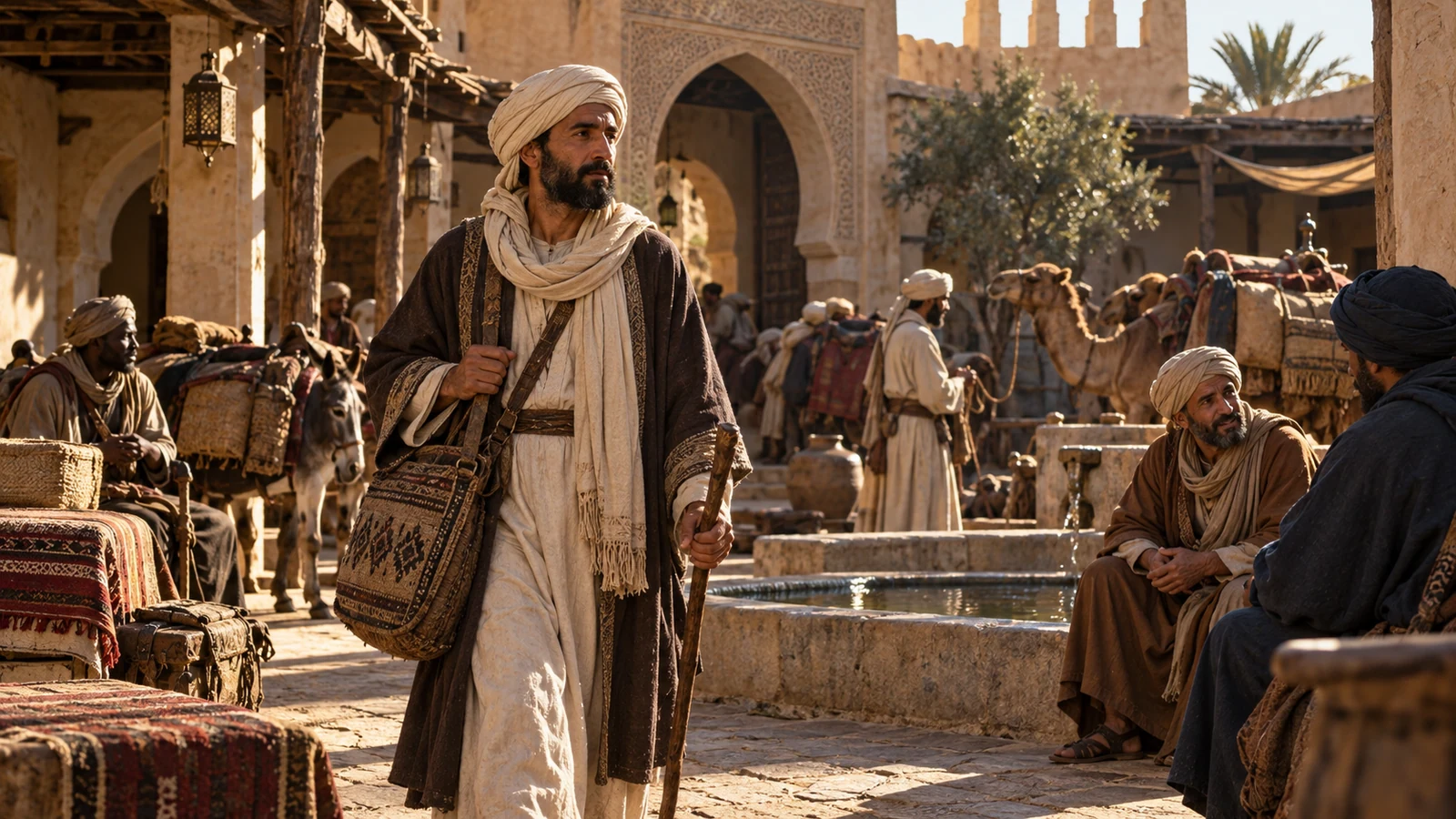
1325–1355
How to read Ibn Battuta’s travels
A pilgrimage became a long journey recorded afterward.
Tangier / DelhiMid-third century BCE
Ashoka’s inscriptions
A ruler’s inscriptions express remorse over war and ideals of government.
Mauryan realm