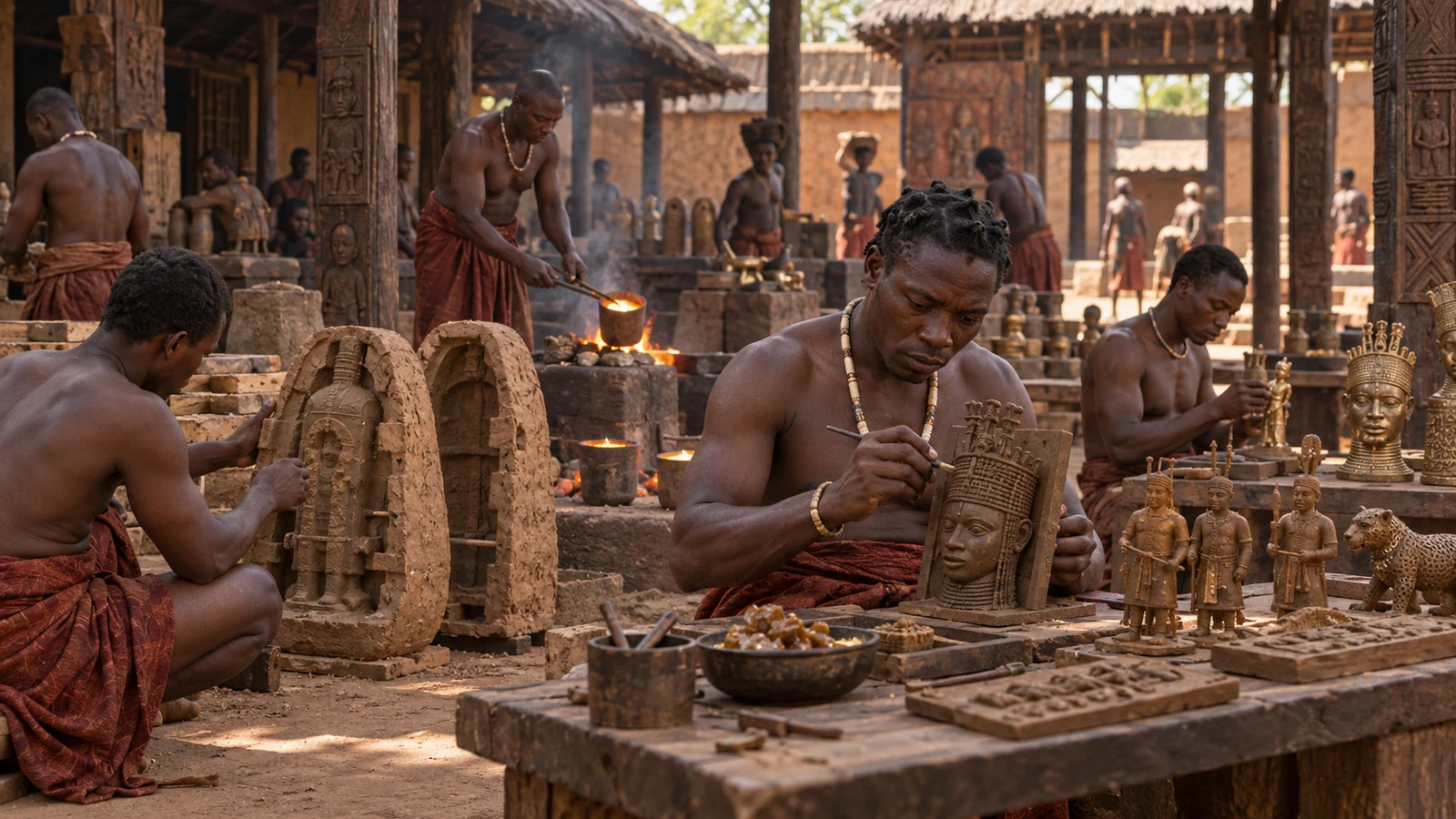
From the sixteenth century to the conquest of 1897
The Benin court and its casters
Royal memory, skilled casting and the looting of 1897.
Metal takes the space left by wax
Can the same direct-casting mould be reused after removing the object?
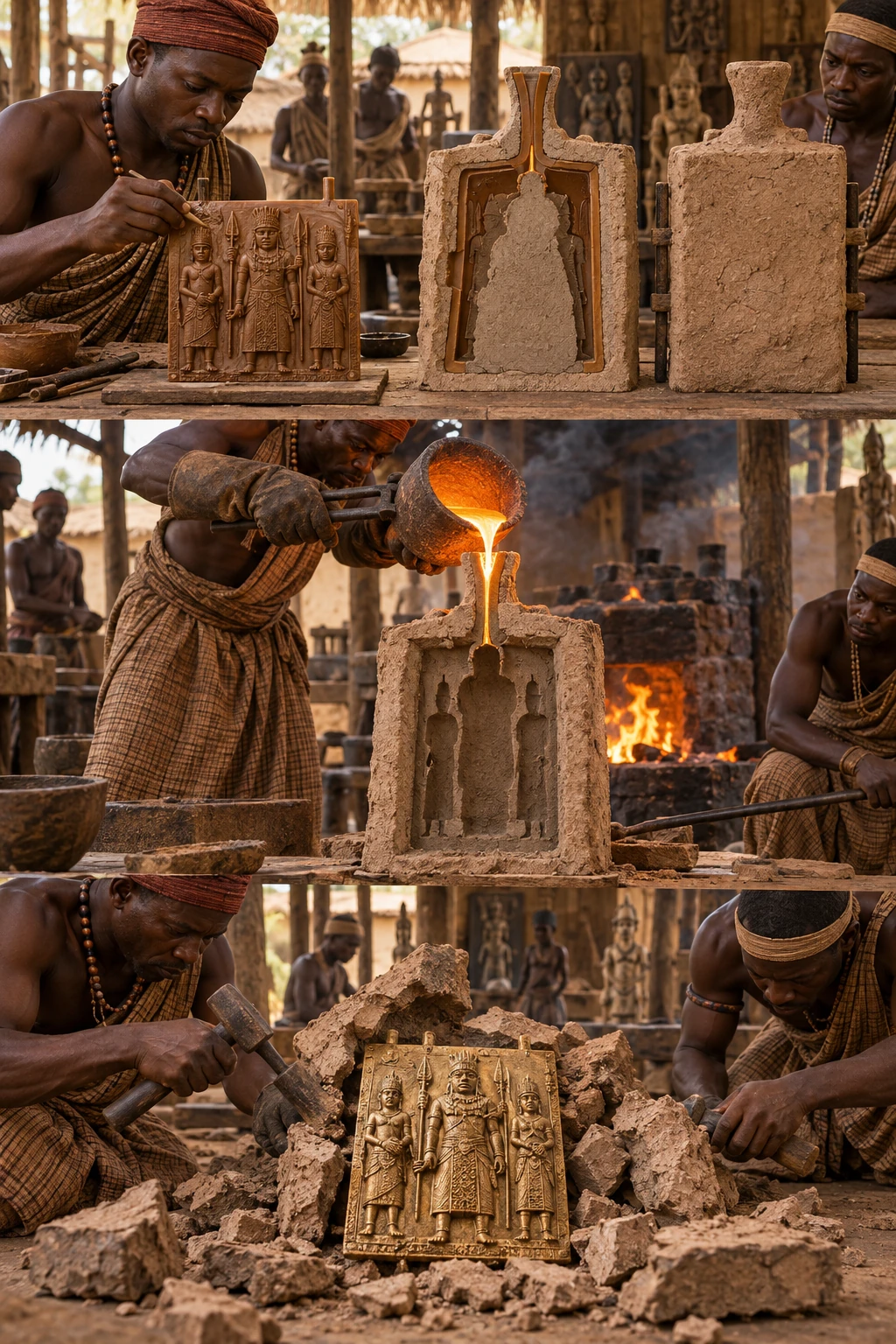
The wax shape is enclosed by clay.
The design starts in wax
Details are modelled in wax and enclosed in clay. Fine inner layers capture detail; outer layers strengthen the mould. The cutaway shows how clay encloses the wax model.
Sources and scope
These illustrations explain processes and institutions rather than reconstructing actual people, buildings or layouts. Cutaways and insets show hidden structures or separate locations.
African lost-wax casting ↗Court specialists and royal power
A new oba commissioned works remembering his predecessor. Heads and plaques served succession and ritual as well as visual display. Differences of scale could express rank within the court.
Casting royal memory in metal
Lost-wax casting replaces a wax model inside a mold with molten metal. Breaking the cooled mold and trimming and polishing finish the work; wax model and mold are lost. Many so-called bronzes use brass, an alloy of copper and zinc. Ivory requires different processes.
From kingdom to museum
British looting in 1897 displaced works from the court. A later museum donation does not establish peaceful earlier acquisition. Craftsmanship and the circumstances of displacement both belong to an object’s history.
Before and after
- From the sixteenth century
Court works were produced.
- 1897
British conquest and looting.
- 1914
A new Oba was installed.
Key terms
- Oba
- The ruler’s title in Benin.
- Lost-wax casting
- Casting with a wax model and a mold receiving metal.
- Provenance
- A work’s history of creation, ownership and movement.
What supports the account?
The present Republic of Benin and historical kingdom are distinct. Accurate location prevents misidentifying the society that produced the works.
Court guilds, materials, ritual, the 1897 conquest and looting. Lost-wax casting, date range and the 1897 acquisition and looting history.
A current country name alone does not identify the kingdom.
Lost-wax casting separates shaping and casting stages. Technique brings specialist artisans behind royal commissions into view.
Court guilds, materials, ritual, the 1897 conquest and looting. Lost-wax casting, date range and the 1897 acquisition and looting history.
Museum records also reflect the collecting institution’s standpoint.
Check your understanding
Choose an answer to reveal the explanation. Return to the article and sources when you are unsure.
Sources
- Benin BronzesBritish Museum
Court guilds, materials, ritual, the 1897 conquest and looting.
- Benin brass braceletBritish Museum
Lost-wax casting, date range and the 1897 acquisition and looting history.
- Collecting historiesBritish Museum
Objects displaced by military action and provenance investigation.
- Commemorative head of an obaThe Metropolitan Museum of Art
Royal succession, court guild, head forms and production period.
- The lost-wax casting processThe Metropolitan Museum of Art
General process of wax models, molds and molten metal; not a production record for a specific Benin work.
Keep exploring
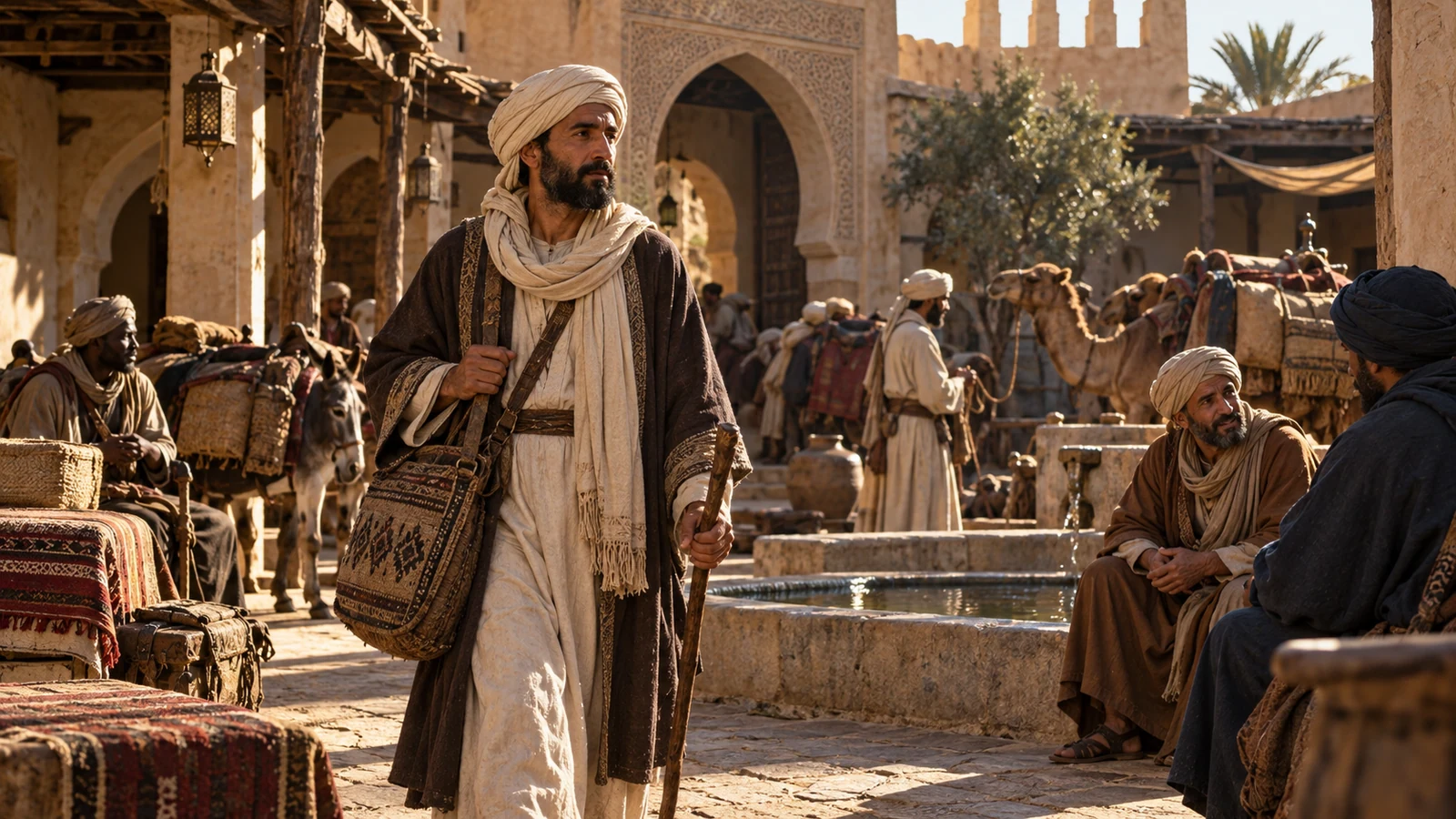
1325–1355
How to read Ibn Battuta’s travels
A pilgrimage became a long journey recorded afterward.
Tangier / Delhi1324–sixteenth century
Mali and learning in Timbuktu
Gold and salt trade supported a West African city of mosques, manuscripts and learning.
TimbuktuMainly thirteenth–fourteenth-century prosperity
Kilwa and the Indian Ocean
A Swahili port connected eastern Africa’s interior with Indian Ocean trade.
Kilwa Kisiwani