1530–1578
Uesugi Kenshin
Daimyo of Echigo
Ruled Echigo as Nagao Kagetora before inheriting the Uesugi name. Compare contemporary documents with later accounts of his wars.
Why an Echigo ruler fought in Kantō
Why did Nagao Kagetora of Echigo intervene in Kantō? Supporting Uesugi Norimasa and inheriting the Uesugi name and Kantō deputyship gave him a political role there. The later name Kenshin belongs to a career shaped by succession and office.
Uesugi Norimasa sought Kagetora’s support against Hōjō expansion. Inheriting the Uesugi name and office changed his political standing, helping explain campaigns beyond Echigo. Succession was a mechanism of authority as well as a change of name.
Different objectives in Shinano and Kantō
Relationships with displaced Shinano warriors helped draw him into Kawanakajima. Land and followers mattered beyond personal rivalry.
Campaigns supporting Murakami in Shinano and acting for the Uesugi in Kantō involved different allies and opponents. Supply and alliances differed by destination, while Echigo still required government. Managing simultaneous regional politics complicated decisions beyond advance or retreat.
After his death in 1578, adopted sons Kagekatsu and Kagetora fought for succession. Retainers and outside powers became involved. Relationships united under Kenshin split over whom to follow next.
Disputed succession and later honor stories
After Kenshin’s death in 1578, his adopted heirs Kagekatsu and Kagetora fought the Ōtate conflict. Retainer support and outside connections extended the struggle. Military leadership had not guaranteed an agreed, stable transfer of authority.
The “Bi” banner invoked Bishamonten. Religious devotion could support legitimacy and cohesion as well as private prayer. Temple relationships therefore belong within the study of lordship, not outside supposedly rational military history.
Salt-giving and single-combat tales became recurring images of an honorable Kenshin. Administrative letters and dramatic military narratives preserve different material. His reputation reflects later readers’ preferred heroic figure alongside evidence of his actions.
Turning points
- 1530
Birth into the Nagao family.
- 1548
Succession and lordship at Kasugayama.
- 1553
A Shinano campaign begins the Kawanakajima conflicts.
- 1561
Inheritance of the Uesugi name and Kantō office.
- 1578
Death followed by the Ōtate succession conflict.
Their legacy
He dealt with different powers in Shinano and Kantō while governing Echigo. The succession conflict after his death exposed the difficulty of transferring those relationships to another ruler.
Related history
Sources
長野市 · Biographical outlines; later battle tales are not treated as proven tactics or single combat.
長岡市立中央図書館文書資料室 · Kenshin’s death in 1578 and the succession conflict.
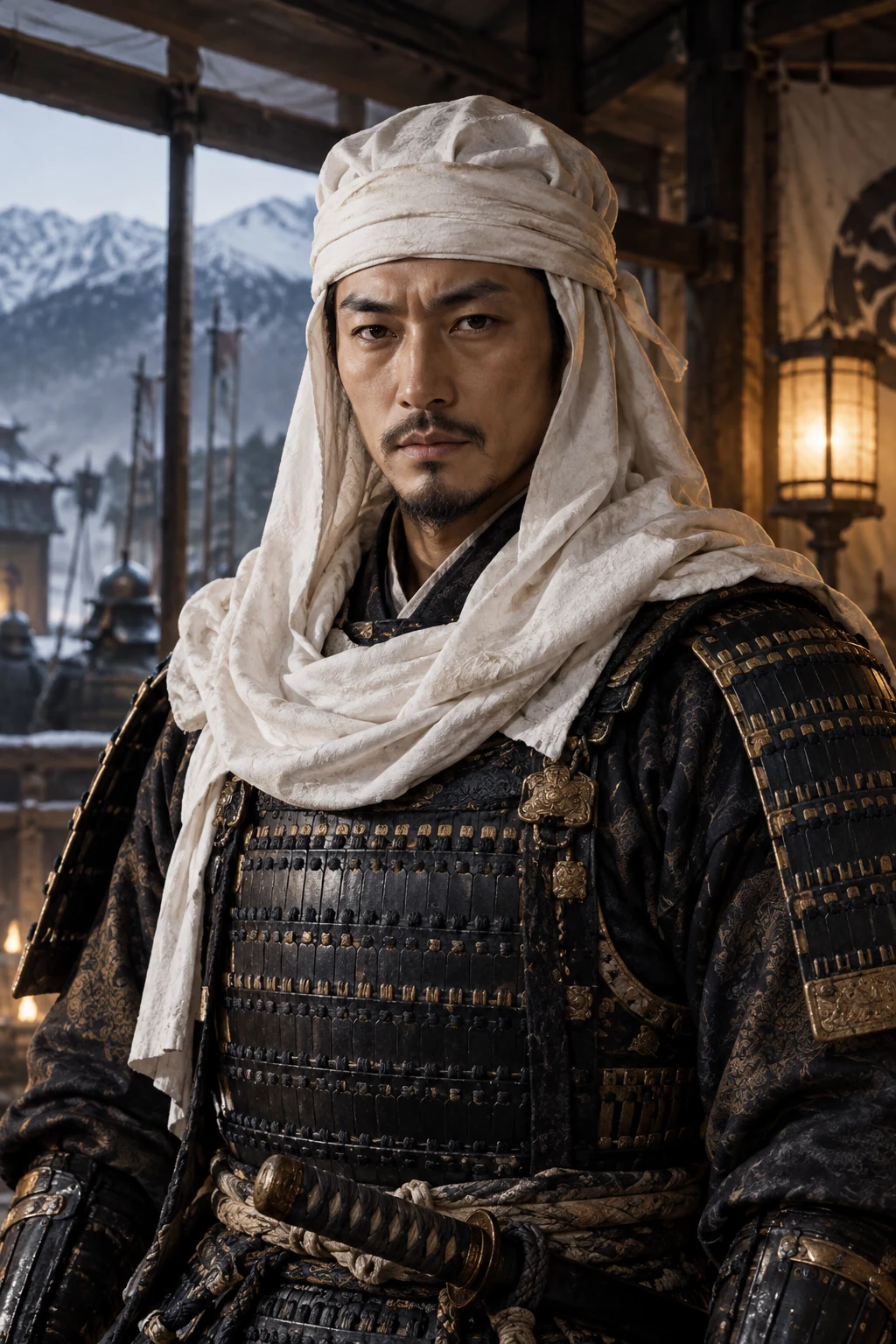
The portrait is an original historical imagining, not evidence of the person’s appearance.