1864–1929
Tsuda Umeko
Educator and school founder
Studied in the United States as a child and founded Joshi Eigaku Juku in 1900, seeking pathways from advanced education to women’s work.
Making overseas education into a path at home
Umeko left for the United States at six, but returned to limited opportunities to use her education. After roughly a decade abroad beginning in 1871, she sought to turn that experience into opportunities for other women to study and work.
Advanced education and professional careers remained limited for women. Through teaching, Umeko confronted how overseas learning could be used in Japan. Creating opportunities for other women to study and work became a direction for her educational project.
At Bryn Mawr she studied biology and researched frog eggs with Thomas Hunt Morgan. Small classes and research informed her educational approach. Scholarship work extended opportunity to other Japanese women while she was still studying.
The school that began with ten students
Ōyama Sutematsu, Uryū Shigeko and Alice Bacon supported the 1900 opening. Bacon helped with examinations and class placement. Ten initial students required teachers, funds, premises and practical administration as well as a founding ideal.
The school sought broad education alongside English expertise and encouraged independent thought. Specialized learning offered routes into work when women’s options were constrained. Its purpose extended beyond preparation for marriage.
Graduates extend educational opportunities
Eight students graduated in the first ceremony in 1903. Later records show Tsuda tracking graduates’ teaching posts on a map, often at girls’ schools. Their own students carried the institution’s influence beyond its founder.
Costs and prior schooling restricted who could enter. The school opened a professional route through English, but access was unequal. Graduates’ careers coexist with the circumstances of women unable to reach that route.
Permission to handle English teachers’ qualification without a separate examination in 1905 established a professional route. After the school burned in the earthquake of 1923, Anna Hartshorne and others raised recovery funds. Qualifications, graduates, teachers and supporters helped sustain the school beyond one founder.
Turning points
- 1864
Born in Edo.
- 1871
Departed for study in the United States.
- 1882
Returned to Japan.
- 1889
Began study at Bryn Mawr.
- 1900
Opened Joshi Eigaku Juku.
- 1929
Died.
Their legacy
Graduates taught later generations in schools around Japan. The institution and a path to English-teaching credentials turned one person’s overseas education into continuing educational opportunity.
Related history
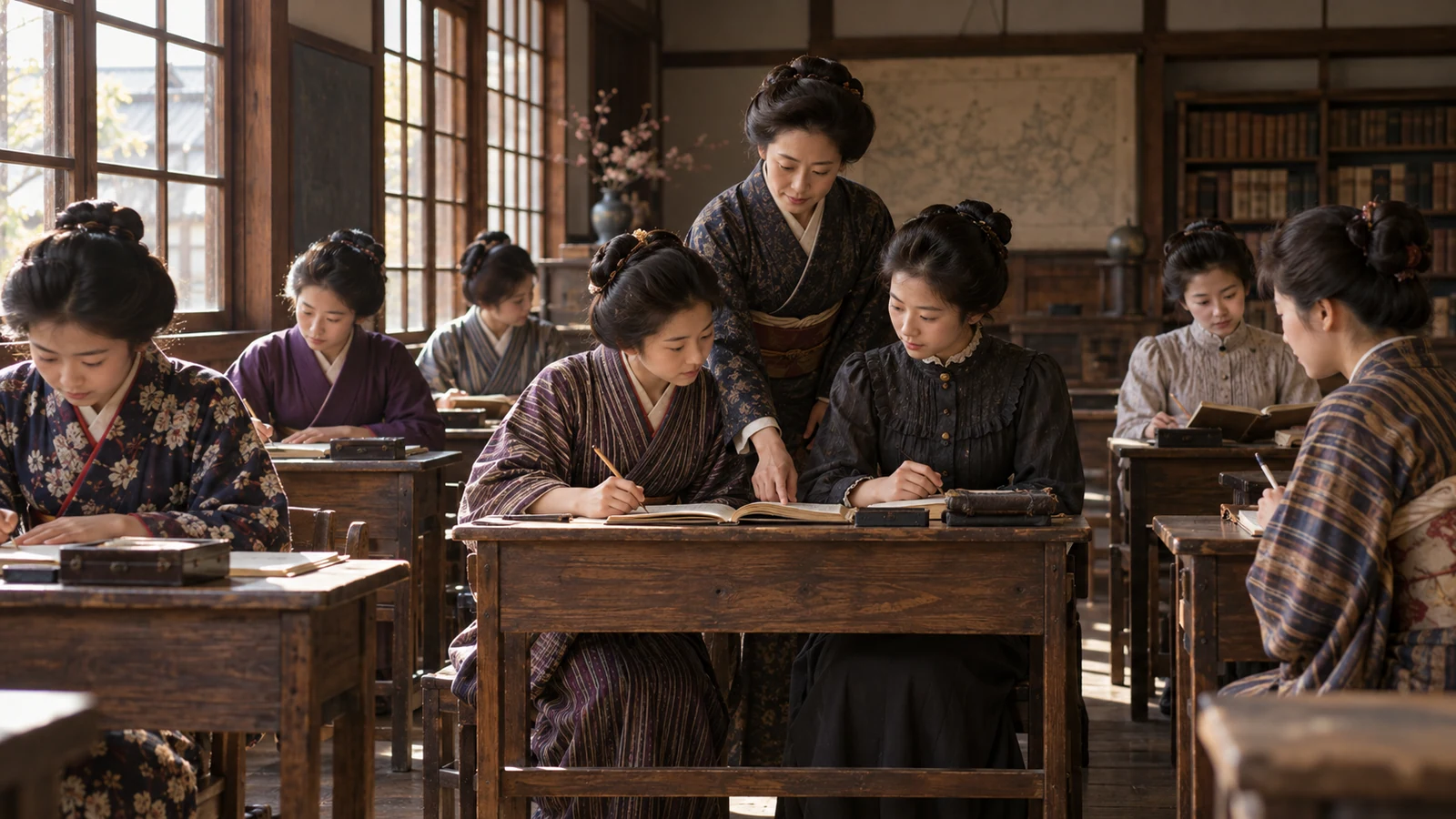
1900 · Opening Joshi Eigaku Juku
The school Tsuda Umeko began with ten students
After overseas study, creating opportunities at home connected higher education to work.
Kōjimachi, Tokyo1889 · Promulgation of the Meiji Constitution
What the Meiji Constitution established
Original documents explain the emperor, parliament and subjects’ rights.
TokyoSources
津田塾大学 · Overseas study, the school’s foundation and educational principles.
津田塾大学 · Principal dates in 1864–1929.
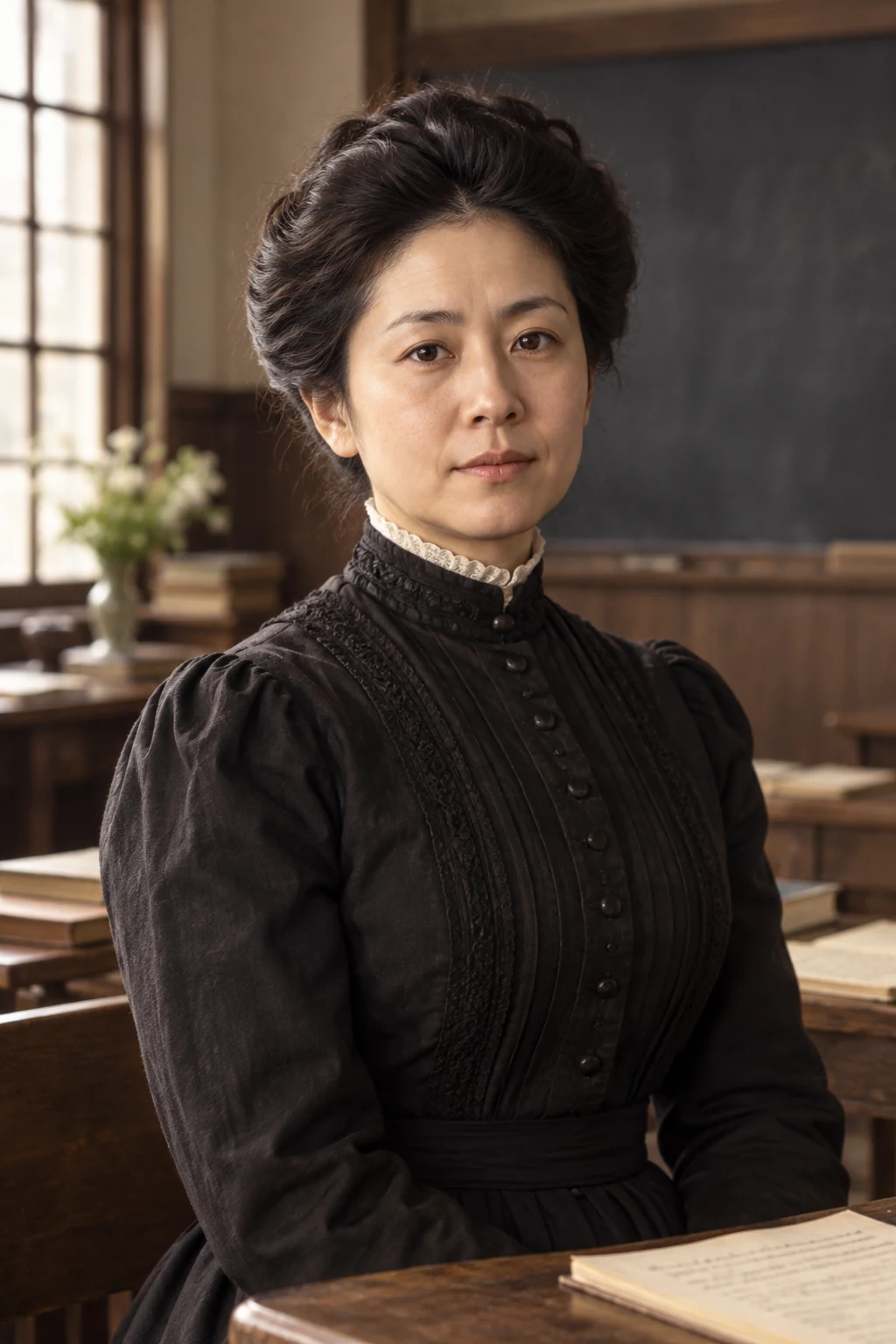
The portrait is an original historical imagining, not evidence of the person’s appearance.