1521–1573
Takeda Shingen
Daimyo of Kai
Expanded from Kai into Shinano. His history includes warfare, river management and the labor needed to sustain a domain.
Feeding and protecting an expanding domain
Expansion from Kai into Shinano added castles and supply routes to maintain. After displacing his father Nobutora in 1541, Takeda Harunobu—later Shingen—had to govern farmland, rivers and warrior allegiances alongside fighting.
Murakami Yoshikiyo’s resistance and appeal to the Uesugi help explain Kawanakajima. Alliances concerned the survival of local families and holdings. The conflict involved regional choices, not merely a duel between two famous commanders.
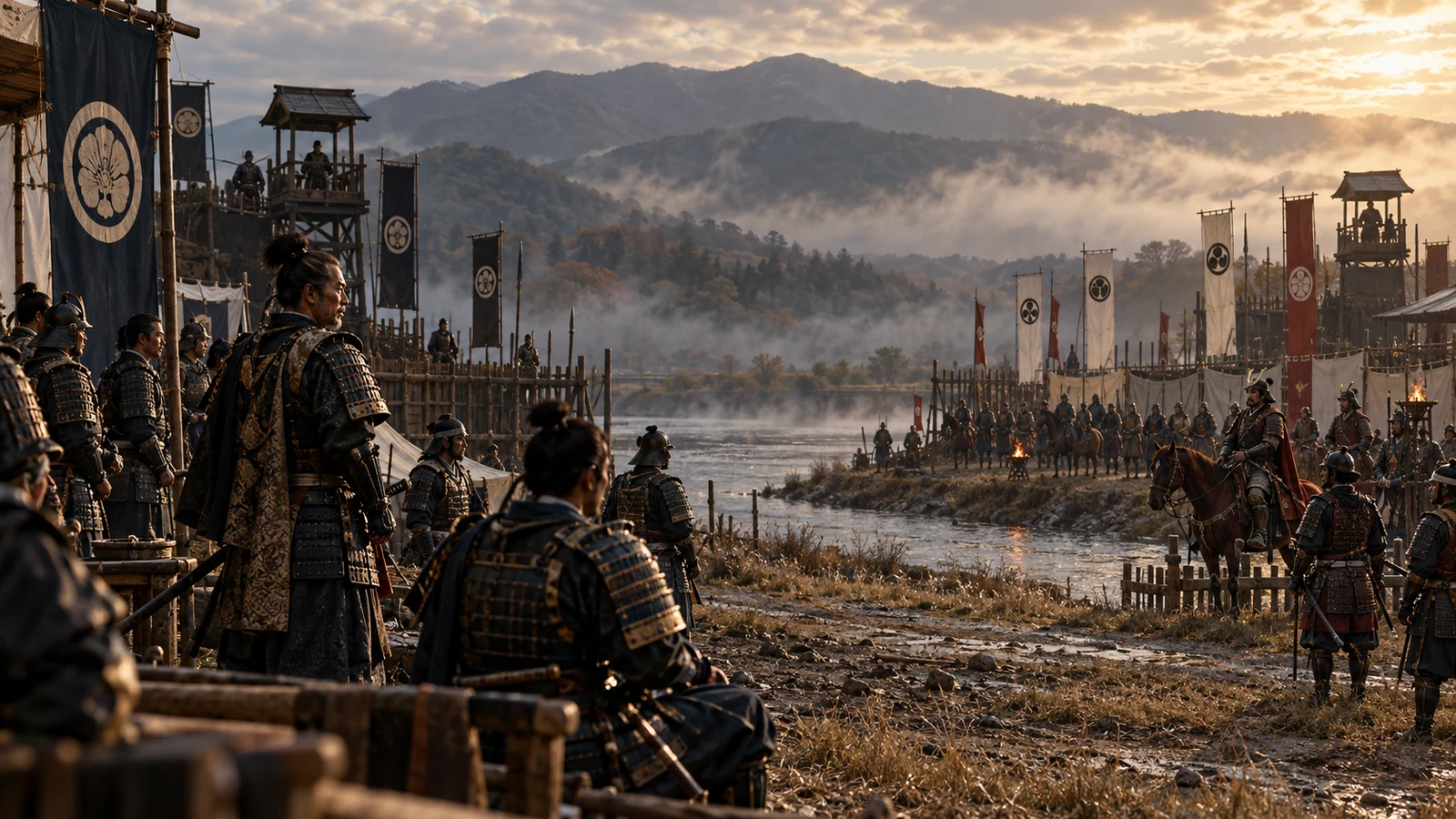
At the Chikuma–Sai confluence, crossings, forts and provisions constrained Kawanakajima campaigns. The battle of 1561 is famous, but later accounts of a “woodpecker” tactic or single combat are not equally secure. Terrain, supplies and regional relationships shaped the Uesugi conflict.
Water management, farmland and military resources
In the flood-prone Kōfu basin, works associated with Shingen used diversion, rock faces and terrain as well as embankments.
Redirecting water could transfer risk. Flood management required observation and repair after construction. Works associated with Shingen belonged within maintained farmland and land use. Protecting fields secured food and revenue, the basis of territorial military resources.
Conquests farther from Kai lengthened routes for supplies and commands. New retainers’ rights and village obligations needed adjustment. A captured castle could not sustain troops without revenue and provisions. Expansion increased resources while enlarging the demands of government and logistics.
From Mikatagahara to succession
Shingen defeated Tokugawa forces at Mikatagahara in 1572 and died the next year. Military advantage did not settle the future. Katsuyori inherited expanded lands and retainers to maintain under changing political conditions.
The Takeda did not fall immediately at Shingen’s death. His successor still needed alliances, support and supplies; the conditions behind the father’s expansion did not necessarily persist.
Turning points
- 1521
Born in Kai.
- 1541
Took control of the Takeda house.
- 1561
The fourth Kawanakajima encounter.
- 1572
Fought Tokugawa forces at Mikatagahara.
- 1573
Died.
Their legacy
Measures to weaken floodwater protected farmland, which supplied revenue and provisions. Warfare and management of the domain depended on that connection.
Related history
Sources
長野市 · Biographical outlines; later battle tales are not treated as proven tactics or single combat.
山梨県 · Flood management, diversion and embankments in the Kōfu basin.
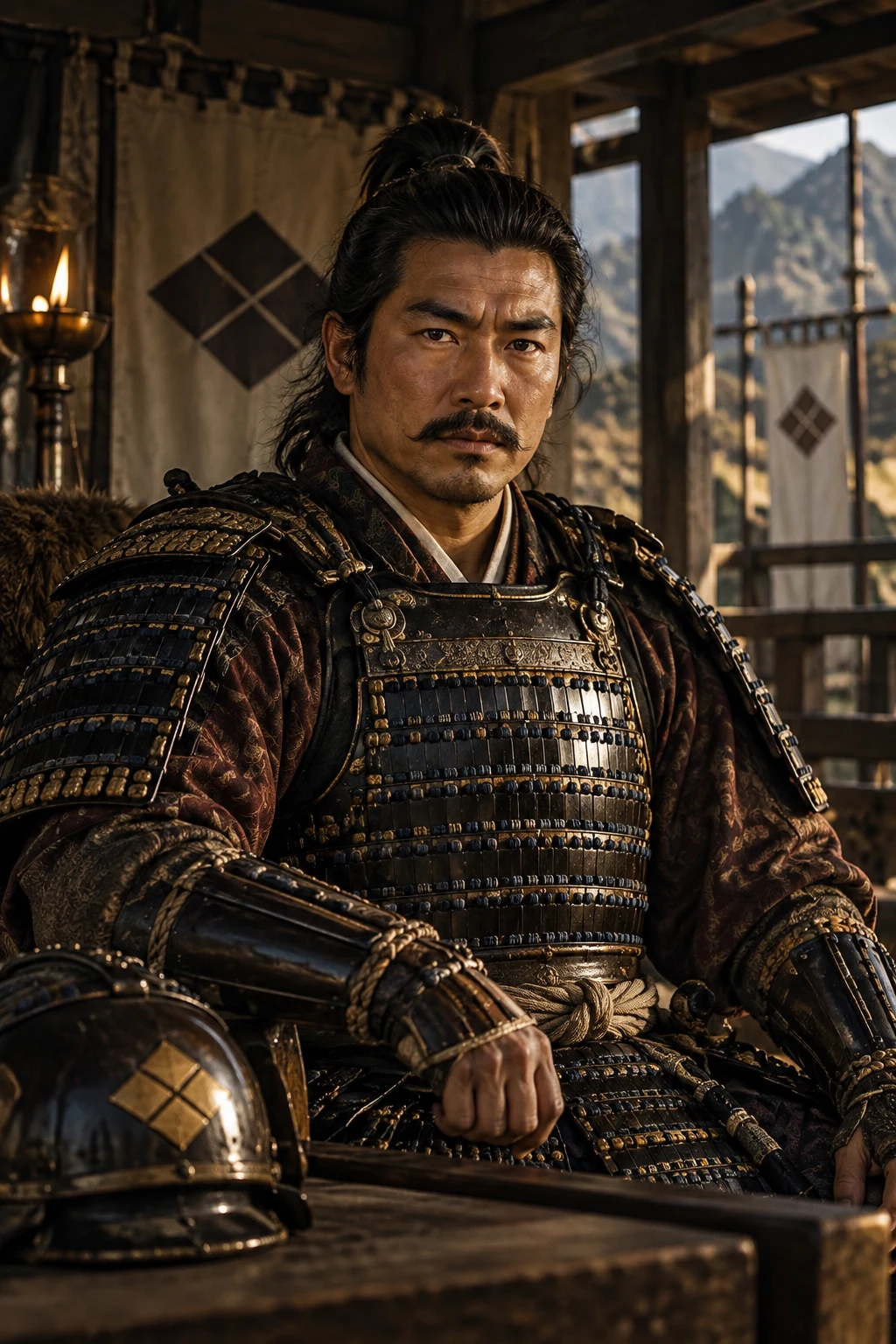
The portrait is an original historical imagining, not evidence of the person’s appearance.