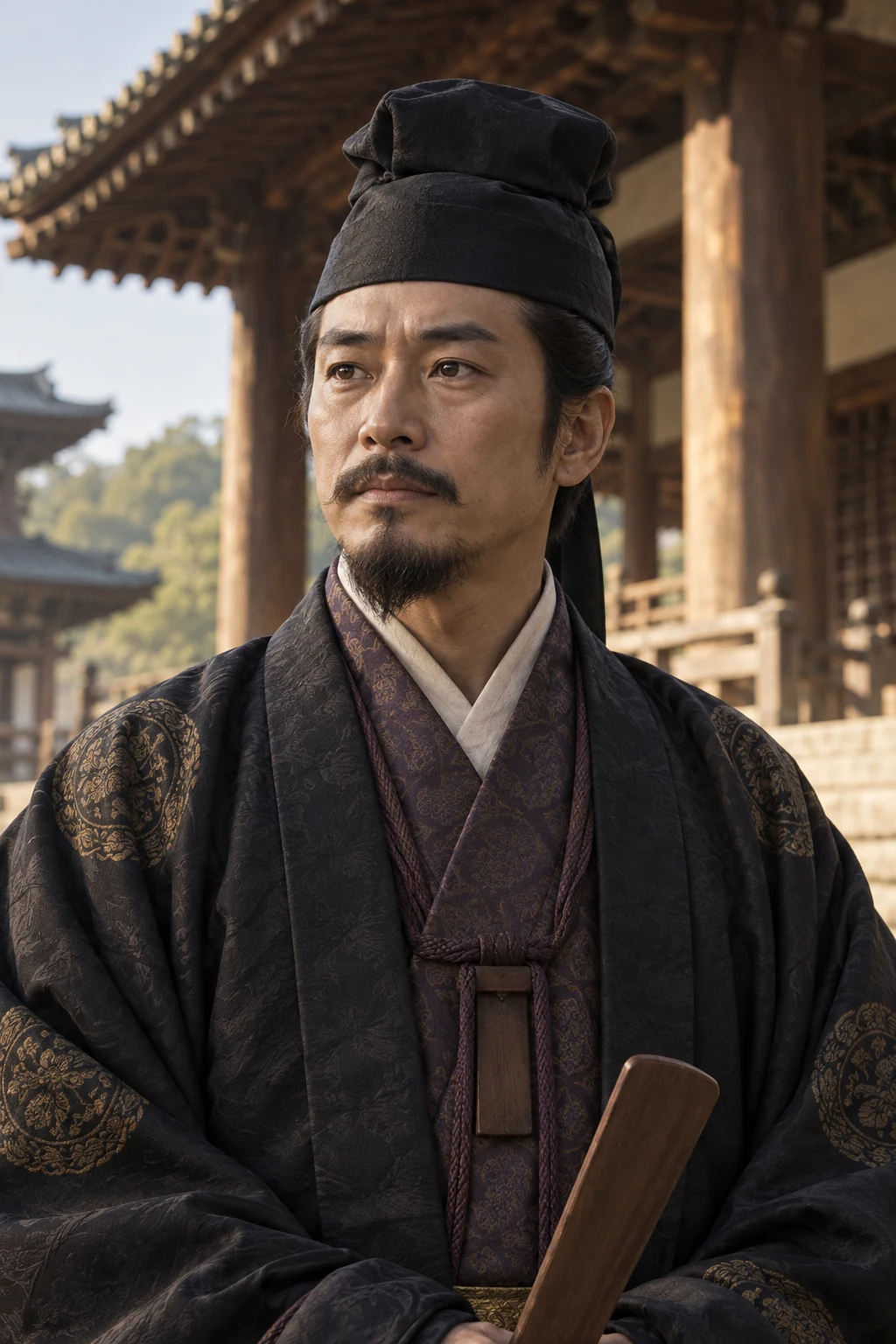
574–622 (traditional dates)
Prince Shōtoku
Asuka-period prince
An Asuka prince also known as Umayado. Distinguish early evidence for Buddhism and political reform from the later Shōtoku cult.
Common rules in a government of clans
Whom should officials serve when powerful clans have competing interests? Ranks and seventeen articles are attributed to Umayado under Empress Suiko. Buddhist reception brought temples and written learning into the same changing political world.
Suiko’s government also depended on Soga no Umako, whose clan sponsored Buddhism and Asukadera. Temple building mobilized materials and skilled workers while displaying authority. Cooperation among royalty, clans and continental specialists did not remove competition for political power.
Official ranks and continental learning
The Nihon Shoki dates the twelve ranks to 603 and the seventeen articles to 604. Ranks ordered service; the articles addressed Buddhism, cooperation and conduct in justice and government. They sought common official behavior amid clan interests, rather than modern citizens’ rights or separation of powers.
Sui was a major unified empire. Embassies required diplomatic documents and ritual as well as safe passage. Ono no Imoko’s mission of 607 belongs to efforts to learn abroad while asserting Wa’s own status.
Monks and students studied scripture, administration and written records abroad. Connections between sponsoring rulers and temples and offices using that knowledge brought diplomatic learning into domestic government.
Temples, inscriptions and remembrance
Hōryūji is traditionally dated to about 607. Records describe a fire in 670, so surviving buildings are not automatically those Umayado saw.
The Shaka triad’s halo inscription connects illness, death and a wish to commission an image. It informs remembrance without proving every legend. Later illustrated biographies organized his life into the story of an ideal Buddhist protector.
Completed in 720, about a century after his death, the Nihon Shoki tells this history through a royal framework. Temple inscriptions and subsequent biographies were produced at different times for different purposes.
Turning points
- 574, traditional
Traditional birth year.
- 593
Traditional chronology places his political role under Suiko here.
- 603–604
Chronicle dates for ranks and the seventeen articles.
- 607
Embassy to Sui; traditional Hōryūji foundation period.
- 622
Death in the received chronology.
- 720, compilation
Completion of the Nihon Shoki.
Their legacy
Institutions and temples introduced new ranks and learning into clan politics. Later devotion remembered the prince as an ideal Buddhist protector.
Related history
588–694 · Palaces and temples in Asuka
Temples rise in Asuka
Palaces, tiles and a water clock reveal a changing political and cultural centre.
Asuka, Nara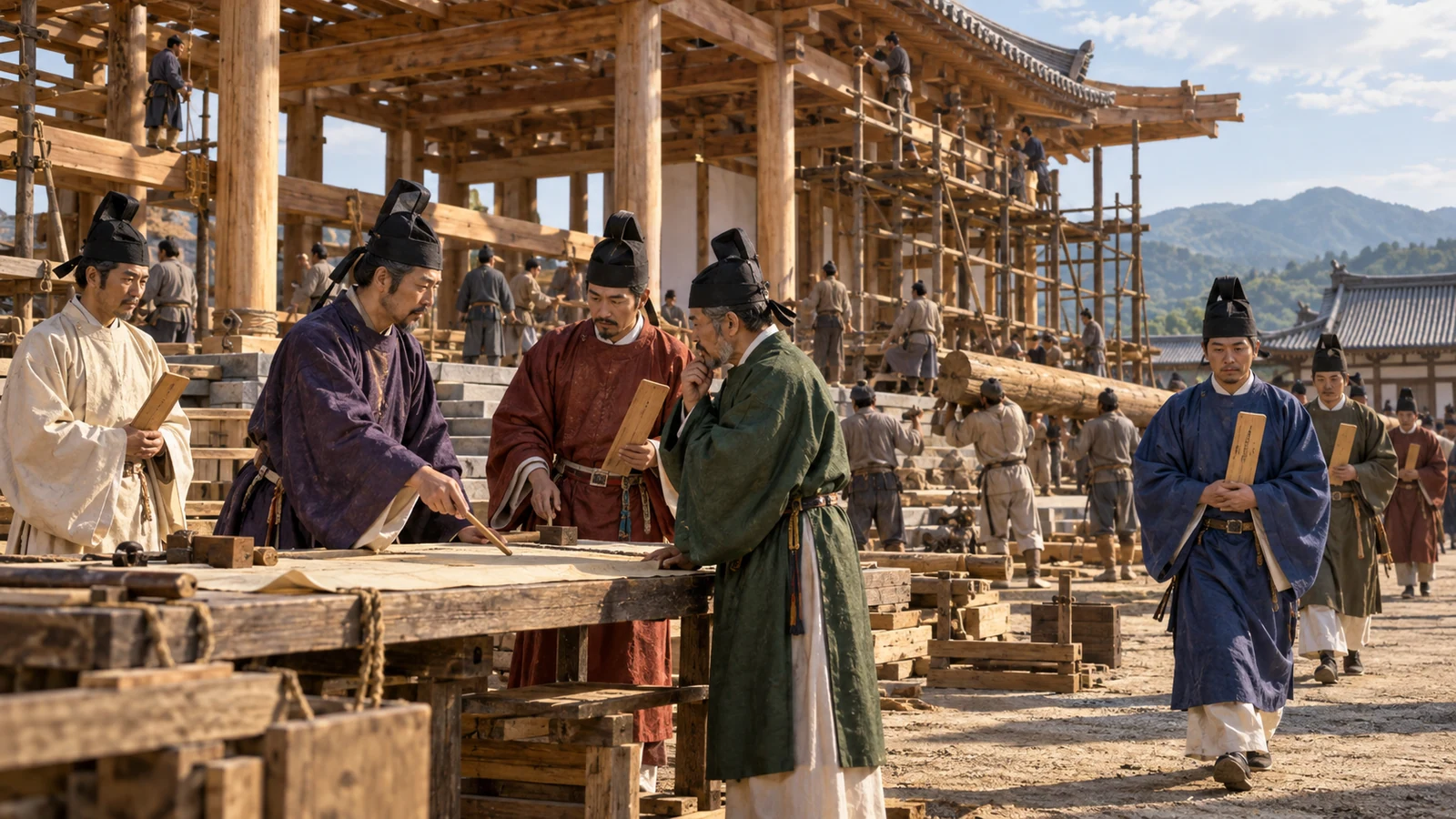
645–701 · From coup to legal codes
The Taika reforms were not a single-day change
Separate the assassination of Soga no Iruka from the later formation of state institutions.
Asuka, Nara / Naniwa, OsakaSources
東京国立博物館 · Buddhist reception, the Shōtoku cult and later art.
法隆寺 · The temple’s foundation chronology and account of Shōtoku, including religious tradition.
法隆寺 · The halo inscription, date and intention of the Shaka triad; includes the temple’s devotional interpretation.
奈良県(国土交通省公開) · Shōtoku, Umako, the Sui missions and continental institutions and techniques.
The portrait is an original historical imagining, not evidence of the person’s appearance.