1st–2nd century CE
Pliny the Younger
Letter writer and Roman official
Wrote letters about the eruption to Tacitus. His own viewpoint was Misenum; he is not placed inside Pompeii as a resident in this story.
A nephew records what happened after his uncle sailed
When his uncle sailed toward the coast, Pliny the Younger remained at Misenum. His escape with his mother became a later letter to Tacitus. The writer recording his uncle’s death had not witnessed that death himself.
As a provincial official, he asked Emperor Trajan for decisions on spending and administration. Reports and replies connected local problems with imperial authority.
The younger Pliny inherited his uncle’s name but did not write the Natural History. Nine books preserve letters to various correspondents; the tenth contains exchanges with Trajan. Questions and replies about provincial business illustrate government through communication across distance.
Leaving Misenum with his mother
Pliny was at Misenum, not Pompeii, during the eruption of 79. He did not join his uncle’s voyage and later described evacuation with his mother in Letter 6.20. Moving vehicles, changes at sea and darkness form one local experience, distinct from his uncle’s rescue mission.
In 6.20, his mother urged the young man to escape without her; he took her hand and tried to bring her along. Amid shaking and darkness, flight involved a decision about whom to stay with, not simply how quickly to move.
Sending two accounts to a historian
Letters 6.16 and 6.20 to Tacitus concern the uncle’s death and the nephew’s experience respectively. Written later, they organized events rather than supplying immediate time-stamped reports. Combining them into one eyewitness journey would falsely place the nephew at his uncle’s death.
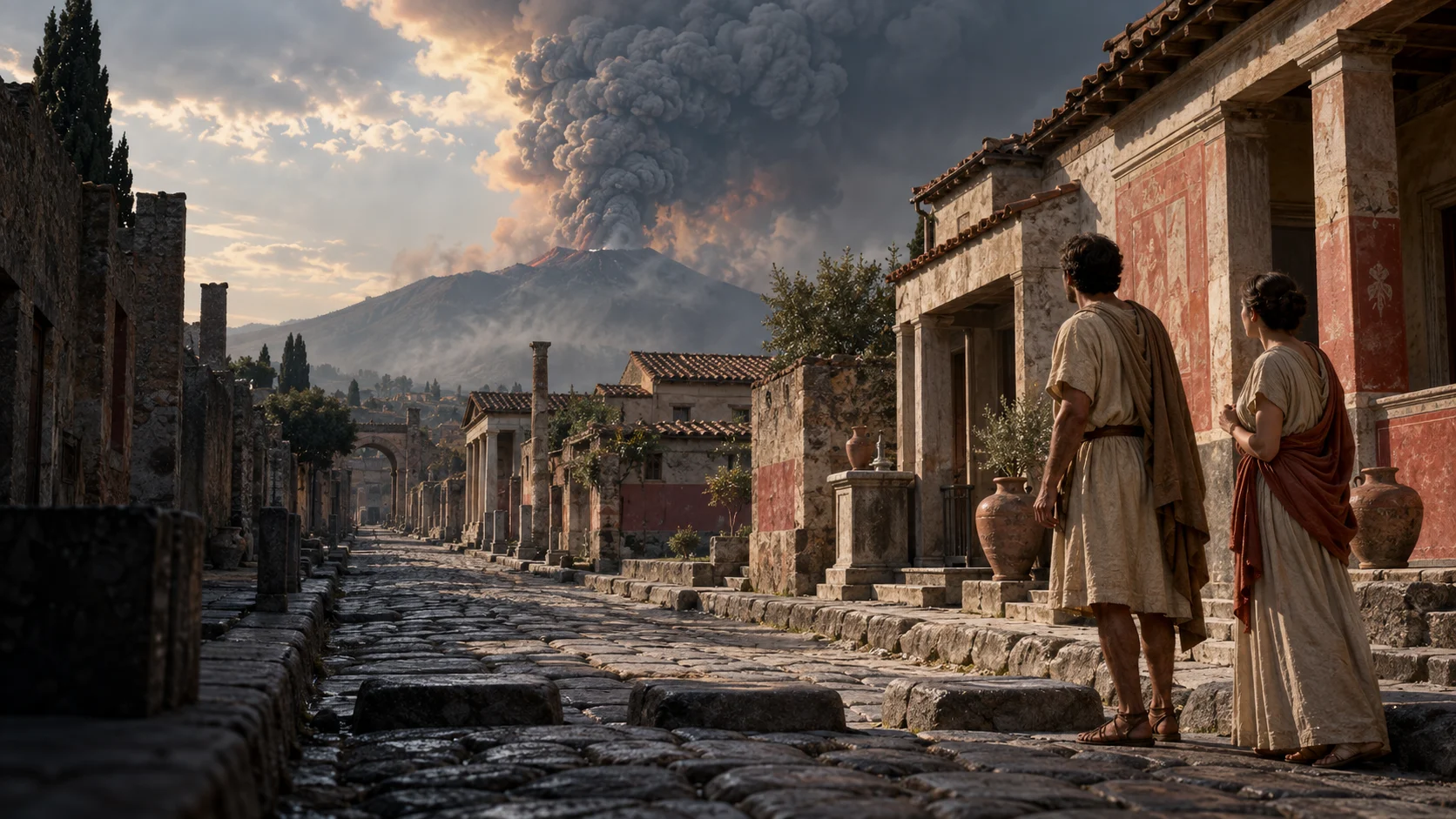
Letters convey narrated experience; excavated buildings preserve material effects elsewhere. Comparison does not relocate Misenum’s events onto Pompeii’s streets. Similarities and geographical differences both matter.
Unlike his uncle’s Natural History, his principal surviving work is a collection of letters, including administrative and social correspondence. The eruption letters belong to that broader account of a political life and its relationships.
Turning points
- Later first century CE
Grew up and received education in the Roman world.
- The eruption of 79
Stayed at Misenum as his uncle departed.
- 100
Became consul.
- Around the early second century
Sent accounts of the eruption to Tacitus.
Their legacy
Letter 6.16 recounts his uncle’s death; 6.20 describes his escape with his mother. Their different locations distinguish his own experience from information received from others.
Related history
Related stories
Sources
Dickinson College Commentaries · The nephew’s account of his uncle’s naval mission and death at Stabiae.
Dickinson College Commentaries · Earthquakes at Misenum and the nephew’s evacuation with his mother.
Dickinson College Commentaries · The consulship of 100, provincial government and collection structure. Reprinted older scholarship, not a definitive source for eruption dates or death.
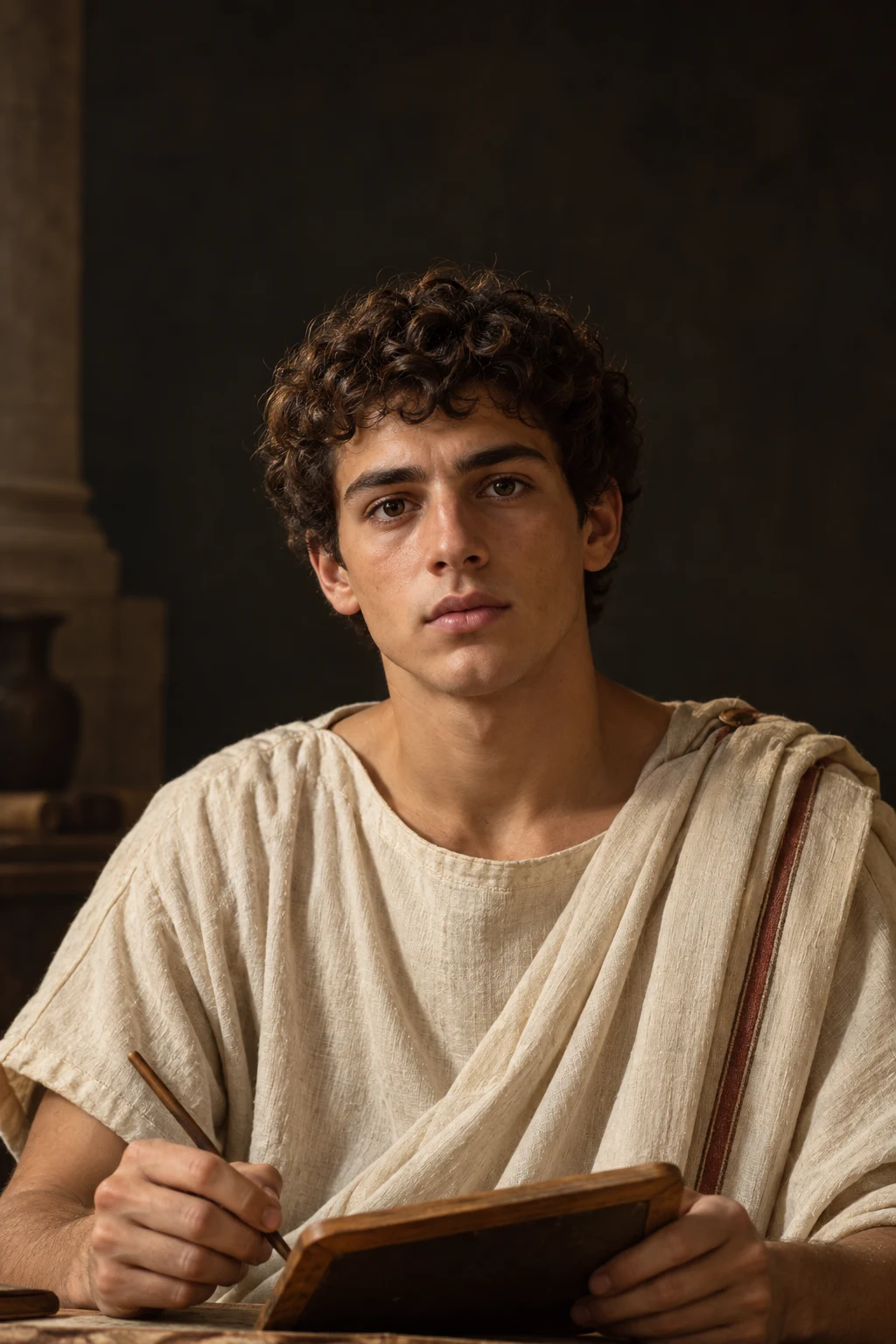
The portrait is an original historical imagining, not evidence of the person’s appearance.