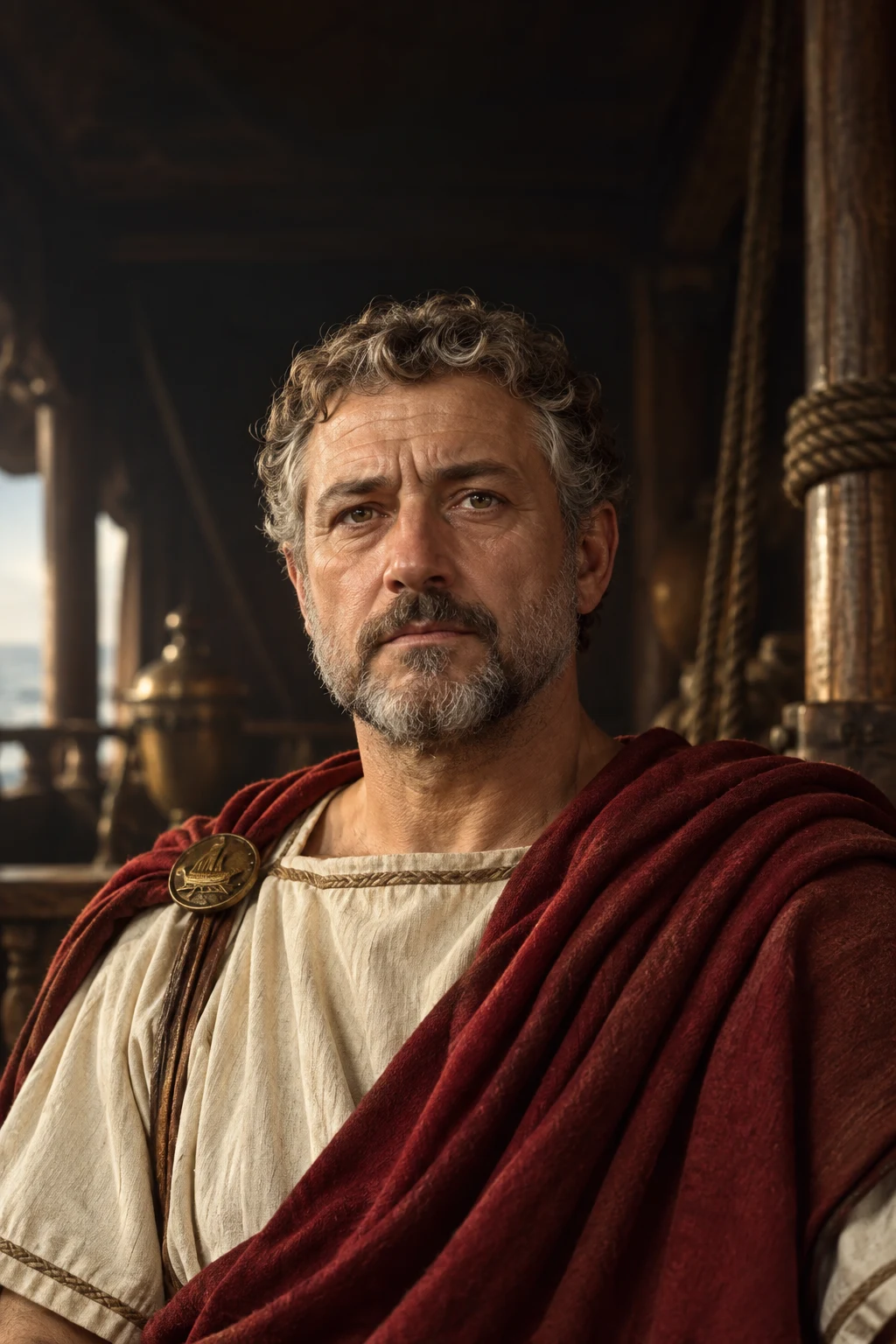
1st century–79 CE
Pliny the Elder
Author and fleet commander
His nephew’s letter describes his rescue effort during the eruption. The account of his death includes reports from others, rather than events all witnessed by the nephew.
An observation voyage becomes a rescue mission
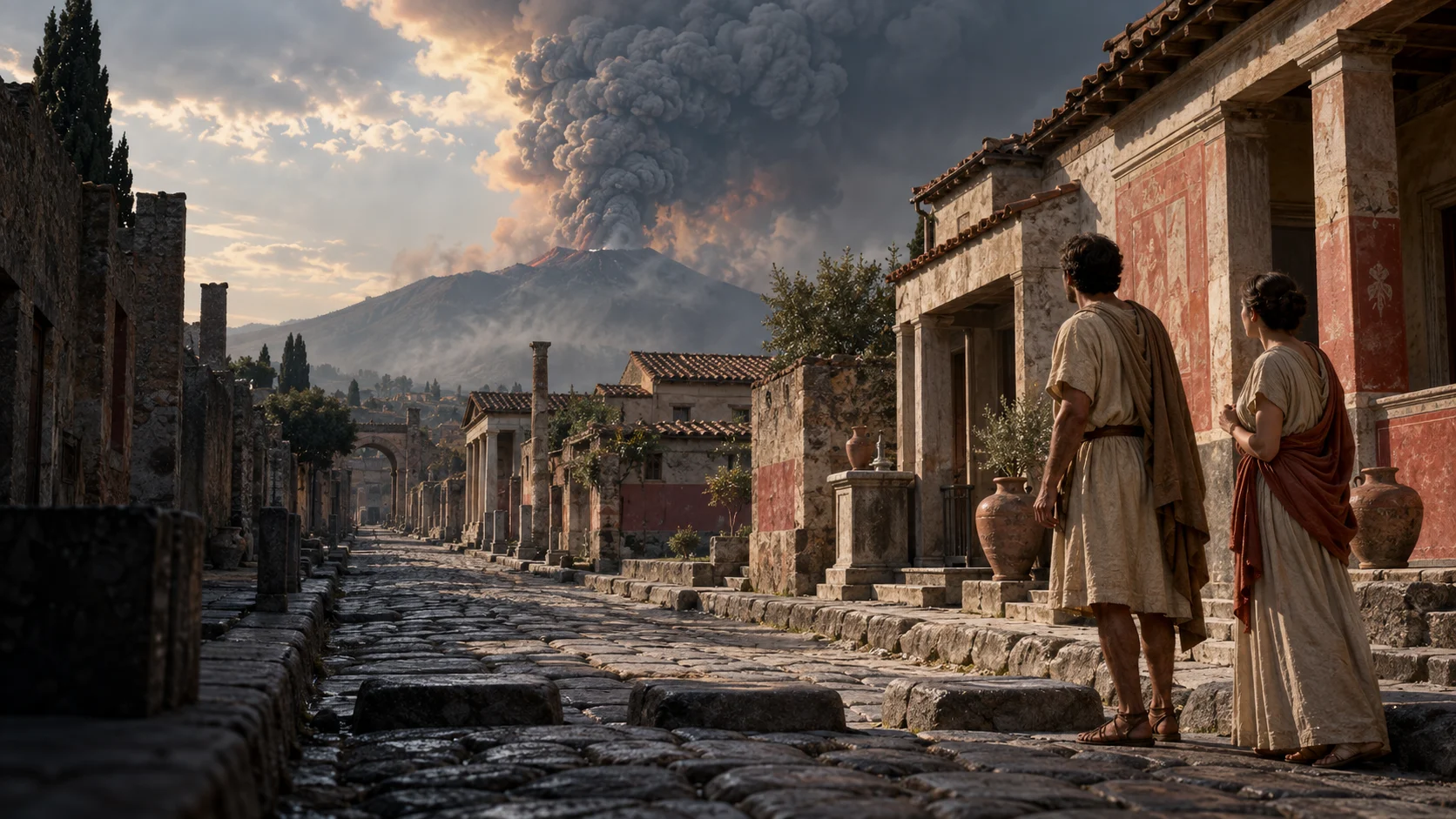
In 79 CE, the fleet commander Pliny the Elder prepared to inspect an unusual cloud. A request for rescue then arrived from the coast. The compiler of Natural History was both an observer and someone able to mobilize ships and crews.
Compilation required judgments about credibility and arrangement. Its mixture of observation, hearsay and marvels reveals ancient knowledge-making.
Descriptions of plants and remedies include uses and reported effects. Ancient ideas of usefulness differ from experimentally established effects, and plant names need not match modern taxonomy. Materials and information sources nevertheless reveal connections between life and knowledge of nature.
From observing the cloud to coastal rescue
During the eruption of 79, Pliny commanded the Misenum fleet. His nephew says preparations to inspect the unusual cloud changed after Rectina requested help. Several vessels sailed to aid coastal inhabitants. Naval authority, as well as interest in observation, enabled that response.
At Stabiae, Pomponianus and the fleet faced wind and sea constraints. The account also compares unstable buildings with falling material outdoors. Choices involved competing dangers rather than a simple safe-or-dangerous alternative.
How his death at Stabiae was reported
Pliny died at Stabiae. His nephew remained at Misenum and reported the final events through information obtained afterward. Letter 6.16 answered the historian Tacitus’s request and sought to preserve the uncle’s actions. It is an account of a life’s ending, not a log of every vessel.
Natural History selected reading and reports into an extensive compilation. During the eruption, rescue responsibilities joined his interest in observation. Scholarship and naval command were different activities held by the same person.
Turning points
- First century CE
Worked in Roman military and administration.
- Before 79
Compiled Natural History.
- 79
Commanded the fleet at Misenum.
- The eruption of 79
Sailed toward the coast and died at Stabiae.
Their legacy
Natural History and his nephew’s account of the rescue voyage survived. His observations and reading, and information later received by his nephew, entered different forms of record.
Related history
Related stories
Sources
Dickinson College Commentaries · The nephew’s account of his uncle’s naval mission and death at Stabiae.
Tufts University / Perseus Digital Library · An ancient compilation about people and skills, accessed in a later translation.
The portrait is an original historical imagining, not evidence of the person’s appearance.