1867–1934
Marie Curie
Physicist and chemist
Investigated radioactivity and new elements. Measurement, chemical separation and laboratory building reveal the work behind scientific discoveries.
An unexplained measurement leads toward new elements
An ore’s activity could not be explained by its uranium alone. Marie Curie pursued the discrepancy as evidence of an unknown component. After moving from Warsaw to Paris in 1891, her studies led toward research joining physical measurement and chemical analysis.
Becquerel reported spontaneous uranium radiation in 1896. Marie compared activity in different materials, investigating an intrinsic property rather than a response requiring external illumination. This led toward a search for additional elements.
Some ores were more active than their uranium content could explain. A discrepancy between known properties and measured values suggested an unknown component. Comparable samples and measurements made that inference possible.
Separating ores to identify elements
In 1898 the Curies and collaborators announced polonium and radium. Polonium’s name recalled Poland. Measuring separated fractions traced the active component through repeated chemical analysis.
Evidence for an unknown element preceded isolation and characterization. Processing substantial raw material for a minute component required equipment, labor and repeated measurements. Physical measurement and chemical separation worked together.
The 1903 physics prize was shared with Becquerel and Pierre. Marie received the chemistry prize alone in 1911 for work including the elements’ discovery and radium’s isolation. The awards recognize related but distinct research achievements.
Teaching and wartime X-ray diagnosis
After Pierre’s death in 1906, she continued university teaching and research. Training researchers and managing samples and instruments carried knowledge forward. Awards did not end the work of maintaining a scientific environment.
During the First World War she promoted X-ray diagnosis for wounded soldiers. Transport alone was insufficient: equipment needed power, trained operators and medical interpretation. Mobile facilities and training joined scientific knowledge with practical delivery.
X-ray imaging differs from experiments on radioactive material. Exposure protection was limited, with shielding and equipment improvements developing later. Practical use involved both obtaining benefits and reducing harm.
Building research and care with Regaud
At the Radium Institute, Marie led physical and chemical research while physician Claudius Regaud studied biological and medical effects. Complementary laboratories linked measurement with investigation of effects on cells and patients.
They developed a foundation in 1920, recognized for public benefit in 1921. Henri de Rothschild supported it and Émile Roux was involved. Finance, premises and patient services joined scientific results with institutional care.
The dispensary developed in 1922, linking consultation and radiation care with research. Using experimental knowledge required finance, premises and clinicians. Organizations delivering the technology developed after the original discoveries.
Turning points
- 1867
Born in Warsaw.
- 1891
Moved to Paris to study.
- 1898
Announced polonium and radium.
- 1903
Shared the Nobel Prize in Physics.
- 1911
Received the Nobel Prize in Chemistry.
- 1934
Died.
Their legacy
Discovery announcements were followed by separation, measurement, teaching and institution-building. Medical applications depended on complementary expertise and organizations involving Regaud and others.
Related history
Sources
Nobel Prize Outreach · Life, research and the awards of 1903 and 1911.
Musée Curie · Element discoveries in 1898 and research and medical institutions.
Nobel Prize · Research methods, collaboration, awards and laboratory conditions.
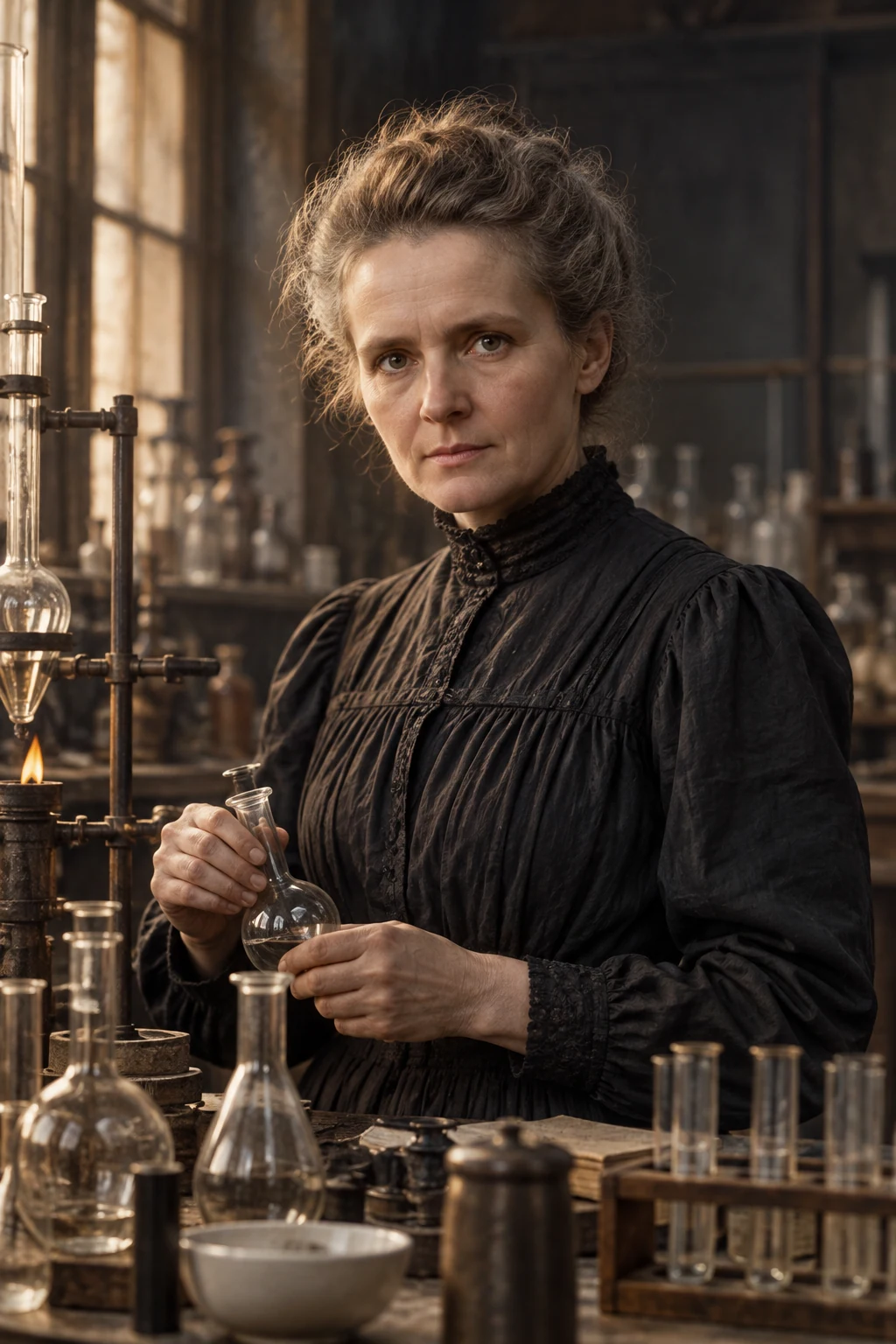
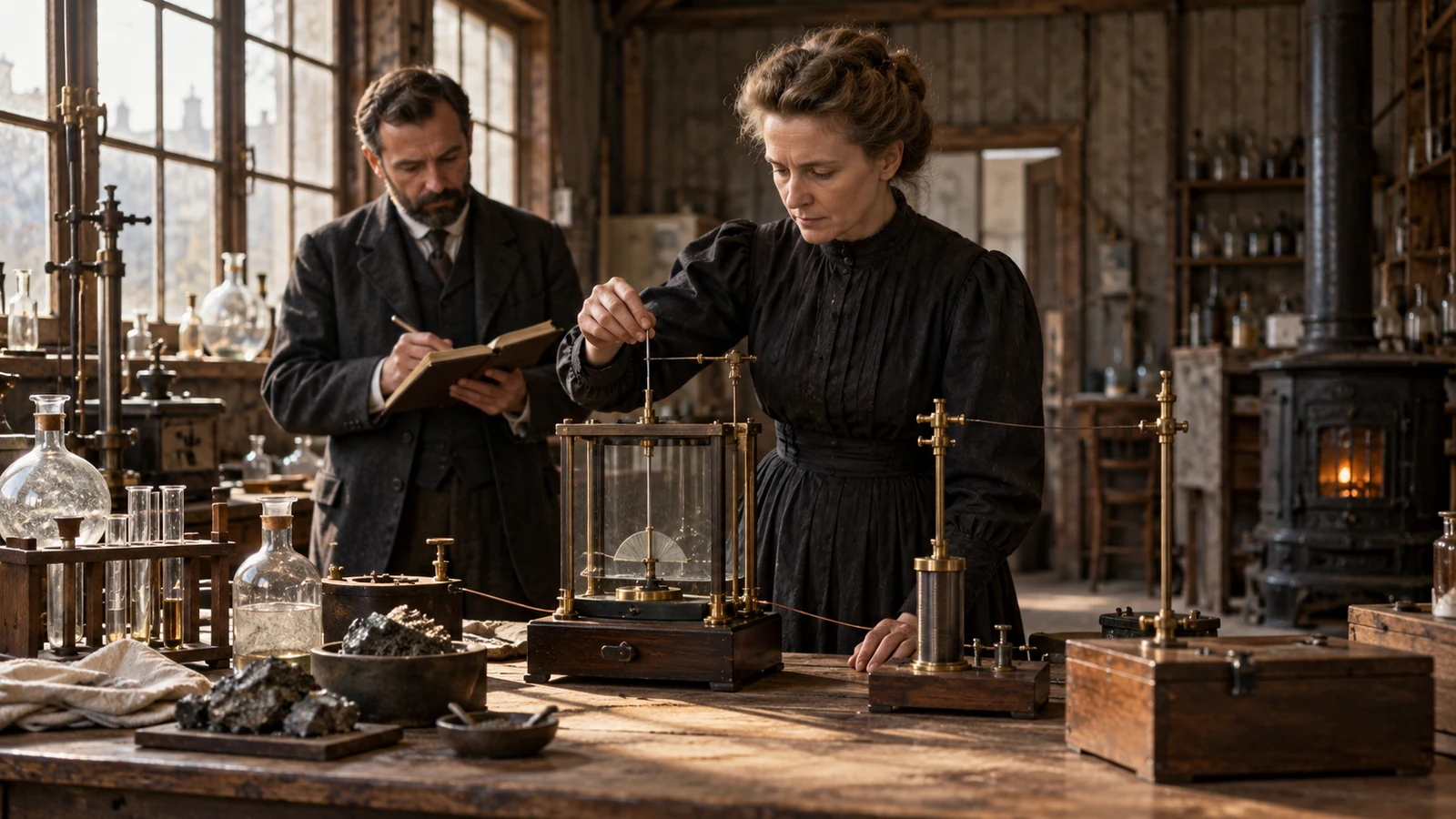
The portrait is an original historical imagining, not evidence of the person’s appearance.