1304–late 14th century; death year debated
Ibn Battuta
Traveler and jurist
A Moroccan jurist whose pilgrimage led to extensive travels. Read the dictated Rihla as evidence about societies and the traveler’s own perspective.
A pilgrim becomes a judge abroad
In 1325 the jurist Ibn Battuta left Tangier for pilgrimage. His learning helped him gain hospitality and employment far from home. Routes expanded toward courts and ports, making him a participant in societies as well as a visitor.
Pilgrimage routes connected travelers with lodging and charitable support. Shared religion and legal learning helped him form relationships across different societies. His journey depended on social networks rather than solitary self-sufficiency.
Indian Ocean voyages and inland caravans required different seasons and support. Lists of modern countries obscure those conditions. Mapping ports and land routes shows how existing transport networks enabled long-distance travel.
Working as a jurist abroad
He served as a judge under Muhammad ibn Tughluq in Delhi and later worked in the Maldives. Patronage offered status but tied him to political danger. Applying legal ideals could also bring tension with local practice.
Accounts of African ports and courts are valuable, but his judgments reflect the legal and cultural expectations he brought with him.
His Mali account judges ceremony, gifts and religious practice through a visiting jurist’s expectations. Local values need not match his assessment. Material evidence and other records broaden the history beyond one observer’s approval or disappointment.
From spoken experiences to a travel account
After his return, Ibn Battuta dictated his experiences to Ibn Juzayy under royal patronage in Morocco. The resulting travel account was not an unchanged daily diary. Memory, literary shaping and the patron’s purpose contributed to its composition; borrowed passages and some claimed visits remain subjects of scrutiny.
Distinguish observation, hearsay and passages resembling earlier texts. A vivid story and a securely established itinerary are different questions.
Courts providing work and patrons funding onward travel extended the itinerary. Pilgrim lodging, merchant ships, caravan routes and shared legal learning connected him with distant communities.
Turning points
- 1304
Born in Tangier.
- 1325
Departed for pilgrimage.
- 1330s
Worked as a jurist in places including Delhi.
- Late 1340s, according to the travel account
Returned to Morocco after extensive travels.
- 1350s
Visited West Africa and later dictated his account.
Their legacy
Travel through pilgrimage routes, ports and courts became a dictated account after his return. It records regional life alongside a jurist’s preferences and misgivings.
Related history
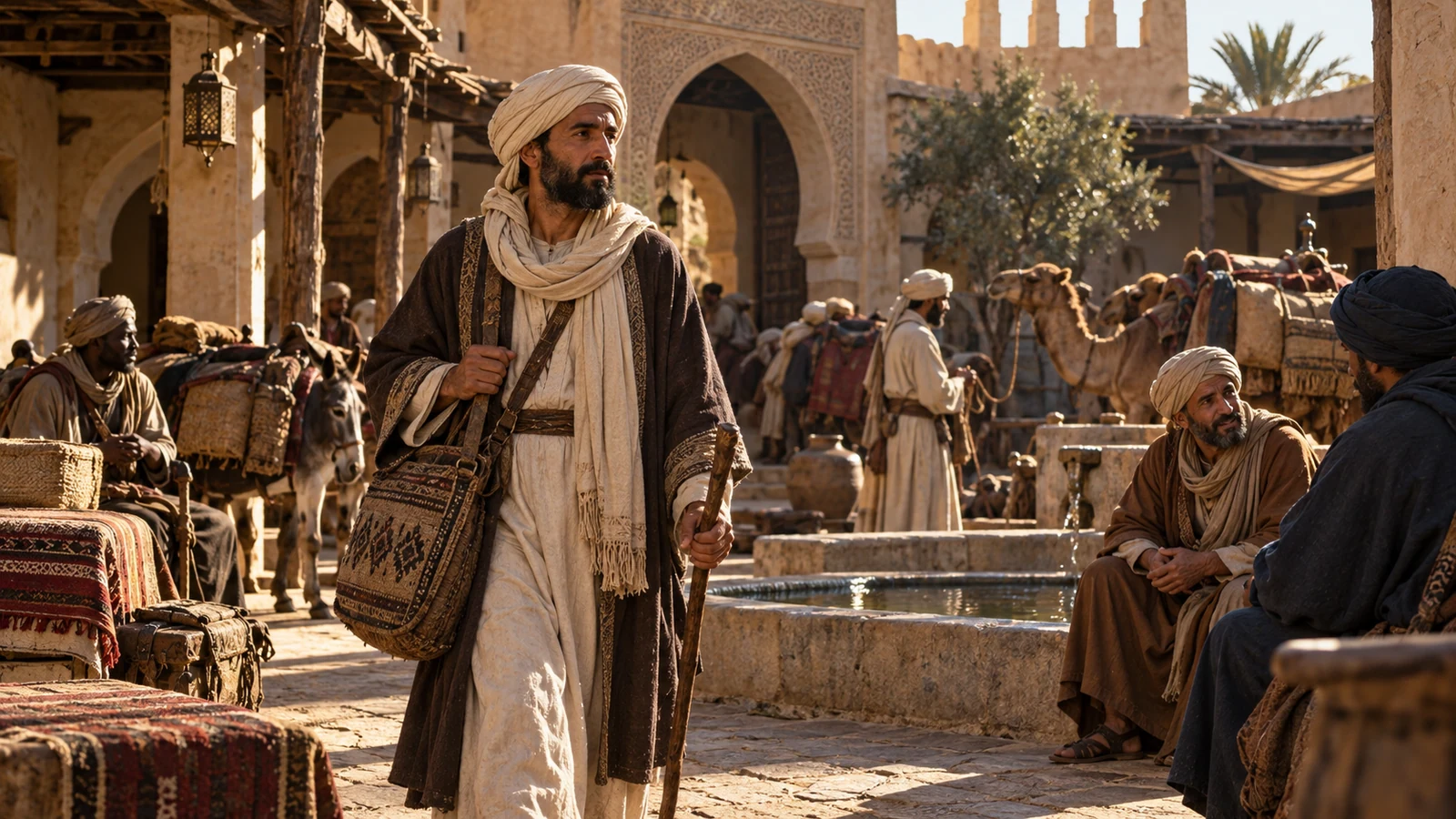
1325–1355
How to read Ibn Battuta’s travels
A pilgrimage became a long journey recorded afterward.
Tangier / DelhiMainly thirteenth–fourteenth-century prosperity
Kilwa and the Indian Ocean
A Swahili port connected eastern Africa’s interior with Indian Ocean trade.
Kilwa Kisiwani1324–sixteenth century
Mali and learning in Timbuktu
Gold and salt trade supported a West African city of mosques, manuscripts and learning.
TimbuktuSources
University of California, Berkeley / ORIAS · Pilgrimage, regional settings and the composition of the travel account.
Fordham University Medieval Sourcebook · Translated passages from the dictated account, including the traveler’s judgments.
University of California, Berkeley / ORIAS · Court service, the judgeship, patronage and political danger.
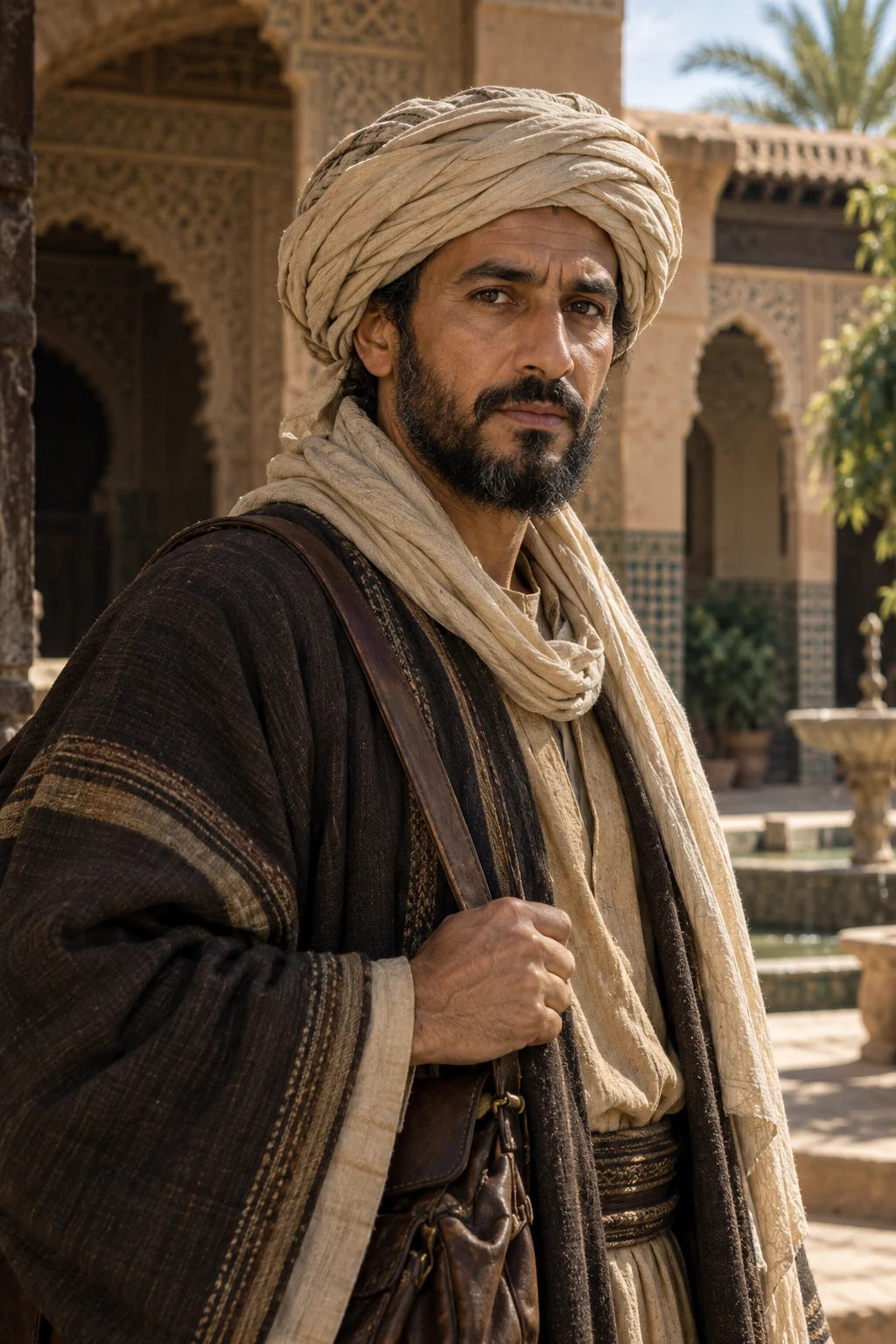
The portrait is an original historical imagining, not evidence of the person’s appearance.