1157–1225
Hōjō Masako
Political leader in Kamakura
Yoritomo’s wife and a political force after his death. The nickname nun-shogun does not mean that she held the formal office of shogun.
Sustaining Kamakura without a Minamoto successor
After Yoritomo died, Masako supported the shogunal household. Succession through her sons Yoriie and Sanetomo brought conflict involving retainers and the Hōjō. Responsibilities within the family became questions about the government’s survival.
Tokimasa, Yoshitoki and the administrator Ōe no Hiromoto formed part of her political surroundings. Maternal status alone did not secure decisions. Shogunal succession exposed the tension between household hierarchy and retainers’ competing interests.
Widows could represent a house in property, memorial rites and succession. Masako’s house was the shogunal family, so those responsibilities directly concerned Kamakura government. Cooperation with Yoshitoki and Hiromoto translated authority into administration and negotiation.
Succession and negotiation with Kyoto
Masako participated in negotiations and new succession arrangements. Nun-shogun is a description of influence, not an official appointment.
Sanetomo’s death ended direct Minamoto succession. Selecting a new shogun required dealings with Kyoto as well as Kamakura. Political survival depended on agreement over inherited authority, not military victory alone.
Jien’s Gukanshō discusses Masako’s meeting with Fujiwara no Kenshi on the court side. Agreement over succession involved women’s access to powerful people as well as male officeholders. Mediation and household authority provided channels of influence without a formal shogunal appointment.
The Jōkyū conflict and family commemoration
She supported the government during the Jōkyū conflict. The famous speech is a transmitted account, not a verbatim recording.
Buildings for Sanetomo and Ōhime preserved family memory in the town. Commemorative work belongs beside negotiation and government. Reading both roles prevents the label “nun shogun” from reducing a life to political toughness.
Yoshitoki died in 1224; Hiromoto and Masako followed in 1225. The generation sustaining government after Yoritomo disappeared, but the bakufu continued, carrying shogunal authority and Hōjō politics into another generation.
Turning points
- 1157
Born into the Hōjō family in Izu.
- 1199
Took religious vows after Yoritomo’s death.
- 1219
Participated in succession after Sanetomo’s death.
- 1221
Supported the government during the Jōkyū conflict.
- 1225
Died in Kamakura.
Their legacy
She worked on succession, negotiations with Kyoto and cohesion among retainers. Household authority and influential connections enabled political action without the formal office of shogun.
Related history
1180–1333 · Warrior government in Kamakura
When did the Kamakura shogunate begin?
Follow the formation of a government and a city beyond a single founding date.
Kamakura, Kanagawa
1180–1232 · Vassals and land
A government built around protecting land rights
Service, estate management and legal disputes mattered alongside battlefield victories.
Kamakura, KanagawaSources
鎌倉歴史文化交流館 · Roles after Yoritomo’s death, family and death in 1225.
鎌倉市 · Birth year, shogunal succession and political activity.
鎌倉市 · Administrative work, court negotiations and relationships with Masako and Yoshitoki.
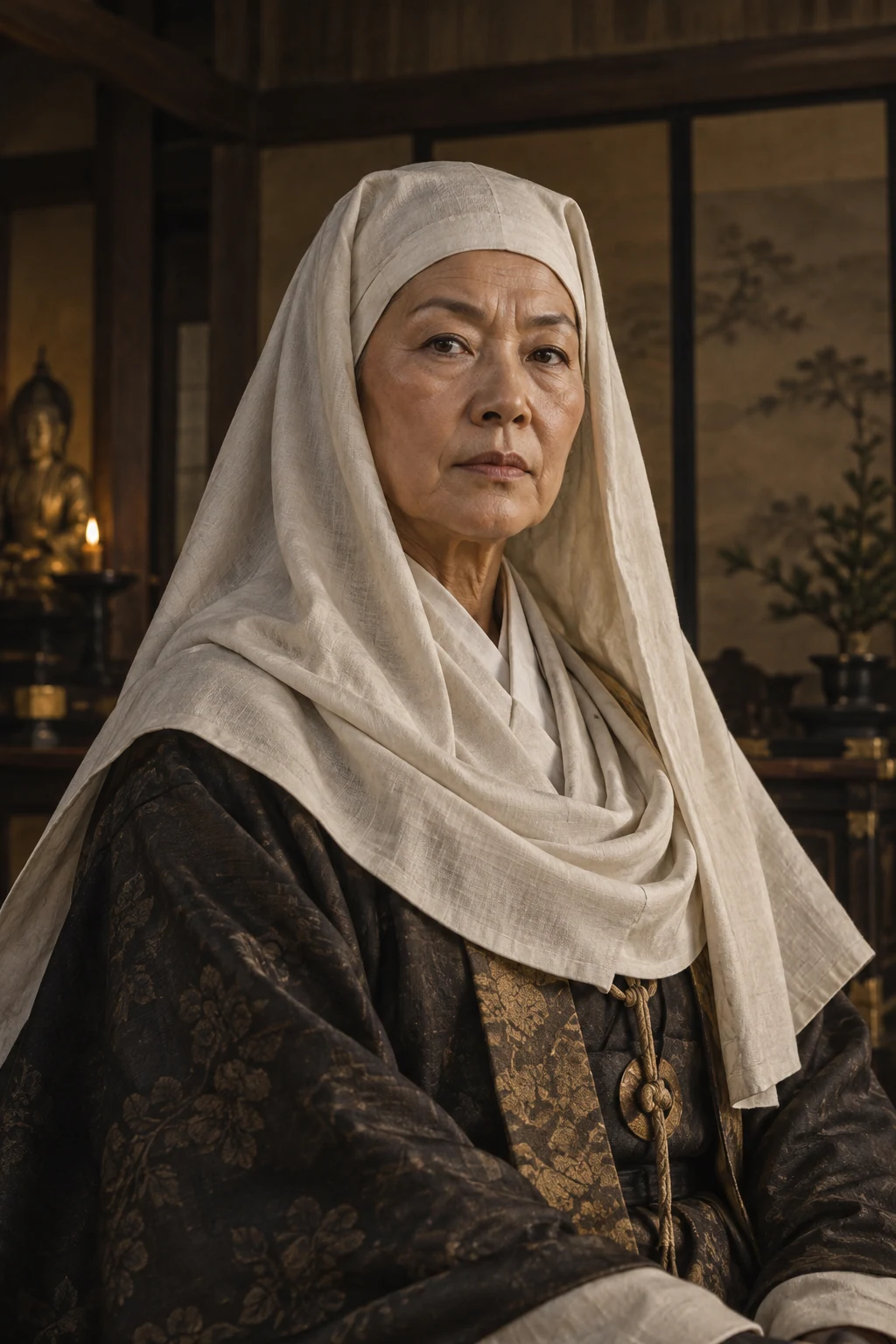
The portrait is an original historical imagining, not evidence of the person’s appearance.