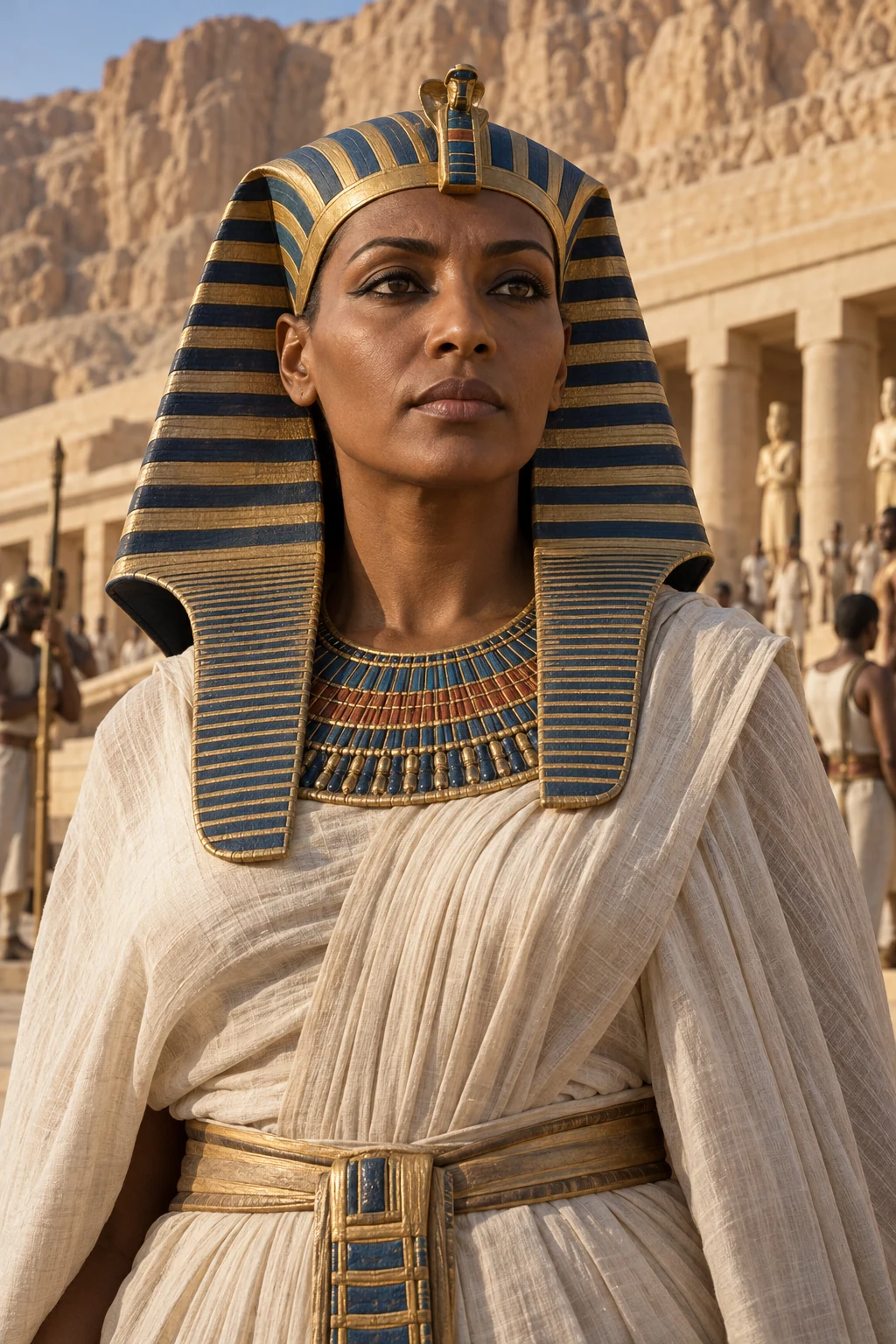
15th century BCE; reign c. 1473–1458 BCE
Hatshepsut
Ruler of Egypt’s Eighteenth Dynasty
Became senior co-ruler after serving as regent for Thutmose III. Temples and statues reveal how she represented royal legitimacy.
From regent to ruler in her own name
After Thutmose II’s death, Hatshepsut became regent for the young Thutmose III. She subsequently adopted royal titles as co-ruler. Temples and statues publicly presented a royal woman as a reigning king.
Senenmut managed property, helped educate Neferure and held influential offices connected with Amun. His statues display status and proximity to royalty, rather than proving a private romantic relationship.
Authority in temples and sculpture
Statues use feminine forms as well as conventional royal dress. Crowns, beards and titles communicate status rather than literal everyday appearance.
A female-form seated statue still bears royal titles. Nine bows symbolize enemies, not a literal list of nine conquests. Pose, dress and inscription combine gendered representation with conventions of kingship.
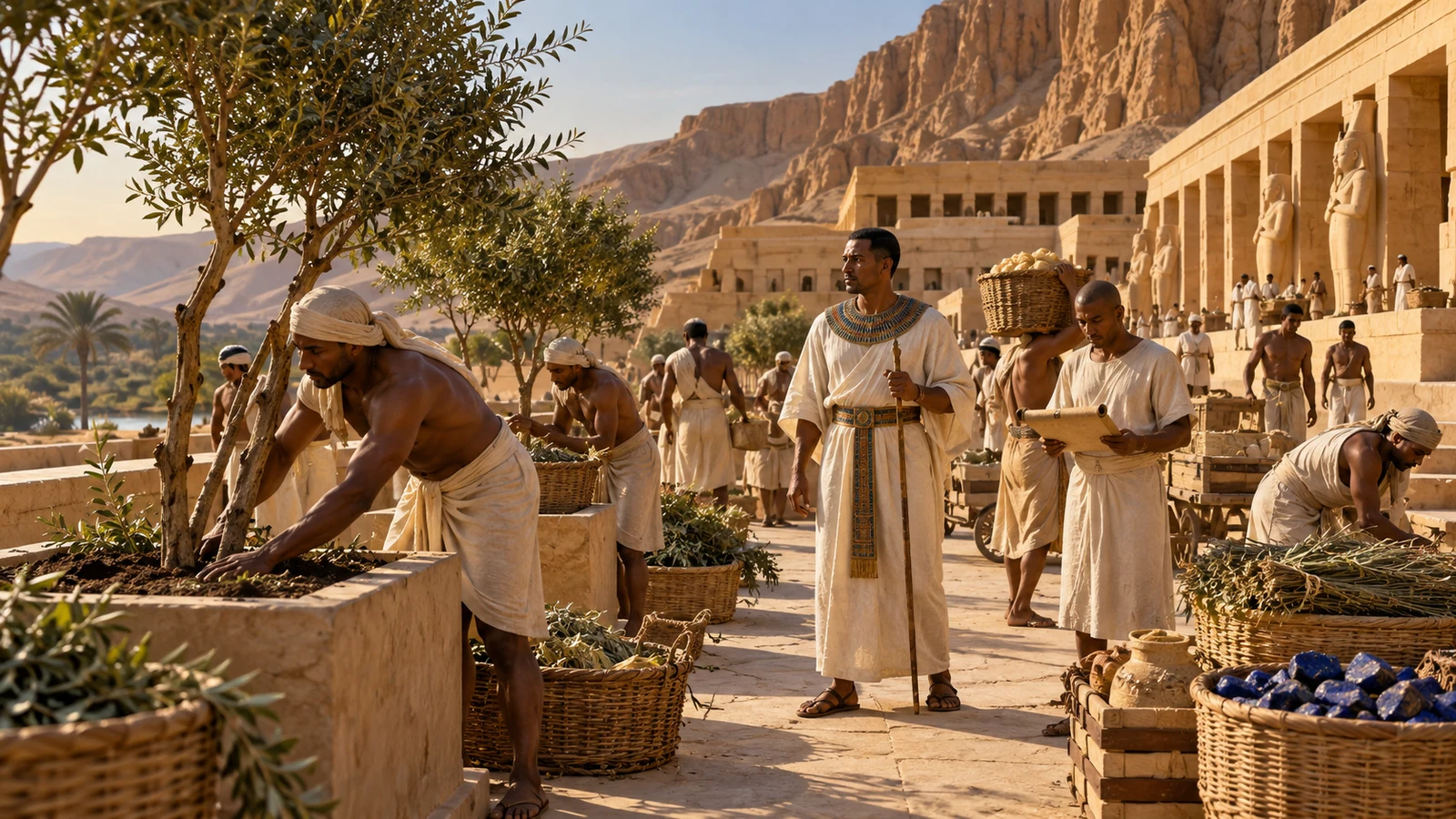
The Deir el-Bahri temple and trade with Punt were important projects. Imported resources supported royal display and ritual. Sailors, artisans and administrators carried out work commemorated under a ruler’s name.
Punt trade and rediscovered images
Reliefs of the Punt expedition present royal images of exchange and prosperity, not a diary of every participant’s experience.
Destruction and erasure occurred after her death, not necessarily as an immediate act of hatred. Motives remain uncertain. Excavated fragments and reconstruction allow study of both royal self-presentation and subsequent attempts to remove it.
Findspots, dates and reconstruction histories accompany museum statues. Their function changed from ritual objects to excavated exhibits. Fragmentary evidence connects her reign with the later history of recovering and interpreting royal authority.
Turning points
- Early fifteenth century BCE
Participated in royal politics as queen.
- After Thutmose II’s death
Became regent for the young Thutmose III.
- About 1473 BCE
Became co-ruler with royal titles.
- About 1458 BCE
Her reign ended.
- 1920s–1930s, excavation history
Statue fragments at Deir el-Bahri were excavated and reconstructed.
Their legacy
Statues bearing royal titles were broken after her death and reassembled following excavation. Objects displaying authority also preserve attempts to erase memory and the subsequent history of rediscovery.
Related history
Sources
The Metropolitan Museum of Art · The transition from regent to co-ruler and approximate reign dates.
The Metropolitan Museum of Art · Royal titles, feminine representation and the statue’s findspot.
The portrait is an original historical imagining, not evidence of the person’s appearance.