Around 1473–1458 BCE
How Hatshepsut represented kingship
Study a female ruler through sculpture, temples and exchange.
From regency to kingship
A statue can wear masculine regalia while its inscription uses feminine grammar. Hatshepsut’s imagery was not simply concealment. Moving from regent for Thutmose III to royal co-ruler, she adopted established conventions of kingship.
Senenmut managed royal estates, tutored Neferure and became steward of Amun. Land, resources and personnel depended on offices around the co-rulers.
Exchange and temple building
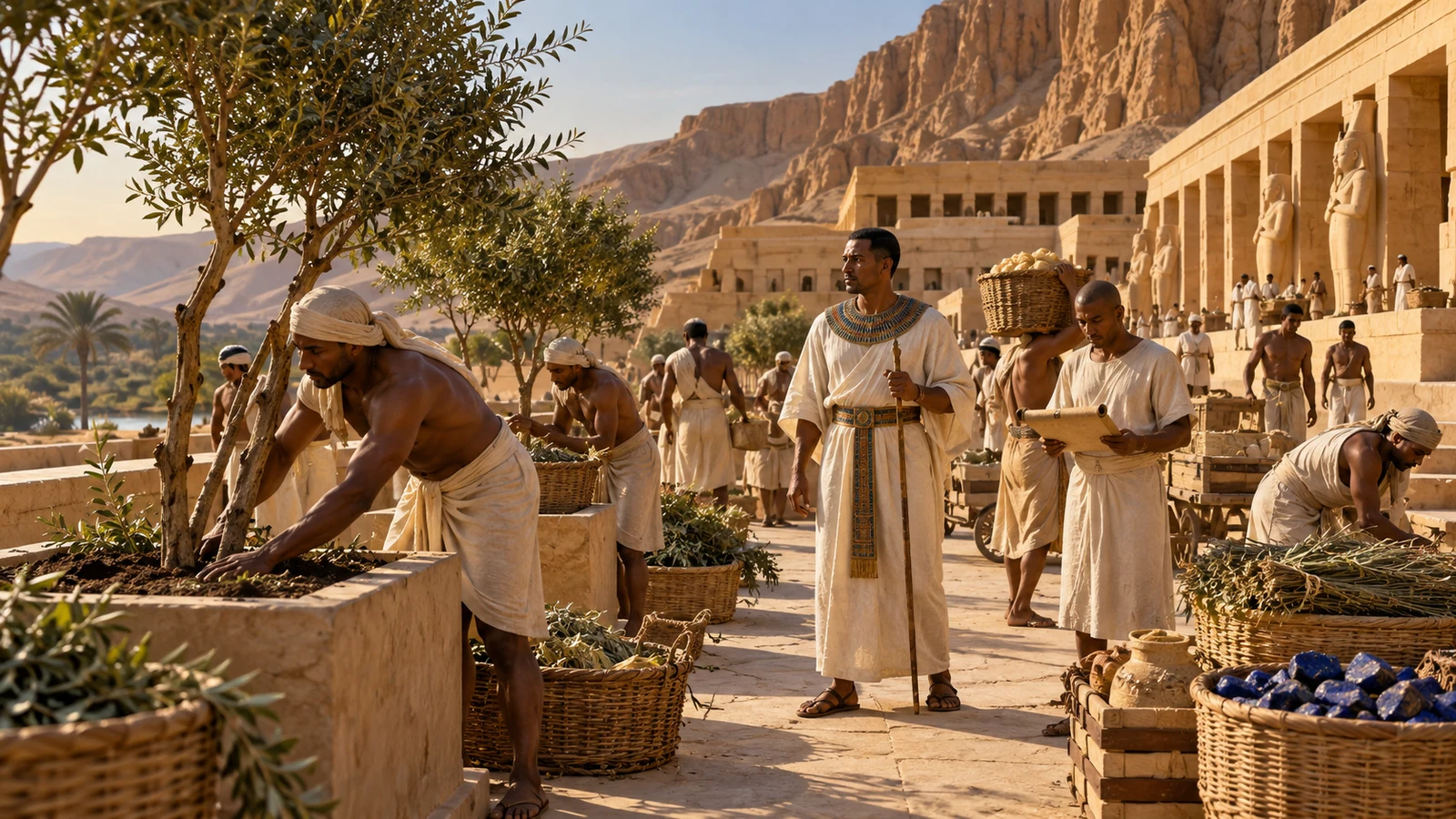
Trade with places including Punt supplied royal temple projects. At Deir el-Bahri, seated figures in female dress and royal headcloths, colossal masculine kings and sphinxes served different locations. Offerings and processional routes helped determine their forms.
Damaging images and rewriting memory
Attacks on names and images are dated roughly twenty years after her death, with motives uncertain. A seated statue’s torso was found in 1869, other pieces in the twentieth century, and parts reunited in 1998. The present object records ancient creation and destruction as well as modern recovery.
Before and after
- Around 1473 BCE
Approximate beginning of royal co-rule.
- Around 1458 BCE
Approximate end of her reign.
- 1998
The seated statue’s torso and dispersed fragments were reunited.
Key terms
- Regent
- Someone governing on behalf of a ruler.
- Inscription
- Names or text carved on an object.
- Co-rule
- More than one ruler holding royal authority together.
What supports the account?
Regency and royal accession were different positions. Following the change avoids reducing female rule to a simple exception.
Co-rule, exchange, the temple and later destruction of images. Royal conventions, feminine inscriptions and reassembly.
Regency and kingship are distinct.
Read dress with inscriptions. Feminine wording on masculine images complicates claims that the ruler concealed her identity.
Co-rule, exchange, the temple and later destruction of images. Royal conventions, feminine inscriptions and reassembly.
Images do not recover private thoughts or conversations.
Check your understanding
Choose an answer to reveal the explanation. Return to the article and sources when you are unsure.
Sources
- Hatshepsut: From Queen to PharaohThe Metropolitan Museum of Art
Co-rule, exchange, the temple and later destruction of images.
- The Female Pharaoh HatshepsutThe Metropolitan Museum of Art
Royal conventions, feminine inscriptions and reassembly.
Keep exploring

30 BCE
Cleopatra and Alexandria
Egypt before Roman rule: a harbor and dynasty beyond the queen’s later legend.
AlexandriaMainly the eleventh–fifteenth-century growth and prosperity
The stone city of Great Zimbabwe
Local stone-building skills and long-distance trade reveal a southern African city.
Great ZimbabweMainly thirteenth–fourteenth-century prosperity
Kilwa and the Indian Ocean
A Swahili port connected eastern Africa’s interior with Indian Ocean trade.
Kilwa Kisiwani