69–30 BCE
Cleopatra VII
Ptolemaic queen
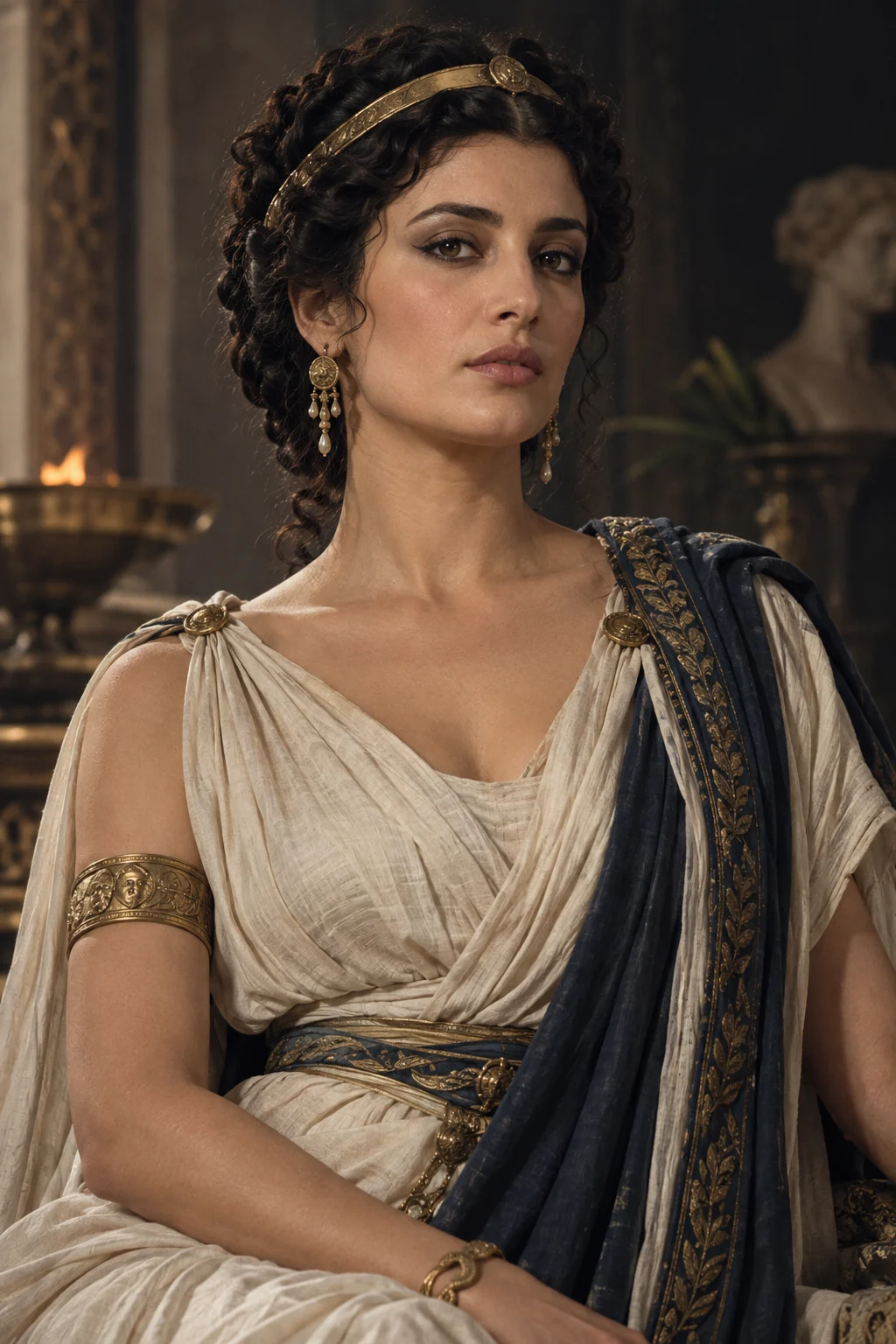
A Ptolemaic ruler of Egypt. Faces in later sculpture or films are not treated as her established historical appearance.
Preserving a dynasty amid Roman civil war
Whom could Egypt’s queen support while Rome fought civil wars? Cleopatra VII of the Ptolemaic dynasty allied with Caesar and later Antony. Preserving her rule became entangled with Roman struggles for power.
The dynasty followed Alexander’s conquest and combined Greek names with Egyptian kingship. Alexandria and regional temples presented authority differently. Dynasty and inhabitants’ history cannot be reduced to a modern single-nation, single-culture model.
Alexandria connected palace, harbor and learning with Mediterranean networks. Art mixing Greek and Egyptian forms reveals multiple audiences for royal rule.
Diplomacy within Roman civil conflict
Her politics involved Caesar and Antony. A romance-only account overlooks diplomacy aimed at retaining Egypt’s dynasty and power.
Cooperation with Antony connected finance and eastern Mediterranean politics. Their defeat at Actium in 31 BCE preceded Octavian’s advance into Egypt in 30. A romantic ending alone cannot explain transfer of political control and resources.
Coins with Antony and Cleopatra on opposite sides also record names and titles. An object used in payment publicly represented their alliance. Its inscriptions directly state their claims as rulers.
Dynastic ending and continuing lives
Later art often depicts a snake at her death, but such images are not eyewitness records. Her death, the dynasty’s end and Roman control are firmer political landmarks than an unqualified dramatic reconstruction of the final moment.
Roman annexation did not instantly erase temples or customs. Artistic and religious practices could continue across political succession. Rulers’ chronology and objects’ dates reveal both rupture and continuity in the same landscape.
William Wetmore Story’s nineteenth-century sculpture is a later imagined queen, far removed from contemporary coinage. Comparing them traces the transformation of a political ruler into a compelling cultural character.
Turning points
- About 69 BCE
Born into the Ptolemaic dynasty.
- 51 BCE
Began her reign.
- 40s–30s BCE
Participated in diplomacy amid Roman civil wars.
- 31 BCE
Antony and Cleopatra’s forces were defeated at Actium.
- 30 BCE
Died; Egypt came under Roman rule.
Their legacy
After Actium and the queen’s death, the dynasty ended and Rome took control. Some religious and social practices continued, so political transition and changes in daily life did not move at the same speed.
Related history

Related stories
Sources
The Metropolitan Museum of Art · Dynasty, Alexandria, Greek and Egyptian cultures and the transition of 30 BCE.
British Museum · Their coin portraits and political representation.
The Metropolitan Museum of Art · Life-date summary and a nineteenth-century imagined queen.
Rice University / OpenStax · Alliance, Actium and the transfer to Octavian’s control.
The portrait is an original historical imagining, not evidence of the person’s appearance.