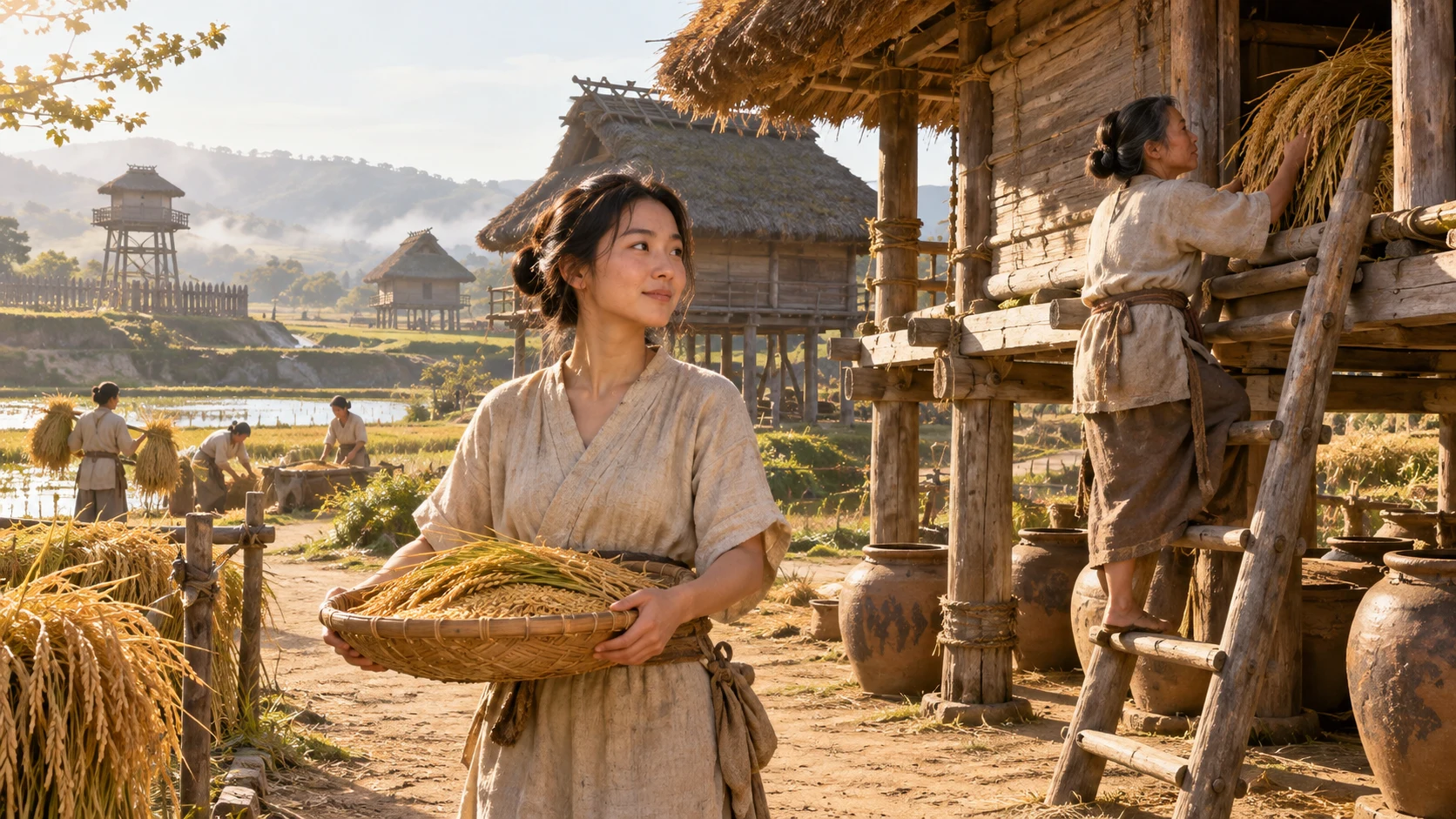
Around the third century CE · Late Yayoi period · Yoshinogari, Saga
What remains until the next harvest
From the storehouse to an exchange
Obtain a replacement vessel while preserving food and next season’s seed.
Every share taken for exchange leaves less in store.
Begin the storyPreparing your story…
Explore the diagram: Homes, stores and protected spaces
Homes, stores and protected spaces
Does a growing settlement only need more buildings?
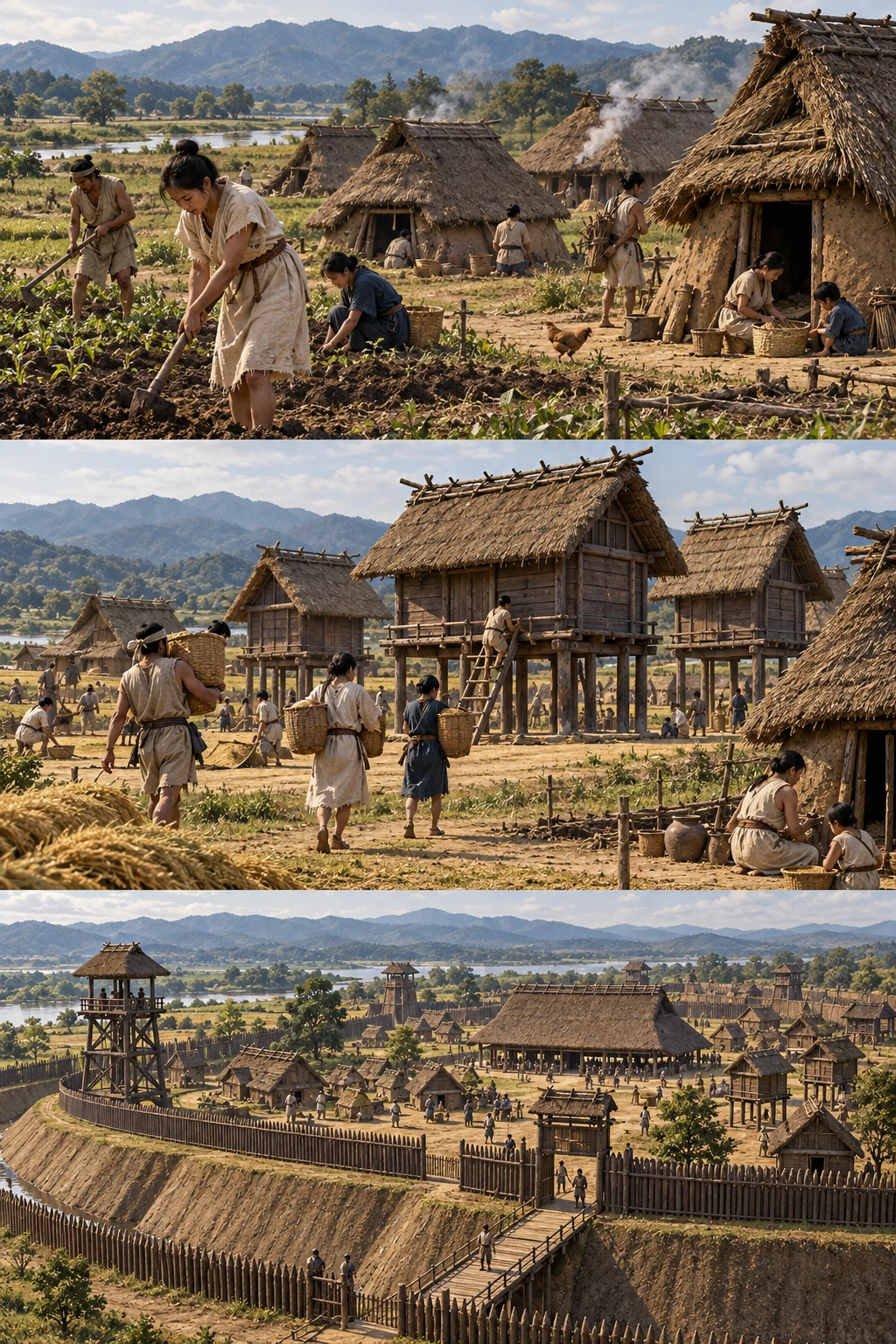
Places to live develop on the hills.
Communities establish places to live
Yoshinogari changed over the Yayoi period. It did not begin as the large centre represented by today’s reconstruction.
Sources and scope
These illustrations explain processes and institutions rather than reconstructing actual people, buildings or layouts. Cutaways and insets show hidden structures or separate locations.
History of Yoshinogari ↗Nagi, Towa, their exchange partners, harvest division and dialogue are fictional. Archaeological interpretations inform the storehouse and exchange setting, not evidence for this family. The twelve units, minimums and route costs are illustrative models, not historical quantities, proportions or a map.
Explore the time and placeSources
- History of Yoshinogari ↗
吉野ヶ里歴史公園 · Development by phase, enclosures, storage, graves, reconstruction date and dry ditches.
- About the Yoshinogari site ↗
吉野ヶ里歴史公園 · Extent of the site and changing Yayoi settlement.