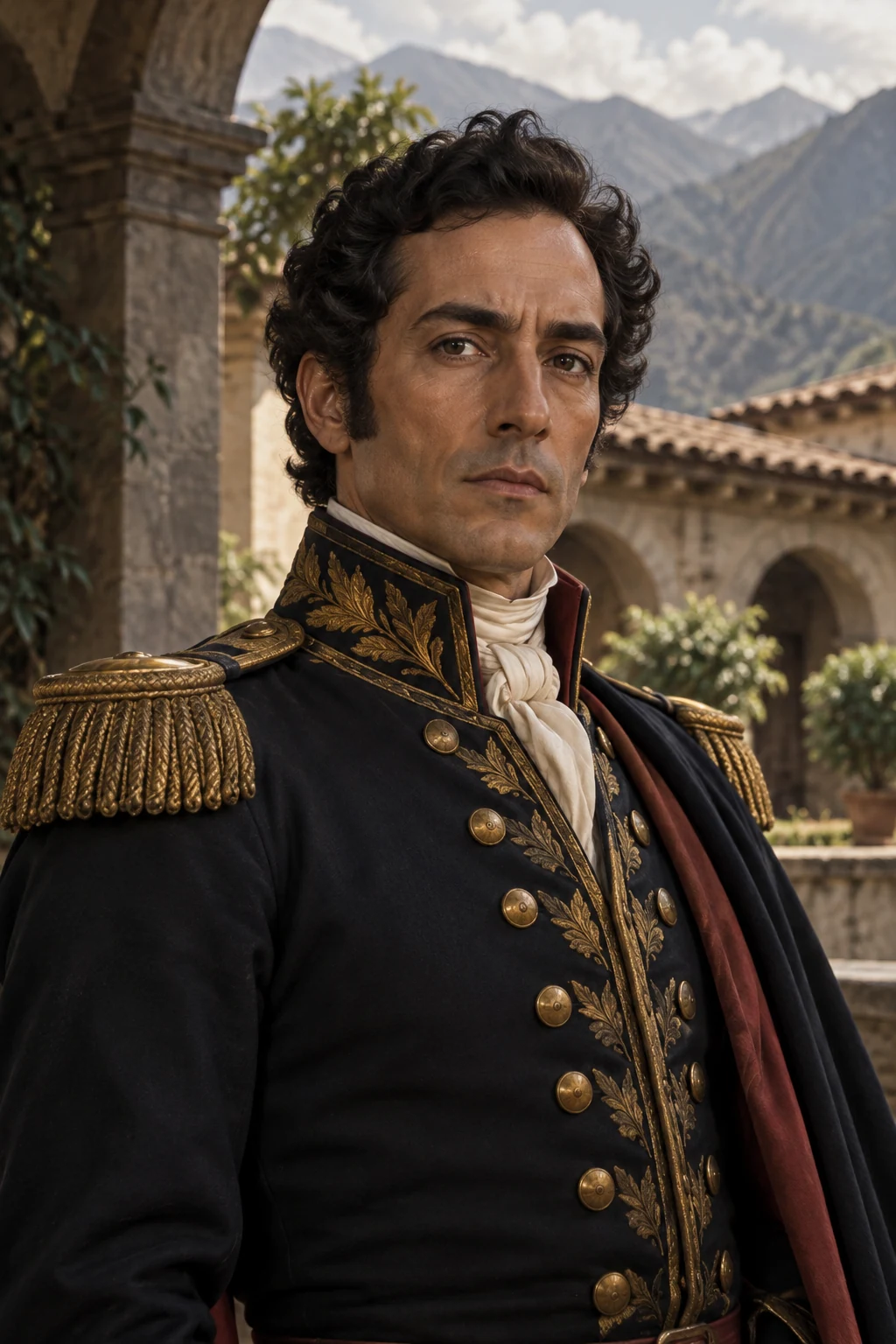
1783–1830
Simón Bolívar
Leader in South American independence
Led independence campaigns and efforts to build republics. His vision of union collided with competing regional interests.
Could allies for independence remain one country?
Allies seeking independence from Spain did not necessarily want to remain one country. Caracas-born Bolívar led campaigns and proposed a large republic. Asking wartime partners to accept central authority brought conflict with regional autonomy.
Francisco de Miranda preceded Bolívar’s independence project, but their relations deteriorated over the surrender of 1812. Shared goals did not guarantee agreement. Bolívar adapted an existing vision through conflict as well as inheritance.
Participants had different aims. Elites, soldiers, Indigenous communities and enslaved people faced differing questions of rights and livelihood.
Turning independence into institutions and alliances
The Jamaica Letter of 1815 explored union and its obstacles. The 1819 law and 1821 Cúcuta constitution gave the project institutional form across territories associated with several present-day states.
“Gran Colombia” is a later designation for the Republic of Colombia, not simply today’s state. Independence from an empire and the boundaries of a new nation were separate questions. Constitutional and military timelines illuminate the distinction.
The Panama Congress sought connections among independent states, but participation and ratification fell short. A shared break from Spain did not eliminate differing interests and diplomatic conditions. Turning wartime cooperation into durable interstate agreement presented a different problem from independence itself.
Regional autonomy and central authority collide
Páez’s separatist movement in 1826 and the failed Ocaña convention in 1828 exposed disagreements over power. Bolívar subsequently assumed dictatorial authority. Wartime cooperation did not secure agreement on centralization and regional autonomy.
Separation advanced in 1830, the year of his death. Commemoration as liberator must sit beside debates over centralized and dictatorial power. National liberation did not itself settle who would exercise political rights or authority.
Changes of rule and institutions did not remove social inequality. Regional elites, Indigenous people and enslaved people could seek different freedoms. Building a republic still required deciding who received which rights.
Turning points
- 1783
Born in Caracas.
- 1810s
Participated in independence campaigns and politics.
- 1819
The Colombian republic took shape.
- 1821
The constitution at Cúcuta was adopted.
- 1830
Union broke apart and Bolívar died.
Their legacy
The victorious independence coalition did not endure as one republic. Separations in 1830 reveal the difference between winning liberation and maintaining agreement among regions.
Related history
Sources
Banco de la República, Colombia · The republic in 1819, the 1821 constitution, union and dissolution.
Banco de la República, Colombia · Bolívar, independence and dissolution in 1830.
The portrait is an original historical imagining, not evidence of the person’s appearance.