1534–1582
Oda Nobunaga
Sengoku warlord
A warlord who reshaped politics in Kyoto and died at Honnōji. His policies and wars deserve examination beyond one image of an innovator.
Securing allegiance in Owari
Succeeding his father did not bring immediate obedience in Owari. Born in 1534, Nobunaga consolidated power through struggles with his brother Nobukatsu and other Oda houses. Local allegiances had to be secured before wider campaigns.
Defeating Imagawa Yoshimoto at Okehazama in 1560 changed regional relations. In Mino, defections by Inaba Ittetsu, Ujiie Bokuzen and Andō Morinari also mattered. Allegiance shaped conquest alongside military success.
In 1567 he took Inabayama, renamed castle and town Gifu, and made it a base. Fortification and town development joined defense with supplies and administration, supporting further movement toward Kyoto.
Cooperation and conflict with Ashikaga Yoshiaki
Supporting Ashikaga Yoshiaki connected Nobunaga’s force with shogunal legitimacy. Kyoto’s court, temples and urban communities required negotiation. Military arrival did not provide unrestricted control.
The relationship deteriorated, and Nobunaga removed Yoshiaki from Kyoto in 1573. Earlier cooperation should not be erased by the outcome. The decline of shogunal authority intersected with Nobunaga’s territorial rule.
Expansion increased delegated command. Nobutada received the headship in 1575 while his father retained central influence. His regional administration and military responsibilities combined preparation for succession with management of a larger territory.
Skill and authority assembled at Azuchi
Construction beginning in 1576 brought defense, residence, government and display together at Azuchi. Transport workers, carpenters and painters made the space possible. The castle displayed command of resources and skills as well as military authority.
Momoyama interiors used gold and expansive painting while warrior patrons also supported rustic tea aesthetics. Different settings employed different forms of display. Cultural expenditure participated in relationships and political presentation.
Urban trade and overseas connections carried techniques and goods. Chinese and Korean links existed alongside European merchants and missionaries. Lords could obtain materials, form external relationships and use arriving techniques. Domestic rivalry and wider commerce developed at the same time.
Succession interrupted at Honnōji
On the second day of the sixth lunar month in 1582, Nobunaga died under attack at Honnōji; Nobutada died at Nijō Shingoshō. Losing ruler and successor on one day destabilized the Oda succession.
Hideyoshi’s defeat of Mitsuhide did not automatically transfer the whole regime. Oda relatives and senior retainers contested succession. Sanbōshi’s selection still left practical control and guardianship unsettled.
Delegation, resources and linked centers enabled expansion, while villages and temples suffered losses. Transfer of family headship did not protect succession when father and son died together. Constructed institutions, disrupted inheritance, victory and regional damage coexist in this career.
Turning points
- 1534
Born in Owari.
- 1560
Fought the Imagawa army at Okehazama.
- 1567
Established his base in Mino and renamed Gifu.
- 1573
Expelled Yoshiaki from Kyoto.
- 1576
Began Azuchi Castle.
- 1582
Died in the Honnōji Incident.
Their legacy
Retainers governing regions and Nobutada as heir helped sustain the regime. The deaths of father and son on the same day removed its central succession, leaving struggles over territory and authority.
Related history
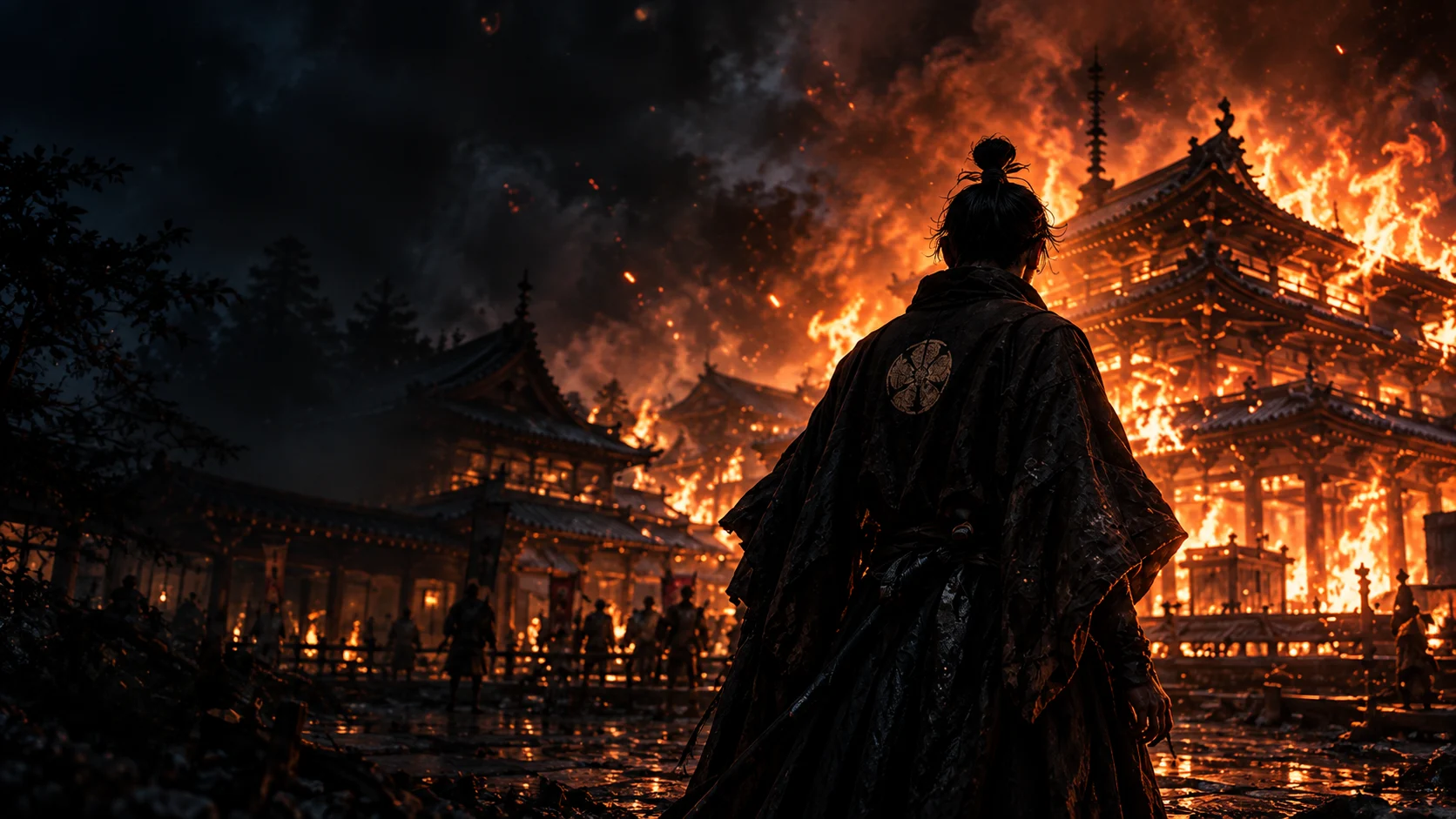
1582 · Second day of the sixth lunar month
Honnōji and the city of Kyoto
Trace the two sites of Nobunaga’s and Nobutada’s deaths, Mitsuhide’s defeat and the temple’s later relocation through Kyoto.
Kyoto1378 · Yoshimitsu moves to his Muromachi residence
Kyoto around the shogun’s residence
Government residences and commercial neighbourhoods gave upper Kyoto different functions.
Upper KyotoRelated stories
Sources
岐阜市 · Careers of Nobunaga and Nobutada, Gifu in 1567 and succession in 1575.
京都市考古資料館 · Events of 1582 and Kyoto sites, distinguishing Honnōji from the Nijō residence.
The Metropolitan Museum of Art · Unifying regimes, art and Hideyoshi’s invasions of Korea.
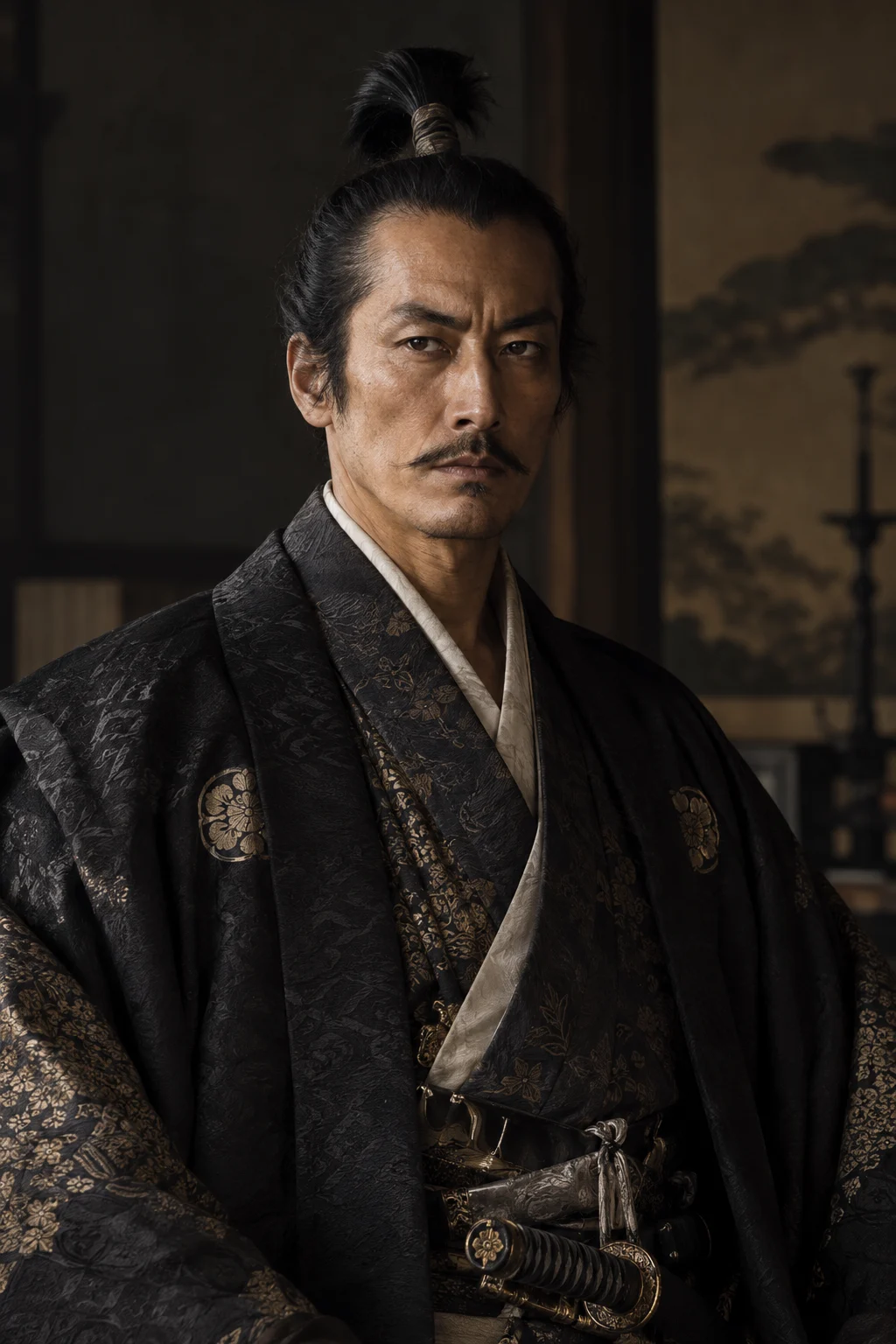
The portrait is an original historical imagining, not evidence of the person’s appearance.