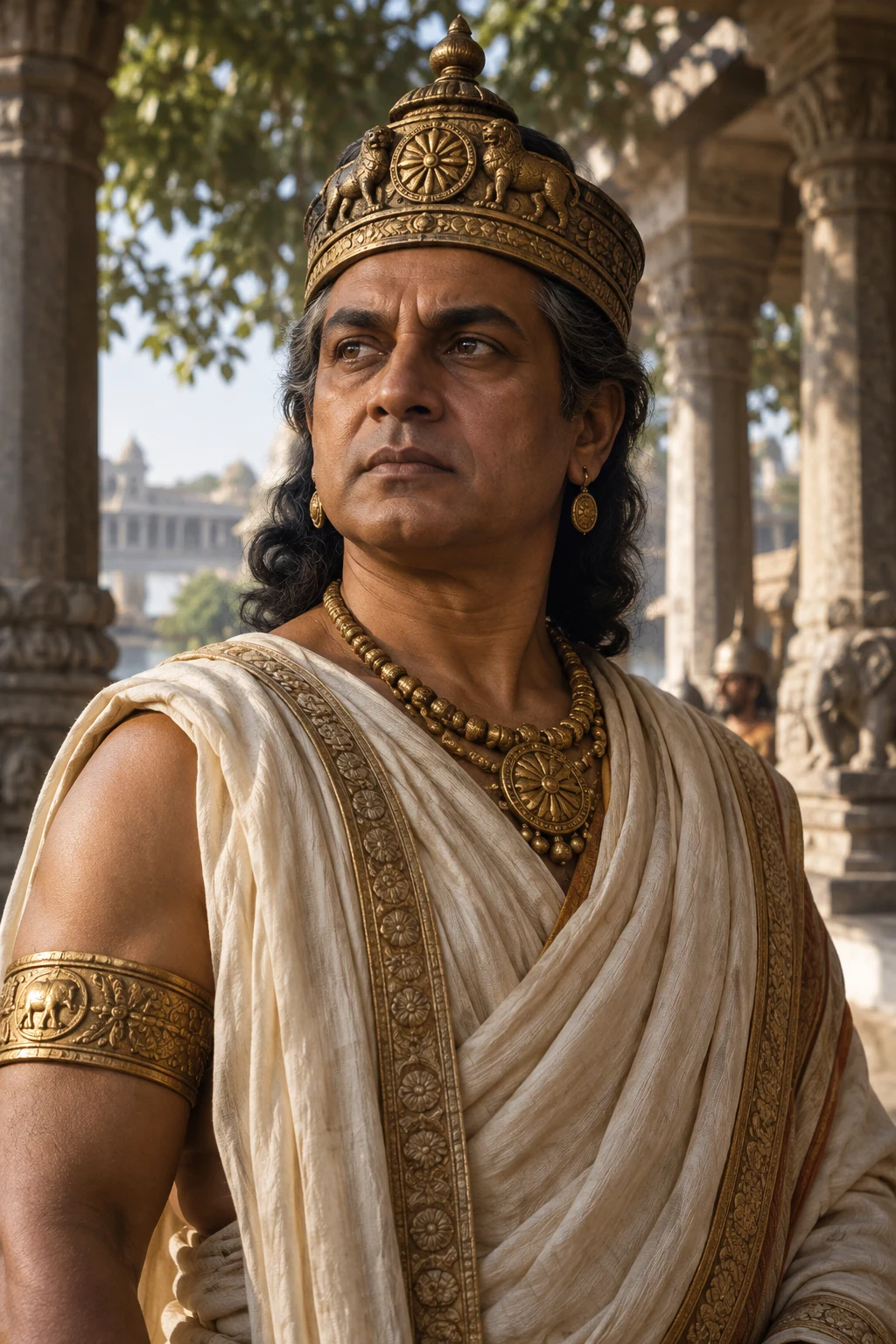
3rd century BCE; reign c. 268–232 BCE
Ashoka
Mauryan ruler
Left edicts across a vast territory. Inscriptions offer evidence for remorse over war and principles of rule alongside later stories.
A conqueror records the suffering of conquest
A victorious ruler recorded remorse for people killed and taken away. Ashoka’s edicts describe his response to the Kalinga conquest. Compassion and the authority to govern an extensive empire appear in the same ruler’s words.
Major Rock Edict XIII expresses royal remorse and discusses loss beyond combatants. Its casualty figures are not an independent census. The text publicly acknowledges harm to families and communities rather than ending with a celebration of victory.
Communicating dhamma across regions
Officials helped convey the policy where the king did not travel. The inscriptions prescribe behaviour for subjects and officials; they are royal instructions rather than a record of compliance by every community.
Officials concerned with dharma linked proclamation with administration. Inscriptions carried messages beyond the king’s presence. A surviving command demonstrates policy, but not universal compliance or its effects in every community.
Edicts survive on pillars and rocks in different regions. Communication across languages and scripts required local forms. A modern collected translation joins objects originally placed in separate locations; findspots and surviving portions matter.
Religious respect and imperial coercion
Pillar fragments reveal workmanship and transport as well as text. Fragments must be related to the original monument and inscription.
Respect for other sects did not abolish religion. The edict links devotion with restraint in disparaging others. It expresses a ruler’s desired accommodation among communities, rather than a complete modern constitutional guarantee of religious freedom.
Remorse did not dissolve imperial authority. Edict XIII also warns forest peoples. Benevolent ideals and coercive power coexist in the text, complicating an uncomplicated portrait of a ruler who simply abandoned all violence.
Turning points
- About 268 BCE
Conventional approximate accession.
- Eighth year after accession
The edict dates the conquest of Kalinga.
- Mid-third century BCE
Issued policies on rocks and pillars.
- About 232 BCE
Conventional approximate end of the reign.
Their legacy
Edicts on dhamma reached different regions through rocks and pillars. Respect for religious groups appears beside warnings to those resisting authority, preserving both ideals and coercion in royal government.
Sources
Columbia University · Royal statements about Kalinga, religious respect and officials.
British Museum · A surviving fragment of a third-century-BCE pillar edict.
The portrait is an original historical imagining, not evidence of the person’s appearance.