1358–1408
Ashikaga Yoshimitsu
Third Ashikaga shogun
A shogun associated with the reunification of the courts and relations with Ming China. His buildings link politics, trade and culture.
Gathering authority after leaving office
Yoshimitsu’s politics continued after he passed the shogunate to his son. At Kitayama he received Ming envoys and an imperial visit; abroad he appeared as “king of Japan.” Buildings and religious institutions became settings for domestic and diplomatic authority.
Hosokawa Yoriyuki assisted the young shogun in relations with powerful governors. Monks Shun’oku Myōha and Gidō Shūshin contributed religious and literary learning. Negotiating warriors and monks handling ceremony and writing supported authority through distinct expertise.
Monks skilled in Chinese verse and prose gathered at institutions such as Shōkokuji. Their learning also served diplomacy. Temples under shogunal patronage combined worship with knowledge and expertise needed by government.
Court reunification and Ming diplomacy
The courts reunited in 1392. Yoshimitsu transferred the shogunate to Yoshimochi in 1394 but remained politically influential.
The Ming mission of 1401 linked commerce and diplomatic recognition. “King of Japan” was a title within Ming relations, not an accession replacing Japan’s emperor. External diplomatic status and domestic office require separate interpretation.
Kitayama hosted Ming envoys and Emperor Go-Komatsu’s visit in 1408. Buildings and gardens provided settings for ceremony. Their political use helps explain influence retained after Yoshimitsu relinquished the shogunal title.
From Kitayama residence to Rokuonji
Construction of Kitayama began in 1397. The Golden Pavilion belonged to a larger ensemble of buildings and gardens.
Kitayama occupied a former Saionji estate and garden. Yoshimitsu transformed aristocratic space for warrior ceremony and visitors. Earlier work remained within its setting and forms. Kitayama culture developed through adaptation of court culture rather than its complete replacement.
After Yoshimitsu’s death, Kitayama became Rokuonji, changing from residence to religious institution. Later custodians maintained it. The pavilion burned in 1950 and the present building was reconstructed afterward. Fourteenth-century construction, subsequent temple life and modern rebuilding are distinct layers at one site.
Turning points
- 1358
Born.
- 1368
Became the third shogun.
- 1392
The rival courts reunited.
- 1394
Transferred the shogunate to Yoshimochi.
- 1397
Began Kitayama construction.
- 1408
Died.
Their legacy
Kitayama architecture, Zen learning and Ming trade intersected under his government. The Golden Pavilion recalls a political setting for receiving people and displaying authority as well as an artistic achievement.
Related history
1378 · Yoshimitsu moves to his Muromachi residence
Kyoto around the shogun’s residence
Government residences and commercial neighbourhoods gave upper Kyoto different functions.
Upper Kyoto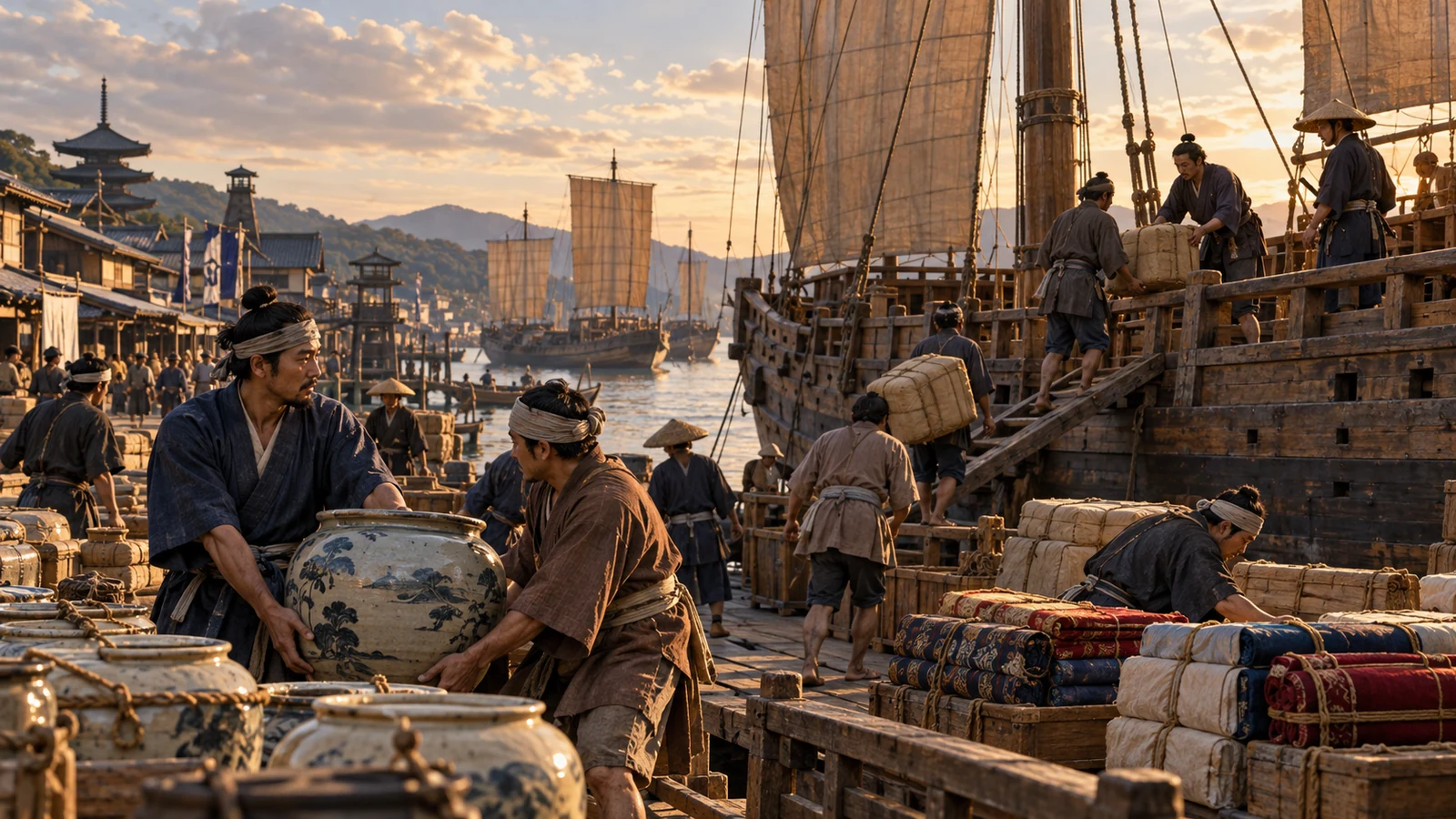
1401–mid-sixteenth century · Trade with Ming China
The tally checked at the port
A tally identified authorised missions: follow the links between diplomacy and commerce.
Hakata, Fukuoka / KyotoSources
臨済宗相国寺派 · Transfer of the shogunate in 1394, Kitayama construction in 1397 and Yoshimitsu’s death.
臨済宗相国寺派 · Yoshimitsu’s dates, the foundation of Shōkokuji and Zen institutions.
京都市考古資料館 · The Ming mission of 1401, Kitayama residence and death in 1408.
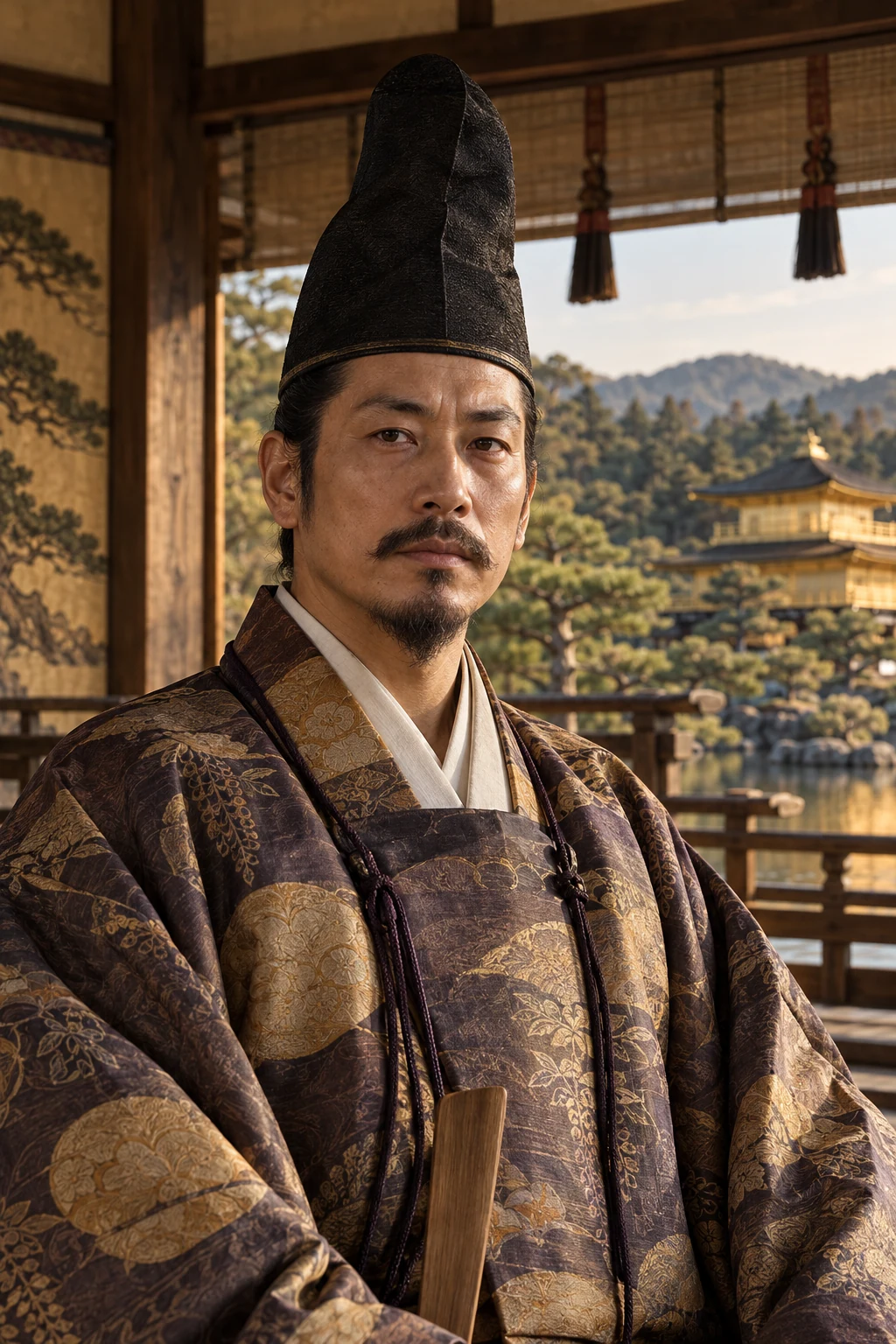
The portrait is an original historical imagining, not evidence of the person’s appearance.